

What if the smartest flooring upgrades for home sale involve leaving some floors alone? Worn, stained, or dated flooring can make buyers wonder what else needs attention, but replacing every surface may add disruption without improving the whole-home impression. The right choice depends on the floor’s condition, the room, and whether a focused fix can make it look clean and cared for.
It’s understandable to want a move-in-ready feel before listing, especially if you’re unsure whether buyers will notice scratches, worn carpet, or mismatched materials. This practical checklist helps you decide where to start and whether to clean, repair, refinish, replace, or leave each floor as it is.
We’ll cover the issues that deserve attention first, explain how to assess common flooring conditions, and help you avoid upgrades that don’t suit your home or selling plans. When replacement is the right scope, professional flooring installation can give the rooms buyers see every day a cohesive finish.
Key Takeaways
- Sale-ready flooring should feel clean, safe, and cohesive, but that doesn’t mean every worn surface needs replacing.
- Compare cleaning, localized repair, refinishing, and replacement to find the least extensive option suited to each floor’s condition.
- New flooring can improve a room’s appearance, but it doesn’t guarantee a higher offer or a faster sale.
- Use a pre-listing checklist to prioritize rooms and coordinate flooring work with photography, showings, and everyday access.
- Make flooring upgrades for home sale strategically, and consider professional installation in Colorado Springs when replacement is the right fit.
Flooring Upgrades for Home Sale: Start with Condition and First Impressions
Not every worn floor needs full replacement before you list. Surface wear may respond well to cleaning or a focused repair, while damage, persistent odors, or unsafe transitions deserve closer attention. The goal of flooring upgrades for home sale is to address what affects a buyer’s first impression and everyday use, not to make every surface look brand new.
Sale-ready flooring is clean, safe, cohesive from room to room, and appropriate to the home’s condition and style. Buyers may notice both the flooring materials and how they meet between spaces. A quick overview of common terms and surfaces in Flooring can help you describe what you’re seeing. Presentation matters, but flooring improvements can’t guarantee a particular sale price or timeline.
Which flooring problems are most noticeable to buyers?
Start with issues that stand out visually, affect comfort, or suggest a larger problem. Give extra attention to entryways, main living areas, kitchens, and bathrooms, where buyers are likely to walk through or pause.
- Look for visible damage: Check for cracked tiles, lifted edges, deep gouges, loose boards, or torn carpet.
- Check stains and odors: Note marks that remain after routine cleaning and odors that persist, especially in carpeted rooms.
- Inspect transitions: Look where flooring changes between rooms for loose strips, uneven edges, or places that could catch a foot.
- Notice overall consistency: Flag abrupt changes in condition or appearance that make connected rooms feel disconnected.
Faded finish, minor scuffs, and light surface wear may be cosmetic. Soft or unstable areas, spreading discoloration, recurring moisture, or movement underfoot can point to a concern beyond appearance. Record these separately for professional assessment rather than covering them with a quick cosmetic fix.
How to complete a simple pre-listing floor check
Walk through the home in daylight, moving from the entry to each room. Check the floor from the doorway, then look closer at any concerns. Note cleanliness, damage, odor, and how the floor meets neighboring surfaces. Take photos from similar angles so you can compare what stands out and prioritize the work.
- Make a room-by-room note of stains, damage, odors, and loose or uneven transitions.
- Mark each concern as cosmetic, safety-related, or needing closer assessment.
- Compare connected spaces and flag mismatches that interrupt the home’s overall presentation.
This record gives you a practical starting point for choosing whether to clean, repair, refinish, replace, or leave each floor alone.
Compare Flooring Upgrades for Home Sale: Clean, Repair, Refinish, or Replace?
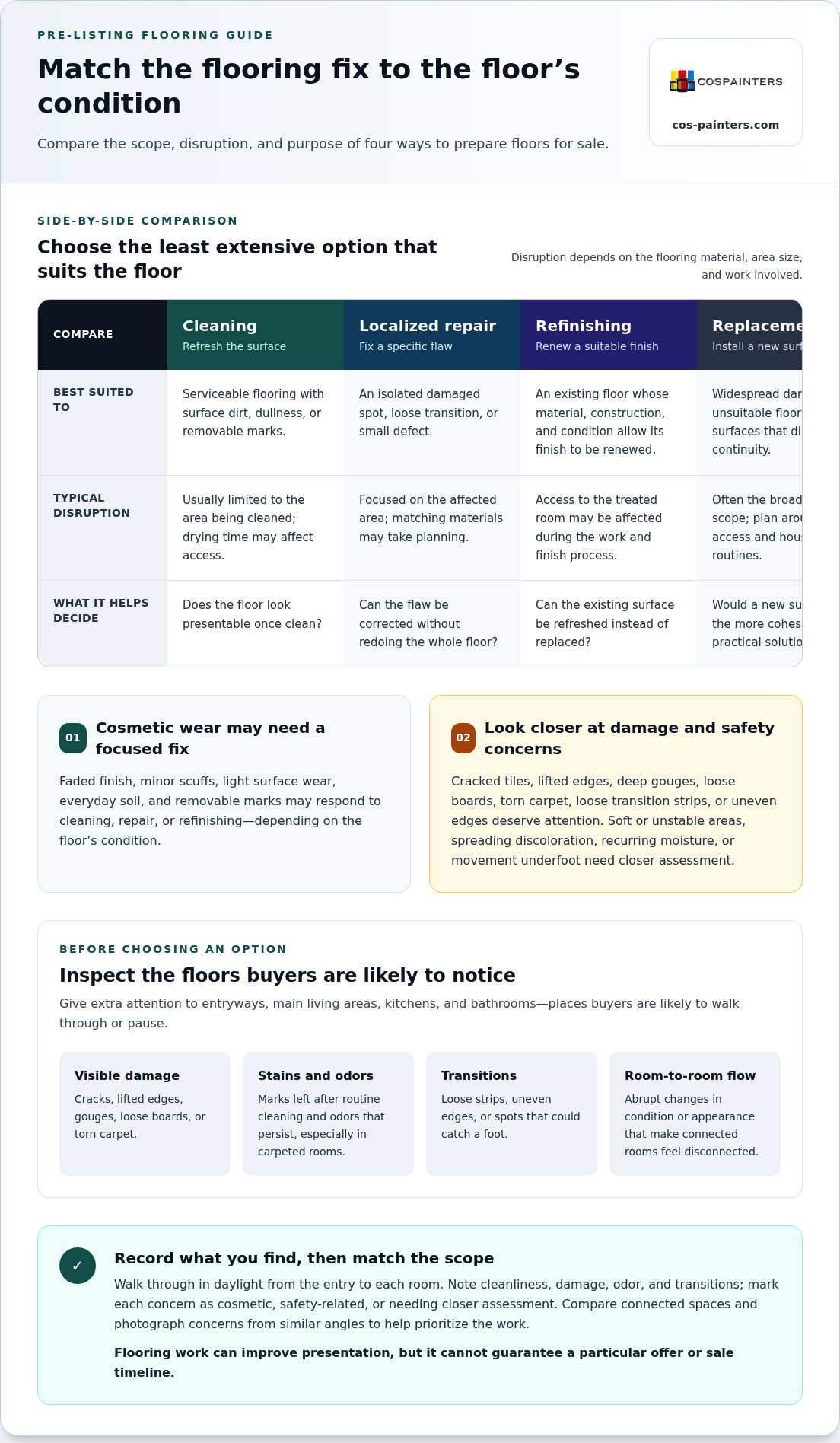
Once you’ve identified floors that need attention, match the work to their condition. A measured approach can refresh the home without turning pre-listing preparation into a larger renovation. The table compares common options. Disruption depends on the flooring material, the size of the area, and the work involved.
| Option | Best suited to | Typical disruption | What it helps you decide |
|---|---|---|---|
| Cleaning | Serviceable flooring with surface dirt, dullness, or removable marks | Usually limited to the area being cleaned; drying time may affect access | Whether the floor looks presentable once clean |
| Localized repair | An isolated damaged spot, loose transition, or small defect | Focused on the affected area, though matching materials can take planning | Whether a specific flaw can be corrected without redoing the whole floor |
| Refinishing | A suitable existing floor with a finish that can be renewed | Can affect access to the treated room during the work and finish process | Whether the existing surface can be refreshed instead of replaced |
| Replacement | Widespread damage, unsuitable flooring, or surfaces that disrupt continuity | Often the broadest scope, with room access and household routines to plan around | Whether a new surface is the more cohesive, practical solution |
When can cleaning or repair be enough?
Professional cleaning may be a sensible first step if flooring is structurally sound but looks tired from everyday soil or surface marks. For example, cleaning a stained carpet may improve its appearance if the stain responds and the surrounding material is still in good condition. A localized repair can address an isolated defect if the replacement piece or finish blends well enough with the surrounding floor. If wear is widespread or a patch would stand out, consider a broader treatment instead.
When might refinishing or replacement make more sense?
Refinishing isn’t suitable for every floor. The right approach depends on the material, how the floor was constructed, and its remaining condition. If those factors allow the surface to be renewed, refinishing may preserve the existing flooring while improving its appearance. Consider replacement if damage is widespread or mismatched surfaces interrupt the flow between connected rooms. For kitchen-specific considerations, see this kitchen floor replacement guide.
Flooring work can improve presentation, but no upgrade guarantees a particular offer or sale timeline. For a broader discussion of hardwood and resale considerations, see Opendoor’s overview of hardwood floor value. Before choosing among flooring upgrades for home sale, weigh the floor’s condition, the project scope, and how the work fits your listing plans. If replacement is the right direction, professional flooring installation can be planned around the specific rooms and surfaces in your home.
Do New Floors Help Sell a Home? Set Priorities Without Overrenovating
New flooring can give a room a cleaner, more cared-for appearance, but it doesn’t guarantee a higher offer or a faster sale. The right choice depends on the home, the floor’s condition, and the time available before listing. As Zillow’s guide to home improvement ROI illustrates, the value of an upgrade depends on the project and property. Treat flooring as a presentation decision, not a guaranteed financial return.
Start with visible wear and safety concerns. A loose transition near an entry or damaged flooring in a main living area deserves attention before a style update in a low-traffic room. Use this decision matrix to rank each concern:
- Severity: Is there a safety issue or widespread damage, or is the concern mainly cosmetic?
- Visibility: Will buyers encounter it in an entryway, main living area, kitchen, or bathroom?
- Continuity: Does the floor disrupt the visual flow between connected spaces?
- Timing: Can the work be completed and the room prepared before photography and showings?
- Fit: Does the improvement suit the home, or is it a personal style choice that may not feel cohesive?
Which rooms should sellers prioritize first?
Begin with the entry and the route buyers are likely to walk through the home. Then assess main living areas, kitchens, and bathrooms, where flooring condition is easy to see and can affect the feel of the space. In Colorado Springs, use the same practical room-by-room check: compare connected areas, such as an entry opening to a living room, and aim for visual compatibility rather than identical materials everywhere.
How can sellers avoid a costly-looking but unnecessary project?
Set a clear scope from your inspection notes. If one area has a specific problem, focus on that room or repair instead of assuming every floor needs an upgrade. Choose broadly compatible colors and finishes that work with the home’s existing features, rather than making a bold design statement just before listing. For broader ideas on coordinating home presentation, explore Colorado Springs interior improvement trends.
For flooring upgrades for home sale, prioritize condition and safety, then consider appearance and continuity. If your assessment points to replacement, professional flooring installation in Colorado Springs can be planned around the rooms and scope that make sense for your home.
A Pre-Listing Flooring Checklist: Plan the Work and Prepare Each Room
A clear sequence helps keep flooring work manageable and leaves time to prepare the home for listing. For flooring upgrades for home sale, plan around the project’s scope, the flooring material, and the dates you expect to photograph and show the home.
What should happen before flooring work begins?
Start with a written room list and a realistic schedule. Before work begins, clear furniture and belongings from affected areas, and protect nearby surfaces as appropriate. Photograph existing damage and note the rooms, surfaces, and transitions included in the project. This shared reference helps keep the planned work focused.
- Inspect and prioritize: Record which areas need attention and what work each one requires.
- Set the scope: Identify the rooms and floor details included so the project stays aligned with your listing priorities.
- Coordinate the calendar: Arrange flooring work around cleaning, painting, photography, and planned showings. Allow time for any required care or settling before rooms are photographed or used.
- Prepare the household: Plan access to essential spaces and follow the flooring material’s and installer’s instructions for acclimation, installation, and care.
For a Colorado Springs home, account for the property’s actual conditions rather than assuming one preparation plan fits every project. Follow installation guidance for the specific material, room, and transition details, including how adjoining floor heights should meet.
What belongs on the final floor walkthrough?
Once the work and cleanup are complete, inspect the floors in daylight and walk through each affected room. Look closely at entry points, edges, and places where flooring changes from one material to another.
- Check that surfaces are clean and free of installation debris.
- Look for secure transitions, visible unfinished edges, and details that need attention.
- Walk between adjoining rooms to see whether materials meet neatly and floor-height changes feel consistent.
- Note any unresolved damage or other concerns for appropriate professional attention before listing photographs.
Finish with a quick view from the doorway and along the main routes a buyer is likely to take. That perspective can reveal details you might miss while focusing on the work itself. If replacement is part of your plan, professional flooring installation in Colorado Springs can help you plan the project around its specific scope.
Choose a Sale-Ready Flooring Plan with Colorado Springs Installation Support
A practical flooring plan doesn’t begin with choosing a new material. It begins with understanding what each room needs. Inspect the floors, prioritize visible or safety-related concerns, choose the least extensive suitable improvement, then prepare the home for listing. Some rooms may only need cleaning, while a defined replacement project can address flooring that’s too damaged or inconsistent to present well.
How does professional installation fit into a pre-sale plan?
If replacement is the right choice, professional flooring installation can turn a specific decision into a clearly planned project. Define the rooms and surfaces involved, consider how the work fits alongside cleaning and listing preparation, and plan around the household’s access needs. Colorado Springs Painters provides residential flooring installation and construction in Colorado Springs, with careful workmanship and a scope tailored to the home and project.
Good planning also accounts for how new flooring meets adjacent rooms, including transitions and changes in floor height. Including these details in the project scope helps keep the work focused on the areas you’ve identified, rather than expanding into a whole-home renovation by default. Plan the installation around your listing schedule, including when rooms need to be ready for photography and showings.
What should sellers do next?
Before deciding on work, make a short room-by-room priority list. Keep it specific, with each item linked to an observed condition and a reasonable next step.
- Room: Identify where the concern is, such as the entry, kitchen, or living area.
- Issue: Note the damage, wear, transition, or appearance concern.
- Priority: Mark whether it affects safety, first impressions, or visual continuity.
- Next step: Decide whether cleaning, repair, refinishing, replacement, or no work seems appropriate.
This list helps separate necessary improvements from optional updates and gives you a clear starting point for planning. Flooring upgrades for home sale should support a clean, cohesive presentation without promising a particular offer or selling timeline. If your priority list points to replacement, professional installation can help you plan the work around the rooms and scope that fit your home.
For a considered flooring project in Colorado Springs, talk with Colorado Springs Painters about your home-improvement plans.
Make Your Floors Listing-Ready with a Focused Plan
The best flooring upgrades for home sale start with a careful look at what each room needs. Clean or repair serviceable floors, and reserve refinishing or replacement for surfaces where the condition or continuity calls for more. A targeted plan can help your home feel cared for without turning pre-listing preparation into a full renovation.
If replacement is the right step, thoughtful planning can keep the scope aligned with your rooms and listing schedule. Colorado Springs Painters is locally owned and operated in Colorado Springs, with professional flooring installation for residential and commercial properties. No upgrade can promise a particular sale price or timeline, but careful workmanship can help create a polished, cohesive presentation.
Have a room-by-room priority list ready? Plan your flooring upgrade with Colorado Springs Painters. With a clear scope and practical next steps, you can move toward listing day feeling prepared and confident.
Frequently Asked Questions
Is it worth replacing flooring before selling a house?
It can be worth replacing flooring before a sale, but the decision depends on its condition, visibility, and the project’s scope. Widespread damage or a floor that makes the home feel poorly maintained may justify replacement. Limited scuffs or isolated stains may respond to cleaning or targeted repairs instead. Prioritize entryways and main living areas, and weigh disruption against the improvement. New flooring can’t guarantee a higher sale price or faster sale.
What flooring improvements matter most when selling a home?
The most useful flooring improvements address issues buyers can readily see or that affect safe movement. Prioritize damaged, stained, unclean, or loose surfaces, along with distracting mismatches between connected rooms. The best response depends on the floor material and condition, not a universal buyer preference. Inspect entry points and main living areas first, then compare cleaning, repair, refinishing, and replacement before setting a practical project scope.
Should I install carpet or hard flooring before listing?
Neither carpet nor hard flooring is the right choice for every home. Consider the room’s use, the existing layout and floor condition, and whether the materials create a cohesive appearance from one space to the next. Avoid replacing a serviceable surface based only on assumptions about what every buyer prefers. Compare maintenance needs and transitions, then decide whether targeted work is enough or replacement is genuinely needed.
Can new flooring increase a home’s sale price?
New flooring may strengthen a home’s presentation, but it can’t promise a specific increase in sale price. Results vary with the property’s condition, location, buyer expectations, and the scope of the project. Separate necessary repairs from optional style upgrades before committing. Rather than relying on generalized return-on-investment figures, assess what buyers will see and whether the improvement is proportionate to the home and your listing plans.
Should I replace flooring in every room before selling?
No, replacing flooring in every room isn’t automatically necessary. Inspect each space and focus first on visible damage, safety concerns, and inconsistencies that distract across adjoining rooms. If a floor is clean and sound, keeping it may be the more practical choice. Compare how connected spaces look together, then define a focused scope so the work addresses real concerns instead of becoming a whole-home makeover.
How soon before listing should flooring be upgraded?
Plan flooring work far enough ahead to account for the project’s size, material instructions, and photography and showing schedule. Ideally, complete installation before listing photos, then leave appropriate time for cleanup, required care, and a final walkthrough. There isn’t one standard duration for every project. Coordinate the sequence with the rooms involved and household access needs so preparation doesn’t conflict with daily routines or scheduled showings.
What should I check on flooring before listing a home in Colorado Springs?
Before listing in Colorado Springs, check every room for visible wear, stains, odors, damaged areas, loose transitions, and changes in floor level. Note whether a problem affects safe movement and how the surfaces look between connected rooms. Walk the home in daylight, including entryways and main living spaces. For any planned project, account for the home’s actual conditions and follow the flooring material and installation guidance.


