

What if the easiest way to manage a renovation is to have one team coordinate the connected work? Juggling separate schedules, contacts, and decisions can make even a straightforward project feel complicated. The benefits of hiring a single company for renovations often come down to clearer communication and a more connected plan, especially when construction, flooring, and painting need to work together.
That approach can make it easier to understand who’s handling each phase and how one decision may affect the next. It also gives you a central point of contact for questions and project changes. Still, one company isn’t automatically the right fit for every renovation. The scope of work and how the different phases connect matter.
In this article, you’ll learn where a coordinated team can simplify planning and follow-through, what trade-offs to consider, and which projects make sense to bring together. From refreshing a bathroom to updating a commercial space, you’ll see how painting, construction, and flooring can align, and how to set expectations for a smoother renovation process in Colorado Springs.
Key Takeaways
- The benefits of hiring a single company for renovations are clearest when project phases connect and need coordinated planning.
- A primary point of contact can centralize questions, updates, and decisions without meaning every specialty belongs in one scope.
- Compare one-company and separate-contractor approaches by communication, scheduling, scope clarity, and the coordination each requires from you.
- Before work begins, list your goals, connected tasks, priorities, constraints, and preferred way to communicate.
- Construction, flooring, and painting can come together in residential or commercial improvement projects in Colorado Springs.
What Does Hiring One Company for Renovations Actually Mean?
Hiring one company for a renovation means bringing compatible parts of the project under one primary team’s coordination. That team helps connect the agreed scopes, communicate about decisions, and organize how its work fits together. It doesn’t mean every trade or specialty automatically belongs in the same project plan.
In short, a single-company approach coordinates related renovation work through one primary contact; separately managed contractors leave the owner to connect the different contacts and work plans. The distinction matters because renovations involve a sequence of decisions and activities, and each property has its own needs. The general overview of Renovation offers useful context on how renovation differs from new construction and involves work on an existing space.
For example, a homeowner refreshing a room might plan construction work alongside new flooring and interior painting. In a business, a commercial decorating refresh could be coordinated with other agreed improvements to the space. These examples show how scopes can connect, not that every project needs the same arrangement. A focused painting project may have no reason to bring unrelated renovation work into its plan.
What work can one renovation company coordinate?
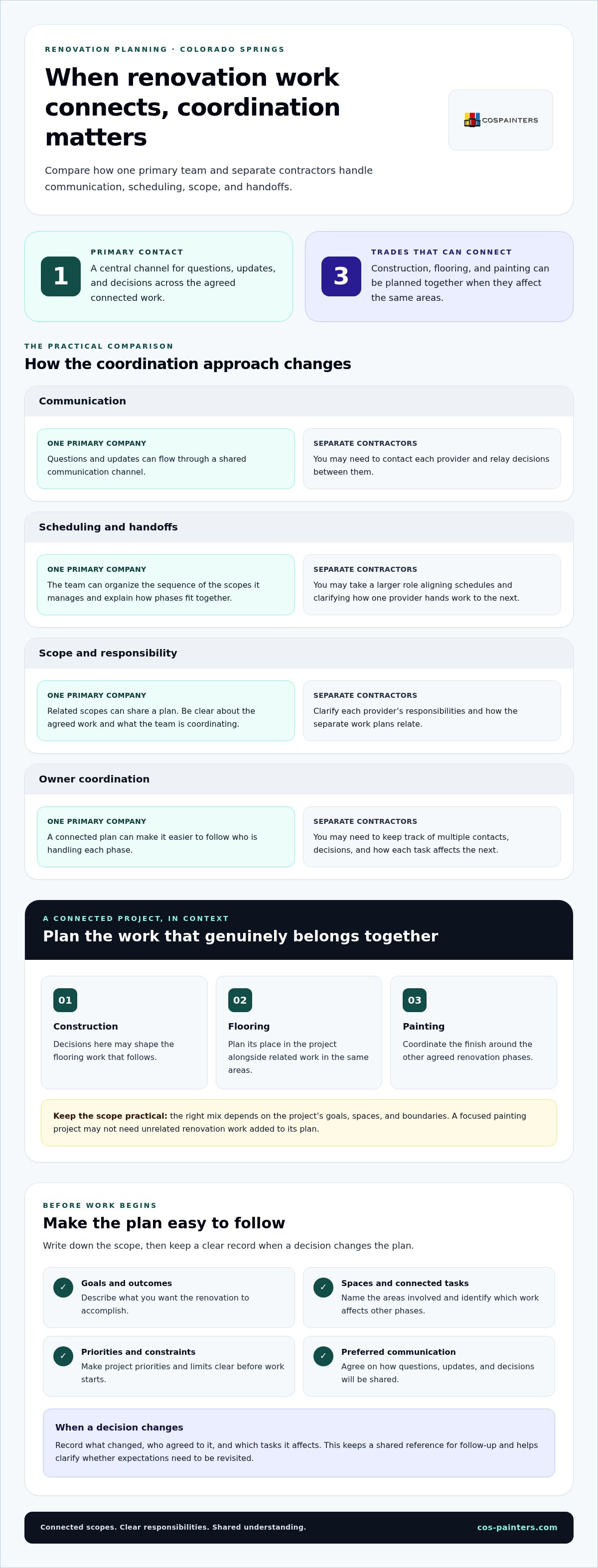
Construction, flooring, and painting can be planned as connected phases when the work affects the same areas. For instance, construction decisions may shape the flooring work that follows, while painting can be planned as the space moves toward its finished look. Coordination gives the project a shared plan for how tasks relate, rather than treating each one as an isolated request.
Commercial decorating can also align with a business-space refresh. A company might plan decorating alongside flooring or construction in the areas being improved. The appropriate mix depends on the project’s goals, spaces, and boundaries. The useful question isn’t how much work one company can place under a single label, but which parts genuinely need to be planned together.
How is one company different from hiring separate contractors?
With one primary company coordinating connected scopes, questions and updates can flow through a shared communication channel. With several independent contractors, the owner may need to contact each one separately, relay decisions, and keep track of how one party’s work relates to another’s. The difference is mainly about coordination and responsibility, not a promise that one arrangement will finish sooner.
Scheduling also works differently. A primary company can organize the sequence of the scopes it manages and communicate about how those phases fit together. With separate providers, the owner may take a larger role in aligning schedules and clarifying handoffs. Either way, the work plan and responsibilities should be clear. Coordination can reduce avoidable confusion, but it doesn’t remove every dependency or change that can arise during a renovation.
Separate specialists can still be a sensible fit when scopes are distinct, unrelated, or require separate expertise. The benefits of hiring a single company for renovations are most relevant when project phases connect and shared communication would make the plan easier to follow. Start by identifying what needs to change, then consider which pieces belong together. That helps keep the scope practical, whether you’re planning a home improvement or a commercial refresh in Colorado Springs.
How One Renovation Team Improves Communication, Scheduling, and Accountability
Renovation decisions can affect more than one part of a project. A change to the work in one area may influence what needs to happen next, so it helps to have a clear way to share questions, updates, and decisions. With one primary contact coordinating connected scopes, you have a central channel for discussing the agreed plan instead of relaying every update between separate contacts.
When renovation phases connect, centralized communication helps keep decisions, responsibilities, and next steps visible to everyone involved. That clarity is one of the practical benefits of hiring a single company for renovations, particularly when you want to understand how a change affects the work that follows.
How does one point of contact help during a renovation?
Start with a written description of the agreed work, the spaces involved, and the outcomes you’re aiming for. As questions arise, bring them to the primary contact and record decisions that change the scope, sequence, or finish details. A brief written update helps everyone refer to the same understanding later, especially if a conversation leads to a change in the plan.
For example, if you’re considering an adjustment to flooring in a room that’s also being painted, make the decision and its effect on the connected work explicit. Keep a simple record of what changed, who agreed to it, and which tasks it affects. This gives you a clear reference for follow-up and makes it easier to spot when an expectation needs to be revisited.
If you’re planning connected improvements, explore Colorado Springs renovation services as a starting point for thinking through how painting, construction, and flooring can fit your project.
Why does coordinated scheduling matter?
Related tasks often have a logical order. Construction work may need to be completed before flooring is installed, and painting can be planned around those phases to suit the project. The right sequence depends on the agreed scope and conditions at the property. A coordinated plan helps clarify what comes next and what needs to be ready before a handoff, without promising that the work will take less time.
Before work begins, align on the scope, expected sequence, and how updates will be shared. If circumstances or decisions affect the plan, communicate the change and its impact rather than relying on assumptions. Project timing depends on the work involved and conditions, so clear updates are more useful than treating any initial schedule as unchangeable.
Accountability also starts with clear ownership. The primary company should communicate about the scopes it has agreed to coordinate, provide relevant updates, and follow up on questions about that work. As the owner, you can support that clarity by keeping decisions in one written record and raising uncertainties promptly. A shared understanding doesn’t eliminate every complication, but it gives you a more organized way to address issues and keep connected renovation phases aligned.
One Renovation Company vs. Separate Contractors: How to Compare the Options
The right setup depends less on the number of tasks than on how closely those tasks relate. If flooring and painting affect the same rooms, coordinating them under one company may give you a clearer path for managing connected work. If your project involves independent scopes with distinct requirements, separate arrangements may make more sense. Compare how each approach handles communication, scheduling, scope, and your role as the owner.
| Consideration | One company | Separate contractors |
|---|---|---|
| Communication | A primary contact can centralize questions and updates about the agreed scopes. | You communicate with multiple contacts and may need to relay information between them. |
| Scheduling | Related phases can be organized around a shared plan and anticipated handoffs. | You may coordinate separate schedules and clarify how work from one provider affects another. |
| Scope clarity | Connected work can be discussed within one coordinated project plan, with responsibilities defined. | Each agreement can address its own scope, so you’ll need to keep the boundaries between scopes clear. |
| Owner coordination | You have one main communication route for the work the company coordinates. | You take a more active role in connecting contacts, updates, and decisions. |
When can one company be a practical fit?
A single company may suit a home improvement that combines flooring and painting in the same areas, or a business-space refresh that brings commercial decorating together with related work. A shared communication route can be useful if you’re balancing household routines or keeping a business operating while improvements are planned. The benefits of hiring a single company for renovations are strongest when the scopes affect one another and need a coordinated plan.
For a workplace update, consider how commercial decorating services might relate to the other agreed improvements. Define which spaces and tasks are part of the project rather than assuming every possible improvement should be bundled together.
When might separate scopes need distinct specialists?
Some renovation plans include requirements that are highly distinct or don’t overlap with one another. In that case, separate contracting arrangements may provide a better fit for the individual scopes. Decide based on how closely the work connects, what expertise each scope calls for, and how much coordination you’re prepared to manage. The goal is clear responsibility, not choosing one arrangement by default.
Use a few practical questions to guide the decision: Do the tasks affect the same spaces? Does one phase need to be planned around another? Would a shared communication route make decisions easier, or would it add little value? A homeowner updating connected rooms and a business refreshing a defined work area may answer differently. Matching the arrangement to the scope helps set realistic expectations without assuming one approach guarantees better quality, lower costs, or a particular completion date.
Plan a Colorado Springs Renovation with Clear Scope and Expectations
A clear plan gives you and the renovation team a shared starting point. Before work begins, put your goals, spaces, priorities, and open questions in writing. That preparation can help you decide which parts of the project belong together and make conversations about scope more productive, whether you’re improving a home or updating a commercial property in Colorado Springs.
Work through these steps to shape a useful project brief:
- Define the goal. Describe what you want to change and how you want the space to function when the work is complete.
- List the connected work. Note the areas and tasks involved, such as construction, flooring, and painting, and identify where one phase may affect another.
- Set priorities. Separate must-haves from optional ideas so the core scope stays clear if plans need to be refined.
- Agree on communication. Decide who will share updates, how questions and decisions will be recorded, and how often you’ll review progress.
What should a renovation project brief include?
Make the brief specific to the property. Name each room or work area, describe the desired changes, and explain how people use the space. A household may need to keep certain rooms available during work, while a business may need to consider how customers or employees use the areas being improved. Note relevant conditions you already know about and decisions that could influence the order of work.
Keep confirmed goals separate from possibilities. For example, list flooring and painting in the agreed scope, then record another improvement as an optional idea rather than treating it as a decided task. This distinction helps everyone discuss what’s included and what would require a separate decision. If exterior painting is part of your plan, use an exterior painting guide to help frame your goals for the outside of the property.
For local projects, requirements can depend on the work and property. Confirm applicable building or permit requirements with the appropriate authority, such as the Pikes Peak Regional Building Department for projects under its jurisdiction. Keep relevant information with your project notes rather than relying on assumptions.
How can owners keep changes and expectations clear?
Keep one accessible record of the agreed scope, decisions, and discussions about possible changes. When an adjustment comes up, document what’s changing, which space or task it affects, and whether it changes the agreed work sequence. A written note after a conversation gives both sides something clear to refer back to.
Choose an update rhythm that fits the project and how the property is used. A household may prefer updates around key decisions, while a business may need communication coordinated around access to work areas. The right cadence should make it easy to surface questions without adding unnecessary check-ins.
Clear preparation helps you get more from the benefits of hiring a single company for renovations because connected tasks and expectations are easier to discuss as one considered plan. Discuss your renovation goals with Colorado Springs Painters and bring your priorities, spaces, and questions into the conversation.
Bring Connected Renovation Work Together with Colorado Springs Painters
A renovation can feel more cohesive when related work is planned as one considered project. Colorado Springs Painters is locally owned and serves residential and commercial properties with painting, construction, flooring, and commercial decorating services. These services can be coordinated where they fit the project, without treating every specialty or trade as part of one all-inclusive scope.
Which connected renovation scopes can the company help bring together?
At home, a project might pair construction with flooring and interior painting in spaces that are being refreshed. A bathroom update could include bathroom painting alongside flooring work, with the agreed scope shaped around the room and the homeowner’s priorities. For businesses, commercial decorating can be considered alongside flooring or construction in the areas being improved. The value of coordinating these services is in planning their relationship clearly, not simply combining tasks for the sake of it.
If your plans include a bathroom refresh, consider how bathroom painting fits your intended updates and the way you want the finished space to feel. Identifying the room, desired changes, and any connected work gives the conversation a practical starting point. Residential and commercial projects have different needs, so organize the work around the property, its use, and the improvements that matter to you.
Colorado Springs Painters is locally owned and works on both homes and commercial spaces. That local perspective keeps the discussion grounded in your project rather than a one-size-fits-all renovation model. The benefits of hiring a single company for renovations are most relevant when the scopes connect and a shared plan can help keep expectations and responsibilities clear.
What is a simple next step for a renovation project?
Begin with a short outline. Note the spaces you want to improve, the changes you have in mind, and which priorities matter most. If you’re considering several services, identify where the work overlaps and what you see as separate or optional. You don’t need every detail settled before starting a conversation. A clear sense of your goals is enough to begin defining the scope.
A scope-focused discussion can help clarify which services are relevant, how the connected work might be organized, and what decisions still need attention. It also gives you a chance to share practical considerations, such as how a household uses a room or how a business uses the areas planned for improvement. Clear expectations start with an open exchange about what you want to accomplish.
Whether you’re planning residential updates or a commercial renovation in Colorado Springs, bring your goals and priority spaces to the conversation. Discuss your renovation project with Colorado Springs Painters and take the next step toward a plan that reflects your property and the work you have in mind.
Shape a Renovation Plan Around What Matters Most
A renovation is a chance to make your space work better for the way you live or do business. Before settling on how the work will be managed, decide what a successful result should feel like day to day. That priority can guide which improvements belong in the same plan and where a clear point of coordination could be useful.
The benefits of hiring a single company for renovations are most meaningful when the arrangement fits the work, not simply because one contact sounds convenient. Think about the decisions you want to make with confidence, the spaces that matter most, and how you’d like the project conversation to unfold. You don’t need every detail resolved to take a thoughtful first step.
Bring your ideas, questions, and priorities to a conversation with Colorado Springs Painters. Start a conversation about your renovation project and explore an approach that feels right for your space. A clear plan can help turn your ideas into a more welcoming, functional setting.
Frequently Asked Questions
What are the benefits of hiring one company for renovations?
The benefits of hiring a single company for renovations can include a more straightforward way to discuss connected work and keep project decisions in view. For example, if you’re updating several areas of a Colorado Springs home, one coordinated plan can make it easier to see how your chosen improvements relate. The arrangement is most useful when scopes overlap; it doesn’t mean every specialty needs to be included or that project complications disappear.
Is it cheaper to hire one company for a renovation?
Not necessarily. The number of companies involved alone doesn’t determine the overall cost, and pricing depends on the project’s scope and requirements. Compare written scopes carefully so you understand what work is included, what responsibilities are assigned, and how proposed changes are handled. A coordinated approach may simplify communication, but that shouldn’t be treated as a promise of savings. Focus on whether the plan clearly accounts for the work your property needs.
Can one renovation company handle painting, construction, and flooring?
Yes. Colorado Springs Painters provides painting, construction, and flooring services, which can be brought together when those scopes suit the same project. For instance, a property update might include construction in a defined area, followed by flooring and painting as part of the overall plan. The right scope depends on your goals and the work involved. Discussing the spaces and desired improvements helps clarify how these services can fit together.
How does hiring one company simplify renovation scheduling?
It can give you one main route for discussing the sequence of connected tasks and their handoffs. For instance, if a room includes construction, flooring, and painting, the team can plan how those parts relate instead of leaving you to reconcile several independent schedules. This supports clearer coordination, but it doesn’t guarantee a shorter project. Timing still depends on the agreed scope, property conditions, and decisions made during the work.
What should I include in a renovation project brief?
Include the property areas involved, what you want changed, how each space is used, and which outcomes matter most. Note known conditions, practical constraints, and any choices that could affect the work sequence. Separate confirmed priorities from optional ideas so the scope is easier to discuss. For a business, include how the areas serve employees or customers; for a home, note how household routines may shape your renovation plans.
Is hiring one company better than hiring separate contractors?
Neither approach is automatically better; choose based on how the work connects. One company can be a practical choice when several related improvements need coordinated planning. Separate providers may suit independent scopes with distinct requirements. Consider how much communication you want to manage, whether one phase affects another, and how clearly each responsibility can be defined. For a Colorado Springs property, matching the arrangement to the actual work is more useful than choosing by default.
How do I plan a renovation project in Colorado Springs?
Begin by describing your goals, property areas, preferred improvements, and priorities. Then identify connected work, note known constraints, and keep decisions in writing as the scope develops. For projects in Colorado Springs, check with the appropriate local authority about requirements that may apply to your work rather than relying on assumptions. A clear outline gives you a useful basis for discussing painting, construction, flooring, or other relevant improvements for your property.


