

The boldest ceiling color isn't always the best choice for an office. Painting exposed ceilings in modern office spaces works best when the color responds to the room’s height, natural light, furnishings, architectural details, and the way people use the space.
It’s easy to focus on the ceiling alone, but its color can change how the whole office feels. A dark finish can add definition to a bright, open room, while white or another light shade can make a dim space feel brighter and more expansive.
This guide explains how to weigh those choices, coordinate the ceiling with walls and furnishings, and decide whether to highlight beams or keep them subtle. You’ll also see how the office layout and commercial use can shape the finish, so the result feels cohesive rather than chosen in isolation.
Key Takeaways
- Use room height and natural light to guide whether a lighter ceiling or a darker, more dramatic shade will suit the space.
- Coordinate the ceiling with walls, furnishings, and artwork to create a palette that feels cohesive across an open office.
- Choose whether beams should blend in or stand out by considering how their color relates to the ceiling and the office’s architectural character.
- Factor in the floor plan, commercial use, and preparation needs when planning a finish that supports the look and function of the workplace.
1. Choosing ceiling colors based on room height and natural light
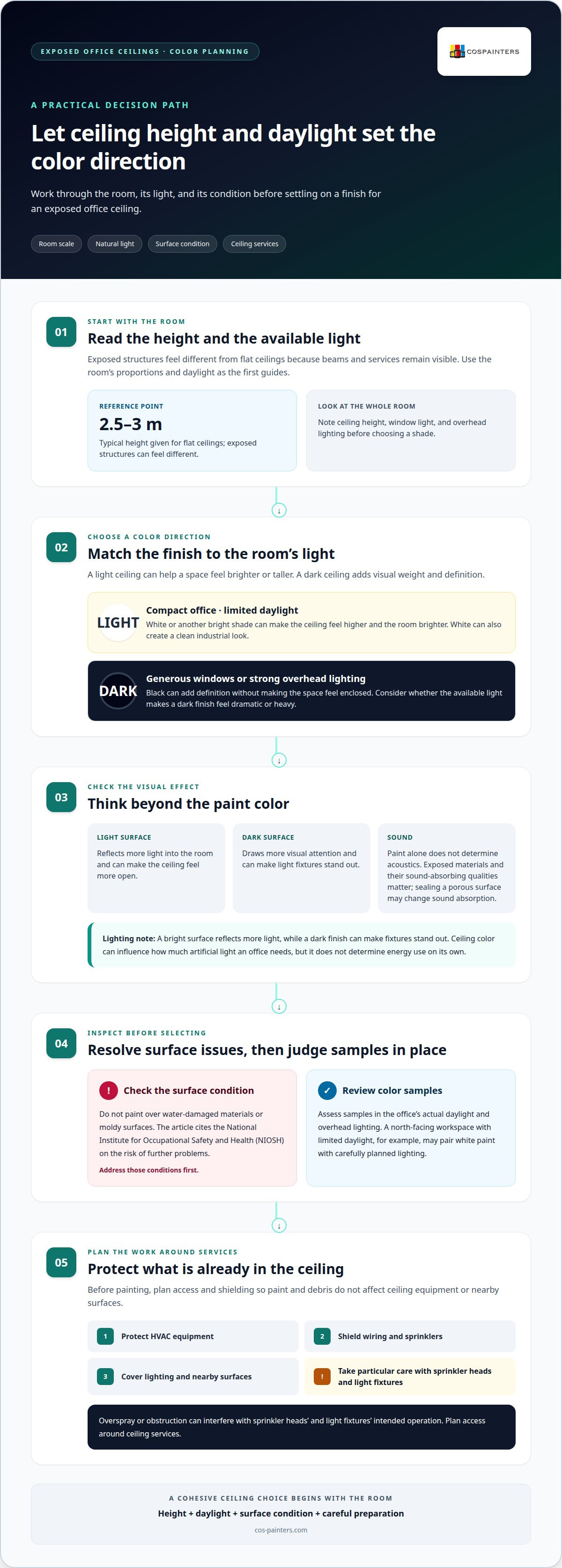
Painting exposed ceilings in modern office spaces starts with assessing ceiling height and daylight. Flat ceilings are typically 2.5 to 3 meters high, while exposed structures feel different because beams and services remain visible. A light ceiling can make a room feel brighter or taller; a dark one adds visual weight.
In a compact office with limited daylight, white or another bright shade can make the ceiling feel higher and the room brighter. White also creates a clean industrial look. In a room with generous windows or strong overhead lighting, black can add definition without making the space feel enclosed. The amount of natural light helps determine whether a darker finish feels dramatic or heavy.
Before painting, protect HVAC equipment, wiring, sprinklers, and lighting from paint and debris. Cover or mask sensitive components, shield nearby surfaces, and plan access around ceiling services. Sprinkler heads and light fixtures need particular care because overspray or obstruction can interfere with their intended operation.
Painting exposed ceilings in modern office spaces also affects how existing light and surfaces work together. A light-reflecting finish can make the ceiling feel more open, while a darker surface draws more visual attention. Paint alone does not determine acoustics: exposed materials and their sound-absorbing qualities matter. Sealing a porous surface may change how it absorbs sound.
Ceiling color can influence how much artificial light an office needs, but it doesn’t determine energy use on its own. A bright surface reflects more light into the room, while a dark finish can make fixtures stand out. For example, a north-facing workspace with limited daylight may pair white paint with carefully planned lighting.
Check the surface condition before choosing a color. According to the National Institute for Occupational Safety and Health (NIOSH), painting over water-damaged materials or moldy surfaces can cause further problems. Address those conditions first, then review color samples in the office’s actual daylight and overhead lighting.
2. Coordinating ceiling colors with walls and furnishings
Start with the office’s fixed elements: wall color, flooring, desks, chairs, curtains, and artwork. In an open-plan workspace, the exposed ceiling connects several work zones, so repeating a color from furnishings or artwork can make the palette feel intentional. For example, a muted blue ceiling can echo blue upholstery without matching every surface exactly.
To make the ceiling visually recede, paint it the same color as the walls. This can suit a large commercial space where exposed pipes and beams already draw attention. In a compact meeting room, carrying one rich color across the walls and ceiling can blur the boundary between them, making the room feel more expansive.
The palette also shapes the room’s mood. Continuing a wall color overhead can make an office feel cozy, while a ceiling accent can energize a shared area. A softer ceiling hue can create a calmer impression in a focus room. For instance, an accent drawn from a framed print adds color overhead while keeping the walls understated.
For a softer transition, tint white ceiling paint with a small amount of the wall color. The ceiling stays lighter while connecting to the surrounding surfaces. In a workspace with warm neutral walls and dark desks, a subtly warmed white can feel more coordinated than a stark contrast. Judge the balance across the whole room, not from one sample viewed alone.
Before settling on a palette, painters consider how colors meet across open areas and separate rooms. They also account for furnishings that may remain after the work, so the finished ceiling complements the space in use. For a cohesive workplace refresh, commercial decorating can bring ceiling and interior color choices together.
An open floor plan offers another way to connect overhead color to the room: ceiling paint can be coordinated with colors from furniture, curtains, or artwork. This gives the palette a point of continuity across shared areas without requiring every surface to match.
Where the ceiling is exposed, painting it the same color as the walls can help it recede visually, particularly in unfinished basements and large commercial spaces. Mixing a small amount of the wall color into white ceiling paint can also help the hues work together.
3. Highlighting beams and architectural details
Exposed beams can become a deliberate feature rather than visual clutter. Painting them a darker shade of the ceiling’s hue accentuates their lines while keeping the palette connected. For example, charcoal beams against a lighter gray ceiling create clear structure without introducing an unrelated color. The contrast draws the eye along the framework and gives the ceiling a more considered appearance.
Use contrast selectively. In a conference room, emphasizing the main beams can frame the table and define the space overhead. In an open work area with closely spaced joists, highlighting every element may look busy. Instead, emphasize the primary beams and keep smaller ceiling details close to the surrounding color.
Give architectural details a clear visual order. Decide which features should stand out, such as a prominent beam, distinctive truss, or exposed column that meets the ceiling. Then choose a related darker shade for those elements. If the room has several forms, such as beams and angled supports, a consistent accent color can make them read as part of one design.
Finish and application also affect how clearly those details appear. A neat paint line where a beam meets the ceiling preserves the shape, while uneven edges can distract from it. Professionals plan the sequence around the ceiling’s framework, protecting adjacent surfaces and keeping the selected contrast consistent across the room. In a reception area, for instance, a darker beam accent can guide attention toward the entrance without adding another wall feature.
Before work begins, consider the view from desks, meeting tables, and walkways. A feature that looks balanced from the entry may feel too prominent when viewed from directly beneath it. Reviewing the ceiling from everyday viewpoints helps keep the beams distinctive while supporting the office’s overall character.
This approach can also emphasize other architectural details. Use a darker shade of the ceiling’s hue to accentuate them without introducing another color.
4. Painting ceilings in offices and other commercial spaces
Commercial ceiling projects balance appearance, access, and the needs of an active workplace. Painting can seal ceiling materials, reduce visible dust and dirt, and help keep debris from falling. On exposed metal, paint can also help prevent rust when the surface is prepared appropriately. Planning painting exposed ceilings in modern office spaces means considering these practical needs alongside the desired finish.
Professionals choose paint and finish based on the ceiling material, appearance, and application conditions. A standard painted finish suits many commercial designs; a metallic effect requires a level 5 finish and an experienced painter to spray it. High gloss can work when the project has the budget and skilled application, while a subtle metallic hint creates a softer glow.
No single building-code or fire-safety rule applies to every office ceiling. Local regulations influence ceiling materials and design, so building use, existing materials, and applicable requirements all shape the painting plan. Paint selection does not replace that review.
Painting exposed ceilings in modern office spaces can refresh a workplace, reduce visible dust, and add color without overwhelming the room. Trade-offs include extensive preparation, disruption below the work area, and careful access planning. Very high ceilings may require scaffolding or specialty dryfall or drydrop paint. Professionals clear or cover items below to protect them from fallout.
Choose spray equipment and protective gear based on ceiling height, material, nearby fixtures, and work-area conditions. A high ceiling may call for scaffold access, while spray application requires protection for surrounding surfaces and equipment. The plan should also account for HVAC systems, wiring, sprinklers, and lighting. Common mistakes include skipping preparation, allowing overspray onto fixtures, and choosing a finish that reveals surface flaws.
Successful painting exposed ceilings in modern office spaces also depends on the condition of the substrate. Painters avoid coating water-damaged or moldy materials, which can cause further problems according to the National Institute for Occupational Safety and Health (NIOSH). For a workplace refresh, plan commercial ceiling painting with a professional.
Colorado Springs Painters
Colorado Springs Painters helps turn ceiling color decisions into a cohesive workplace plan in Colorado Springs. If you’re weighing light against dark, deciding whether beams should stand out, or coordinating the ceiling with office furnishings, professional input can align those choices with the room’s layout and use.
With commercial painting and decorating and interior painting, the team can refresh the exposed ceiling alongside the surrounding interior. This is a practical next step when you’re ready to move from color ideas to a professionally planned finish, especially when ceiling height, visible services, and preparation affect the work.
For a considered approach to your office ceiling, contact Colorado Springs Painters.
Make the Ceiling Part of Your Office Vision
A thoughtful approach to painting exposed ceilings in modern office spaces starts with the feeling you want people to experience each day. Treat the ceiling as part of the workplace’s identity, not an isolated finish. A well-planned color choice can support the atmosphere you’re building as the office grows or changes.
COS Painters & Construction can help turn that vision into a coordinated project, with interior painting, exterior painting, and commercial decorating among its services in Colorado Springs. Bring together your goals for the space, the colors you’re drawn to, and the practical needs of the workplace. That gives the project a clear starting point and helps shape an intentional finish.
Ready to take the next step? Start a conversation with Colorado Springs Painters about your office ceiling and create a workspace that feels distinctly yours.
Frequently Asked Questions
What are the steps professionals follow when painting an exposed commercial ceiling?
Professionals plan the work around the ceiling’s materials, access, and occupied areas. The process typically follows these steps:
- Inspect surfaces and identify areas needing repair or additional preparation.
- Coordinate access and protect equipment, furnishings, and nearby finishes.
- Apply the selected coating using an approach suited to the ceiling’s layout.
- Review coverage and finish, then address missed or uneven areas.
For example, a ceiling with dense pipes may need a different application plan than an open structure with clear access.
What spray equipment and safety gear are needed to paint exposed ceilings?
Choose spray equipment and protective gear based on ceiling height, material, nearby fixtures, and work-area conditions. High ceilings may require scaffolding, and surrounding surfaces and equipment need protection from overspray.


