

A large repaint doesn’t have to put an entire community on pause. Exterior painting for property management companies can be phased by building or elevation, allowing work to move forward in manageable stages while residents continue using the property. The key is to plan each phase around preparation, access, weather, and clear communication about where crews will be working.
It’s understandable to worry about blocked entrances, disrupted parking, and residents caught off guard by equipment or fresh paint. A thoughtful sequence can reduce those frustrations while maintaining a consistent finish across the property. This guide explains how to divide a large repaint into practical phases, prepare different exterior materials, coordinate shared areas, and keep colors consistent from one building to the next. You’ll also learn what residents need to know before work begins and how to communicate schedule changes clearly.
Key Takeaways
- Divide a large repaint into building or elevation phases, with preparation and work sequences planned for each surface.
- Coordinate common-area work around resident access, shared spaces, and clear notices about affected areas.
- Record paint colors and product specifications so the finish stays consistent across buildings and future phases.
- Give residents advance notice of work locations and schedule changes to help limit disruption during the project.
Professional exterior surface preparation and pressure washing
A professional preparation plan starts with a walkthrough of each building elevation. Painters identify peeling paint, dirt, mildew, rust, cracked sealant, and areas that need repair. Pressure washing removes surface grime, but the method must suit the material. Excessive pressure can damage vulnerable surfaces, so the crew adjusts its approach for each area. Surfaces must dry before primer or paint is applied. The scope should record preparation requirements and the work sequence for every elevation.
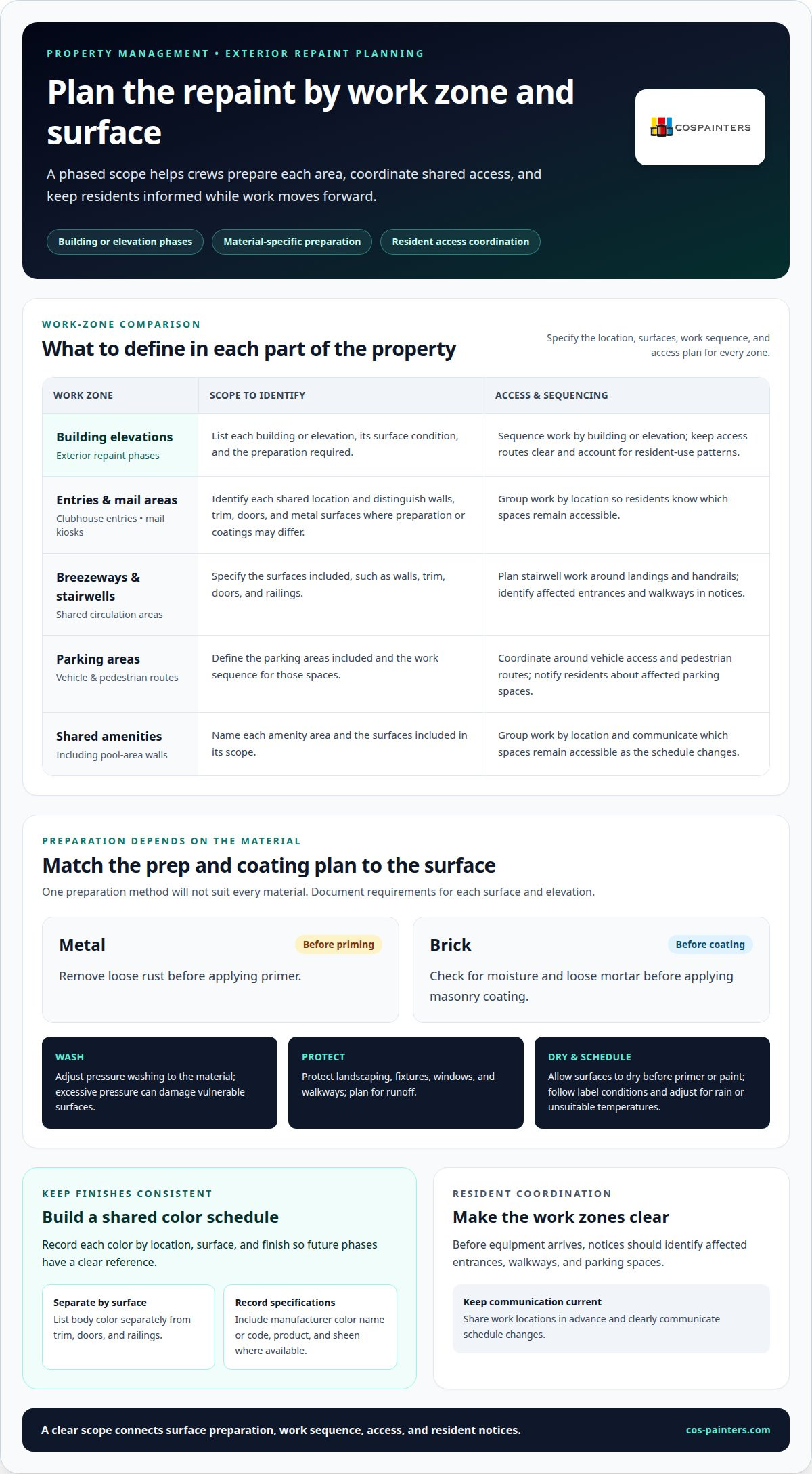
Protection is part of preparation, not an afterthought. Before washing or painting, crews protect nearby landscaping, fixtures, windows, and walkways from water and paint. They also plan for runoff and keep access routes clear. On buildings with mixed materials, one preparation method won’t suit every surface. A project plan should specify the preparation and primer required for each material. On metal, painters remove loose rust before priming. On brick, they check for moisture and loose mortar before applying masonry coating. These checks help match the coating process to the surface’s actual condition.
Permit requirements depend on the local jurisdiction and project scope. According to the U.S. Environmental Protection Agency, firms performing compensated renovations in residential buildings built before 1978 must distribute its lead-hazard pamphlet before work begins. Federal law also requires individuals to receive certain information before exterior renovation disturbs more than twenty square feet of painted surfaces in housing built before 1978.
For property managers, bid factors include building size, material mix, surface condition, access needs, preparation requirements, products, and work sequence. Rain or temperatures outside the paint label’s conditions can also affect the schedule. A scope that identifies each elevation and its preparation needs makes proposals easier to compare consistently.
For an initial meeting, bring the building list, elevation plans, known surface concerns, current color specifications, and preferred timeline. Note resident access restrictions, shared walkways, parking areas, and priority buildings. Photos of peeling paint or rust can help pinpoint areas for review. With those details, the painter can develop a phased scope and identify preparation steps before work begins.
Condo and HOA common-area and exterior painting
Condo and HOA projects benefit from treating building exteriors and shared spaces as distinct work zones. A clear scope can sequence elevations, breezeways, stairwells, and parking areas while accounting for resident access.
Common-Area and Amenity Repainting
Common-area work can include clubhouse entries, pool-area walls, mail kiosks, breezeways, stairwells, and railings. The scope should identify each area and distinguish walls, trim, doors, and metal surfaces, since preparation and coatings may differ. For parking areas, coordinate the work around vehicle access and pedestrian routes. In stairwells, plan the sequence around landings and handrails. Tenant notices should identify affected entrances, walkways, and parking spaces before equipment arrives.
For shared amenities, group work by location so residents know which spaces remain accessible. A property manager can organize the project scope around building plans, priority areas, and resident-use patterns. These details help the painting team sequence the work and communicate changes.
Paint Types for Surfaces and Climates
No single coating suits every exterior material or weather condition. Painters match the coating system to the substrate, its condition, and exposure, specifying preparation and primer for each material. For example, metal needs loose rust removed before priming, while brick should be checked for moisture and loose mortar before masonry coating is applied.
Climate affects when coatings can be applied, but it doesn’t dictate one universal paint choice. The crew follows the paint label’s conditions and adjusts the schedule when rain or temperatures fall outside them. This ties material selection and application timing to the actual surface and forecast, rather than assumptions based on another building.
Repainting and Paint Maintenance
There’s no single repaint interval for every apartment building. Timing depends on surface material, exposure, existing paint condition, and maintenance history. Regular professional inspections can reveal peeling, rust, failing sealant, or moisture concerns before they spread. Addressing these signs early can reduce the preparation and repair work needed during a later repaint.
For each inspection, record the affected elevation, visible defect, and any change since the previous review. That record helps property managers prioritize repairs and plan future phases instead of waiting for widespread coating failure. A documented condition review also gives the painting team a clearer basis for recommending preparation and sequencing. For a coordinated project plan, explore professional exterior painting.
Can you keep colors consistent across multiple properties?
Yes. A shared color schedule and documented paint specifications help keep buildings coordinated, even when projects take place in separate phases. For exterior painting for property management companies, consistency starts with recording specifications and using them as a reference for each property.
Color and Finish Specifications
Create a portfolio schedule that records each color by location, surface, and finish. For example, list the body color separately from trim, doors, and railings. Include the manufacturer’s color name or code, product, and sheen where available. This gives the painting team a clear reference when a building or elevation is repainted later.
Color consultation should account for the property’s architecture, existing materials, and surrounding buildings. Review proposed colors across the portfolio rather than approving each site in isolation. A sample on the actual surface can show how daylight and shade affect the finished appearance. Record approved choices and property-specific variations so a deliberate accent doesn’t become an accidental mismatch.
Consistent Paint Systems
Matching color alone may not produce a consistent result. The project specification should also identify the coating product and finish for each surface, such as siding, masonry, or metal. Different materials may need different preparation and primers, while the approved palette keeps their appearance coordinated. Keeping those details together helps crews follow the same plan at each property.
For phased exterior painting for property management companies, include written specifications in every scope and compare planned products with the portfolio schedule before painting begins. If a product or surface condition changes, document the adjustment and its location. This creates a useful record for later phases and maintenance planning. It also helps distinguish an intentional update from a variation in color or sheen, keeping buildings coordinated across the portfolio.
Painting occupied properties with minimal resident disruption
An occupied apartment repaint needs a work sequence that preserves access as crews move between areas. Divide the property into clear work zones, such as one building side, a breezeway, or a stairwell. For a multi-tenant exterior project, keep at least one entrance open. Marking the active zone helps residents understand where work is underway and which route remains available.
Notify tenants before equipment arrives. The notice should name the affected building side and work dates, as well as any parking spaces and walkways that will be blocked. It should also say whether windows on that side need to stay shut. For example, a notice for the east elevation can direct residents to another walkway and identify the parking spaces affected during that phase. Clear details help residents plan their routines.
Crews should work with care around occupied homes. Minimize noise and odors, keep materials and equipment organized, and treat residents respectfully. Include someone on the crew who speaks the apartment community’s language, so residents can communicate questions about access or the work area. In a breezeway or stairwell, keep the route orderly and coordinate each area’s work with the access plan.
Keep the property manager informed as the schedule progresses. If rain or temperatures outside the paint label’s conditions change the planned dates, notify the manager promptly. This gives the manager time to share revised dates with tenants and update notices. A clear communication chain prevents residents from relying on an outdated schedule. Commercial painting at an occupied property also benefits from recording completed areas and the next work zone.
Plan around resident access, specific notices, and timely schedule updates to make each phase easier to manage. Coordinate your occupied-property painting project with a clear sequence for residents and crews.
Colorado Springs Painters: Exterior Painting
Colorado Springs Painters helps property managers plan phased exterior painting across buildings and shared areas in Colorado Springs. The company’s exterior painting service supports projects that need coordinated preparation, consistent colors, and careful sequencing around resident access. For separate interior refreshes, the company also provides interior painting and commercial decorating.
Bring the building list, known surface concerns, color specifications, and preferred timeline to the initial discussion. These details help shape a project scope around the property’s priorities and resident routines. If an occupied community needs a carefully coordinated repaint, contact Colorado Springs Painters to discuss the project.
Turn Your Repaint Plan Into the Next Step
A phased plan for exterior painting for property management companies can do more than organize the work. It can give your team a practical framework for setting priorities, approving decisions, and keeping each property’s needs visible. Before moving forward, bring the plan together with the portfolio’s priorities, decision-makers, and preferred communication process. This creates a clear starting point for a project shaped around your community.
Choose the property or phase that needs attention first, then outline the outcome you want. A focused conversation can turn that goal into a project scope suited to your buildings and management priorities. Contact Colorado Springs Painters for a free, no-obligation quote and discuss the next step toward refreshing your property’s exterior.
Contact Colorado Springs Painters to discuss your repainting plans and take the next step with confidence.
Frequently Asked Questions
Can a large repaint be split into phases?
Yes. A large repaint can be divided by building or elevation, letting the property manager review completed areas before work advances. For example, the first phase might cover a selected building side, followed by an approval point before the next side begins. A written phase plan also helps align decisions about scope and colors across a multi-building property.
Can you paint while residents are living on the property?
Yes. Exterior painting can take place at an occupied property when the work sequence accounts for residents’ access and daily routines. Management can share updates through its usual resident communication channels and identify a contact for questions. For a community with varied accessibility needs, flagging those needs during planning helps keep routes and notices relevant to the people using them.
Can you provide certificates of insurance?
Colorado Springs Painters is fully insured. A certificate of insurance is a specific document, distinct from a general statement of insured status. Include the required insurance documentation in the association’s project-administration checklist alongside the approved scope and site-access arrangements. This keeps documentation visible during project coordination.
Do you work with condo associations and HOAs?
Yes. Colorado Springs Painters provides exterior painting for condo and HOA properties in Colorado Springs. Associations can organize project decisions around the buildings or shared spaces in the scope, then establish who reviews those decisions on the association’s behalf. A designated point of contact helps coordinate approvals, resident communications, and project updates through the management team.
What areas do you serve?
Colorado Springs Painters serves Colorado Springs, Colorado. For a property portfolio, identify each building’s address when planning the work, especially if sites are in different parts of the city. This grounds the project discussion in the local property locations and clarifies which buildings the proposed painting plan covers.
How should I compare exterior painting contractors and proposals?
Compare proposals against the same project scope, rather than relying only on a headline description. Look for building elevations, surface preparation, products, work sequence, and how completed areas will be reviewed. For example, a proposal that separates siding, masonry, and metal requirements is easier to assess for a mixed-material property. A clear scope also helps identify differences in planned work before approval.


