

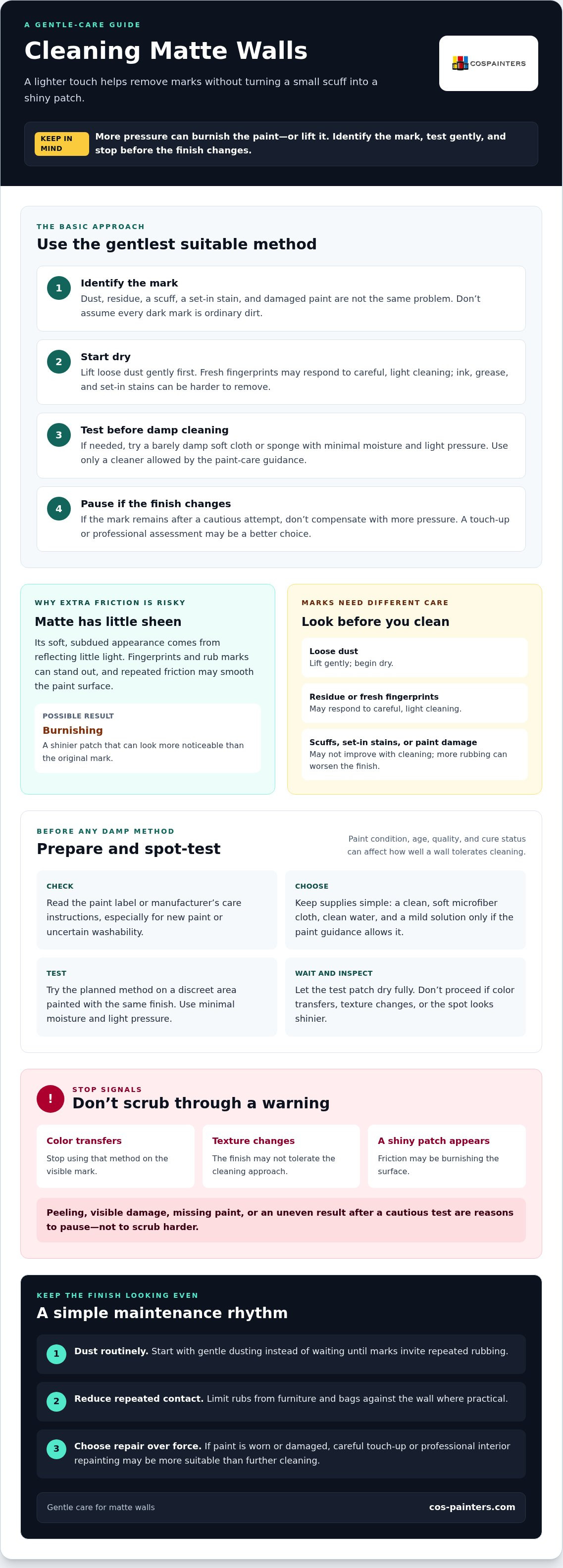
The harder you scrub a matte wall, the more likely you are to leave a shiny patch behind. A small scuff can become a bigger finish problem if too much pressure burnishes the paint or lifts it. Cleaning and maintaining matte finish walls is less about scrubbing harder and more about identifying the mark, using the gentlest suitable method, and stopping before the finish changes.
It’s understandable to want fingerprints, dust, and scuffs gone without making the wall look worse. This guide explains how to start with dry dusting, when to try a barely damp cloth or soft sponge, and why it’s wise to spot-test cleaners and follow the paint manufacturer’s care instructions. You’ll also learn why abrasive eraser sponges can be risky, how paint condition and stain type affect your approach, and when a careful touch-up or professional interior repainting may be a better choice than more scrubbing.
Key Takeaways
- Matte paint’s low-sheen surface can show contact marks, and friction may leave a shiny patch.
- Before cleaning, check the paint manufacturer’s care instructions and gather soft, suitable supplies.
- For cleaning and maintaining matte finish walls, start with dusting and use the gentlest tested method for marks that remain.
- Learn how to tell when a mark may respond to gentle cleaning and when more scrubbing risks worsening the finish.
- A simple dusting routine and fewer repeated rubs from furniture or bags can help keep walls looking even.
Why Cleaning Matte Finish Walls Takes a Lighter Touch
Matte paint has a low-sheen surface that reflects little light, giving walls a soft, subdued appearance. That finish can also make fingerprints, rub marks, and other contact marks stand out, especially where light falls across the wall. The key to cleaning and maintaining matte finish walls is to identify what you’re seeing before choosing how to treat it. A light layer of dust is different from a stain, a scuff, or paint that’s already damaged.
What makes matte paint look different from glossier finishes?
Matte surfaces scatter light rather than reflecting it sharply, which can soften the appearance of small surface irregularities. Eggshell and satin finishes generally have more sheen, so they reflect more light and may show marks differently. These are broad finish categories, not guarantees of durability or cleanability. The Paint sheen overview explains how sheen relates to a paint’s appearance and washability, but your paint’s own care instructions are the better guide for cleaning.
Friction is a particular concern on a low-sheen wall. Pressing or scrubbing repeatedly can smooth the paint surface, leaving a shinier patch called burnishing. The spot may look more noticeable than the original mark, even if the paint hasn’t come off.
Which wall marks can gentle cleaning realistically remove?
Loose dust and some fresh fingerprints may respond to careful, light cleaning. Ink, grease, and other set-in stains can be harder to remove, while a scuff may be dirt transferred onto the paint or a mark caused by abrasion. If pigment has transferred into the surface, or paint is missing, cleaning alone may not restore an even appearance. Avoid treating every dark mark as ordinary dirt.
Stain type determines the safest first step: lift loose dust gently, approach residue cautiously, and don’t scrub a mark that may be paint damage.
Results depend on more than the finish name. Paint quality, age, and condition affect how well a surface tolerates cleaning, and paint that hasn’t fully cured may be more vulnerable. Cure times vary by product, so check its manufacturer’s guidance before washing a newly painted wall. If a mark remains after a cautious attempt, pause rather than applying more pressure. A careful touch-up or professional interior painting may be a better path when the paint is worn or damaged, or cleaning leaves the area looking uneven.
Prepare Matte Finish Walls Before You Clean
A little preparation helps prevent a small cleaning job from turning into a visible patch. Before wetting the wall, check the paint label or manufacturer’s care instructions, especially if the paint is new or you’re unsure how washable it is. Guidance varies by paint, so don’t assume one cleaning method suits every matte surface. For additional practical advice, see How to Clean Flat Paint Walls.
How should you test a cleaning method first?
Choose a discreet spot painted with the same finish, such as behind a door or low behind furniture. Dampen a clean, soft cloth with your planned solution, using minimal moisture and light pressure. Let the test patch dry fully before judging it, since a wet surface can look different from a dry one. If color transfers to the cloth, the texture changes, or the spot looks shinier, stop and don’t use that method on the visible mark.
What supplies and precautions help prevent damage?
Keep your kit simple: a soft microfiber cloth, clean water, and a mild cleaning solution that the paint guidance allows. Avoid abrasive pads, stiff brushes, and eraser-type sponges unless the paint manufacturer specifically approves them. These can be too aggressive for a delicate finish. Apply liquid to the cloth rather than spraying the wall, which helps control moisture and keeps cleaner away from nearby surfaces.
Before you begin, move furniture back from the wall and protect the floor with a towel or other suitable covering. Use a cloth that’s damp, not dripping, and take extra care near seams, trim, and electrical fixtures. Don’t let water pool or run down the surface. Keep cleaning solutions out of reach of children and pets, and follow the product label to protect surrounding materials.
- Use a clean cloth. Dirt trapped in the fabric can scratch or spread residue.
- Work in a small area. This makes it easier to control moisture and notice any finish change.
- Allow the test to dry. Decide whether to proceed only after the patch has fully dried.
Thoughtful preparation is central to cleaning and maintaining matte finish walls without taking unnecessary risks. If the wall is already peeling, visibly damaged, or remains uneven after a cautious test, pause before cleaning further. A professional interior painting assessment may help you decide whether repainting is the better option. Explore professional interior painting if the finish needs more than gentle care.
How to Clean Matte Walls Without Leaving Shiny Spots
Use a gradual approach and let the wall’s response guide your next move. For cleaning and maintaining matte finish walls, the aim is to lift the mark, not polish the paint through repeated friction. Follow the paint manufacturer’s instructions, and use a stronger method only if those instructions allow it.
- Dust first. Use a dry, soft microfiber cloth or a suitable soft dusting tool to lift loose particles. Removing dust before adding moisture helps keep it from turning into a smear.
- Test your method. Try the chosen cloth and cleaning solution on a discreet, representative patch, then allow it to dry fully. Don’t proceed if the paint changes color, texture, or sheen.
- Dab, then wipe gently. For a fresh fingerprint or light mark, use a clean cloth barely dampened with water. Dab first. If needed, wipe lightly with consistent strokes rather than scrubbing back and forth over one spot.
- Use mild soap only when appropriate. If water alone doesn’t help, check the paint-maker’s guidance before trying a small amount of mild dish soap in warm water. The expert tips for how to clean flat-paint walls also reinforce a careful, step-by-step approach.
- Rinse sparingly and air-dry. If the cleaner’s directions call for rinsing, use a separate cloth lightly dampened with clean water to remove residue. Avoid soaking the wall, then let it dry naturally before checking the result.
Gentle blotting is safer than forceful scrubbing on matte paint. Pressure and repeated rubbing can burnish the finish, leaving a shiny area that catches the eye. Use a clean section of cloth as you work so you don’t spread grime, and stop if you see color transfer or a change in sheen.
What should you do about grease, crayon, or stubborn stains?
Identify the mark before choosing a cleaner. Grease, crayon, and other stubborn stains may need different treatment, and a product that works on one mark may damage another surface or the paint. Check the paint-maker’s instructions before using soap or a stain-specific cleaner, and test it first. Avoid abrasive eraser sponges and don’t reach for solvents without reliable product guidance.
If a mark spreads, paint transfers to the cloth, or the finish starts to look smoother or shinier, stop. More cleaning may make the spot more visible rather than remove it. Let the area dry and reassess. A persistent stain or damaged patch may need a touch-up instead of another round of wiping.
When Should You Stop Cleaning and Touch Up Matte Paint?
Cleaning has a limit. If a mark isn’t improving after a cautious attempt, more pressure can burnish the finish or reveal damage that was already there. As part of cleaning and maintaining matte finish walls, pause to assess the surface rather than treating every remaining mark as dirt.
How can you tell whether a mark is damage rather than dirt?
Let the wall dry, then check the spot for missing color, roughness, or exposed material beneath the paint. Compare it with the surrounding wall in both natural and indoor light, since a mark can look different as the light changes. If it remains after gentle cleaning, or cleaning makes the area look shinier or more uneven, stop. The finish is telling you that further wiping may do more harm than good.
Choose the next step based on what you see:
- Loose surface dirt: If gentle cleaning lifts it and the paint looks even once dry, no touch-up may be needed.
- Persistent stain: If the mark remains without visible paint damage, avoid repeated scrubbing. Check product guidance before considering another cleaning method.
- Scuff: A scuff may be transferred material, abrasion, or both. If the paint looks altered or the mark won’t lift gently, further cleaning may make the spot more noticeable.
- Peeling or missing paint: Stop cleaning. This is paint damage, not a surface mark, and a touch-up or broader repaint may be more appropriate.
Will a matte paint touch-up blend into the wall?
Not always. A successful blend depends on matching the original paint’s color and sheen, as well as the wall’s texture, condition, and application method. Even paint kept from the original job may look different if it has changed over time. If available, retain the paint label, color details, and any notes about how it was applied. Test a small area and let it dry fully. If the repair flashes or stands out, avoid expanding it without reassessing.
A small, clean touch-up may be manageable when the paint is in good condition and you have reliable matching details. A larger damaged area, repeated failed touch-ups, or a spot that remains conspicuous after testing may call for professional assessment. For Colorado Springs homeowners, a professional interior painting assessment can help determine whether a localized repair is realistic or repainting is the better route. No touch-up can be promised to disappear completely.
If cleaning or a test repair leaves the wall looking uneven, ask about professional interior painting as a next step.
Keep Matte Walls Looking Even With a Simple Maintenance Routine
A light, consistent routine can help prevent everyday dust and fresh marks from building up. It won’t make matte paint immune to wear, but it can reduce the need for repeated, focused cleaning, which may leave certain spots looking different from the rest of the wall.
What routine helps prevent marks from building up?
Dust the wall gently as needed with a clean microfiber cloth or another soft tool. Use light strokes so you lift debris rather than grind it into the paint. If you notice a fresh fingerprint or splash, address it promptly using the gentle method you’ve already tested and the paint maker’s care guidance. Fresh marks may be easier to identify and treat carefully than older, set-in residue.
Pay attention to where contact happens most. A chair back, backpack, or frequently handled item can rub the same section of wall again and again. Where practical, shift furniture slightly away from the paint, hang bags on a hook rather than against a wall, and leave room for items to pass without scraping. Small changes like these can reduce repeated friction in vulnerable spots.
Keep expectations realistic. Routine care helps manage loose dust and some surface marks, but it can’t reverse worn paint, a persistent stain, peeling, or an uneven finish. If a mark doesn’t respond to a cautious attempt, don’t turn maintenance into repeated scrubbing. Cleaning and maintaining matte finish walls is also about knowing when to leave the surface alone.
When is professional interior painting worth considering?
Consider professional advice if several areas remain stained or scuffed after careful cleaning, if the paint looks uneven across a broader section, or if touch-ups repeatedly stand out. Those patterns may suggest the wall needs more than routine care. Colorado Springs Painters provides interior painting for homes and businesses in Colorado Springs. A professional assessment can help you consider repainting when cleaning cannot restore an even appearance, without assuming that every mark calls for a full repaint.
If recurring marks or uneven paint are making a room feel tired, explore professional interior painting help as a practical next step.
Keep Your Matte Walls Looking Their Best
Matte paint rewards a careful touch. Start with the least aggressive method, test it in a hidden spot, and use gentle dabbing or light wiping rather than scrubbing. Dust and fresh surface marks may come away, but stains, scuffs, or missing paint won’t always respond to more cleaning. Knowing when to stop can help protect the finish from shiny patches and further damage.
A simple routine of gentle dusting, prompt attention to fresh marks, and less rubbing from furniture or bags can help walls stay more even. Still, cleaning and maintaining matte finish walls can’t reverse worn or uneven paint. If careful cleaning or a small touch-up doesn’t restore the appearance, professional interior painting may be the next step.
Colorado Springs Painters is locally owned and operated in Colorado Springs. If your walls need more than routine care, explore professional interior painting in Colorado Springs. With the right approach, you can protect the finish and enjoy a fresher-looking room.
Frequently Asked Questions
Can you clean matte finish walls without making them shiny?
Yes, matte finish walls can often be cleaned without changing their appearance, but friction can burnish paint and leave a shiny patch. For cleaning and maintaining matte finish walls, check the paint maker’s care instructions, test your method on an inconspicuous spot, and use minimal moisture with light pressure. Stop if the sheen changes or color transfers. Results vary with paint condition and mark type, so stains or worn areas may not respond.
What is the safest way to clean matte painted walls?
Start by removing loose dust, then test a barely damp, soft cloth in a hidden spot. If the test looks unchanged after drying, dab the mark or wipe lightly without repeated rubbing. Use a cleaner only if the paint maker’s instructions allow it. Avoid abrasive tools, excess water, and forceful scrubbing, which can alter matte sheen or damage the paint film.
Can you use vinegar or dish soap on matte walls?
Vinegar or dish soap may be suitable for some paints, but neither is a universal choice for matte walls. Paint formulations and care directions differ, so check the manufacturer’s guidance and test any permitted solution on a hidden area first. Choose a mild, paint-safe option only when allowed, apply a small amount to a cloth, and use it sparingly. Stop if color transfers or the surface changes.
How do you remove fingerprints from matte paint?
Fresh fingerprints often respond to a clean, soft microfiber cloth that’s barely damp. Dab the mark first, then wipe lightly if needed, keeping pressure low and using a clean part of the cloth. Let the area dry completely before deciding whether another careful attempt is appropriate. If the fingerprint remains, paint transfers, or the finish turns shiny, stop. The mark may need a touch-up rather than more cleaning.
Why does matte paint look shiny after cleaning?
Matte paint may look shiny after cleaning because friction can smooth or polish its surface, making it reflect more light. This change is often called burnishing. A wet patch can also look different temporarily, so let the wall dry fully before judging the result. If the sheen remains changed, avoid further rubbing. Repeated cleaning may make the uneven spot more noticeable or expose damage to the paint.
How often should you clean matte finish walls?
There isn’t one schedule that suits every room or paint product. Dust gently from time to time, and spot-clean fresh marks as needed, following the paint maker’s care instructions. High-contact areas, such as walls near a dining table or entryway, may need attention more often. Still, repeated wet cleaning can wear the finish, so use a light touch and clean only when there’s a reason.
When should you repaint instead of cleaning matte walls?
Consider a touch-up or repaint when paint is missing, a stain remains after a careful test, the finish looks uneven, or scrubbing has changed its sheen. Small repairs may not blend perfectly, especially if the color, sheen, or wall condition differs. For extensive damage or a visible mismatch, a professional assessment can help clarify the next step. Colorado Springs Painters provides interior painting in Colorado Springs.


