
Color may be the easiest decision in a commercial building exterior painting project. Before choosing a finish, identify which surfaces are included, what preparation or repairs may be needed, and how crews can work around tenants, customers, and staff. In Colorado Springs, strong sun exposure can contribute to fading and chalking, so surface condition and preparation deserve attention from the start.
To compare contractor proposals fairly, first make sure they describe the same work. A clear checklist helps you assess exterior surfaces, clarify repairs and access, plan around daily operations, and review the details behind each proposal, not just the total.
This guide covers what to document before a walkthrough, what to ask about preparation and coatings, and how to plan work around your business. Bring those details to a local painting contractor to help make decisions from the initial assessment through the final review.
Key Takeaways
- Look beyond color when assessing your building. Visible wear can signal the need for a closer surface review.
- For commercial building exterior painting, confirm that the proposed preparation and coating suit the building’s surfaces and exposure.
- Compare written proposals line by line, including preparation, repairs, access, coatings, and cleanup.
- Map entrances, pedestrian routes, parking, deliveries, and operating hours to plan work with fewer interruptions.
- Share your documented needs with contractors and ask about relevant commercial experience, communication, and scheduling.
Commercial Building Exterior Painting: What to Assess Before You Plan
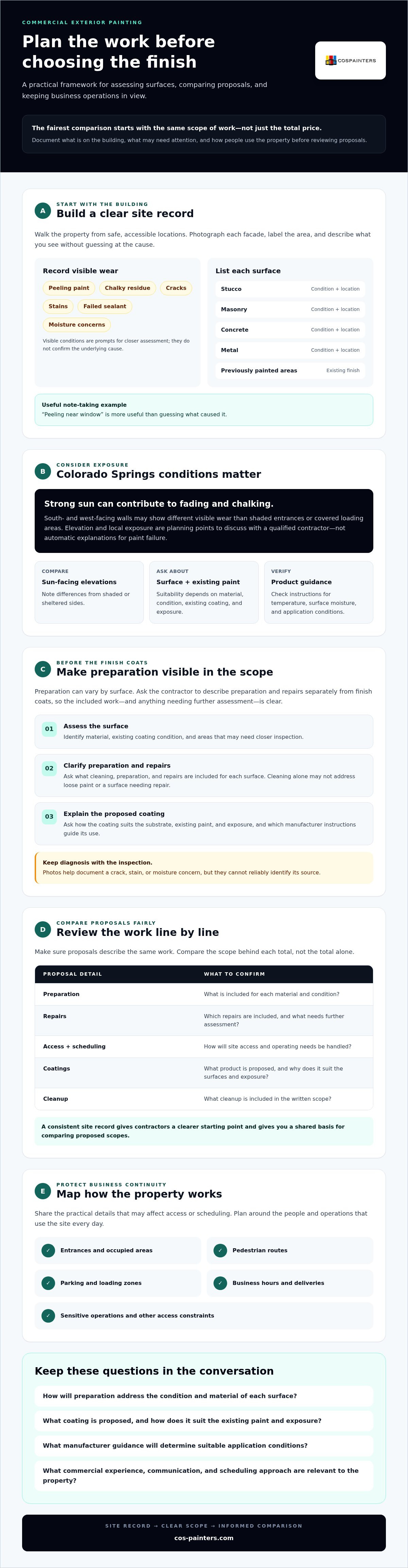
A commercial exterior project involves more than refreshing the color. The finish needs to suit the surfaces it will cover, the condition of existing coatings, and how people use the property. Start by noting visible wear, such as peeling paint, chalky residue, cracks, stains, or signs of moisture. These observations can help identify areas for closer assessment, but they don’t confirm the underlying cause.
Colorado Springs’ strong sun exposure can contribute to fading and chalking, particularly on south- and west-facing walls. Elevation and local exposure are also useful planning points to discuss with a qualified contractor, who can assess the property and verify project-specific recommendations. For background on paint materials and failure mechanisms, see Paint composition and failure.
Before requesting proposals, photograph each facade, note its materials and condition, and mark access points and known concerns. A consistent record gives contractors a clearer starting point for assessing the work.
Which building surfaces should the checklist include?
Record stucco, masonry, concrete, metal, and previously painted areas separately. Their condition and existing finishes may call for different assessment and preparation. Compare sun-exposed elevations with sheltered sides, too. A south- or west-facing wall may show different visible wear from a shaded entrance or covered loading area.
Take representative photos from a safe, accessible location. Label each image by facade or area, and describe what you see without diagnosing it. For example, write “peeling near window” rather than guessing what caused it.
What should you document before requesting proposals?
Use a location-based checklist to record visible concerns and practical site conditions. Clear notes help contractors ask focused questions and identify areas that need closer inspection.
- Mark peeling or chalking paint, visible cracks, staining, failed sealant, and known concerns with previous coatings.
- List exterior materials and the approximate location of each condition, such as “metal trim, east entrance.”
- Note occupied areas, business hours, loading zones, entrances, pedestrian routes, and sensitive operations that could affect access or scheduling.
- Flag uncertain conditions for a qualified contractor to inspect rather than assuming they belong in a particular repair scope.
This groundwork makes commercial building exterior painting easier to plan and gives you a consistent basis for comparing proposed scopes. It also brings questions forward, before color selection or scheduling takes priority.
How Preparation and Colorado Springs Conditions Affect Exterior Paint Performance
A sound finish starts before the first coat. Surface preparation may involve cleaning, assessing repairs, and readying each surface for coating. The work can differ across stucco, masonry, concrete, metal, and previously painted surfaces, so ask the contractor to describe the preparation included for each. Cleaning alone may not be enough if paint is loose or a surface needs repair.
Coating suitability depends on the substrate, the condition and type of existing paint, the building’s exposure, and the product manufacturer’s instructions. Ask how these factors inform the proposed approach. A coating suitable for one material or elevation may not be appropriate for another.
Why does surface condition matter before repainting?
Dirt and loose coatings can interfere with adhesion, while unresolved moisture concerns may affect the finished work. Ask the contractor to describe preparation and repairs separately from finish coats so you can see what is included and what may need further assessment. Photos are useful records, but they can’t reliably diagnose the source of a crack, stain, or moisture concern.
How should local climate and exposure inform planning?
Colorado Springs’ sun, elevation, and changing weather are planning considerations, not automatic explanations for paint failure. Compare sun-facing elevations with shaded or more weather-exposed sides, then ask how the contractor will assess those differences. Before work begins, verify the product-specific guidance for temperature, surface moisture, and application conditions, including the suitable application window. Don’t assume a general forecast alone establishes that conditions are right.
Use these questions to make the scope more specific:
- How will the proposed preparation address the condition and material of each surface?
- What coating is proposed, and how does it suit the existing paint and exposure?
- Which manufacturer instructions will guide temperature, moisture, and application timing?
- How will uncertain repairs or surface concerns be assessed and documented?
If spray application is proposed, clarify the work-area controls and safety approach. OSHA’s spray painting safety standard addresses covered workplaces. Ask the contractor to confirm which requirements apply to your project.
Careful planning supports a durable commercial building exterior painting project, but no fixed coating lifespan can be promised without project-specific evidence. Colorado Springs property owners can discuss their exterior painting needs with a local contractor and review the building’s condition before finalizing a scope.
How to Compare Commercial Exterior Painting Proposals Fairly
A proposal total tells only part of the story. To compare commercial building exterior painting bids fairly, line up the written scopes and check whether each contractor is pricing the same surfaces, preparation, repairs, and access needs. A lower total may reflect a narrower scope or assumptions that need clarification, rather than better value.
Use your building record as a starting point. Ask each contractor to identify included elevations and materials, excluded areas, and conditions that need further inspection. The proposal should explain preparation, specified repairs, masking, coating application, and cleanup. Ask for coating specifications suited to the surfaces in the proposed scope rather than assuming one product is appropriate throughout.
What should a clear exterior painting scope include?
Look for enough detail to understand what will happen in each area of the property. Confirm how the contractor describes surface preparation and minor repairs, and whether those tasks are included, excluded, or subject to separate approval. Also ask what happens if additional work is identified after preparation begins, including how changes will be described and approved before the work proceeds.
Which project details help compare contractors?
Check schedule assumptions, access plans, work areas, and coordination around business hours. Confirm who supplies materials and equipment, who communicates schedule changes, and how questions or scope adjustments will be handled. If a proposal describes safety measures, ask how they relate to your site and work methods. OSHA’s painting safety standard applies to specific shipyard employment contexts. Confirm which safety requirements apply to your project rather than treating it as a universal commercial-building rule.
Use this worksheet to compare the same details across proposals. Ask each contractor to complete it, or fill it in based on the written scope:
| Scope item | Contractor A | Contractor B |
|---|---|---|
| Elevations and surfaces included | [Details] | [Details] |
| Preparation and repairs | [Details] | [Details] |
| Coating specifications | [Details] | [Details] |
| Access, schedule, and work areas | [Details] | [Details] |
| Cleanup, exclusions, and assumptions | [Details] | [Details] |
| Change approval and communication contact | [Details] | [Details] |
Don’t fill gaps with assumptions. If one contractor includes an elevation and another marks it for inspection, ask both to clarify before comparing totals. Clear answers help you understand the scope, plan around operations, and choose a proposal with confidence. Colorado Springs property owners can discuss exterior painting project needs with a local painting contractor.
Commercial Exterior Painting Checklist for Access, Safety, and Business Continuity
A well-organized commercial building exterior painting project accounts for more than the surfaces being painted. It also considers how people, deliveries, and daily operations move around the property. Plan in sequence: map the work areas, identify site constraints, agree on how updates will be shared, and confirm readiness before the crew arrives.
How can a business reduce disruption during painting?
Mark customer-facing entrances, busy pedestrian routes, parking areas, delivery zones, and operations that can’t easily pause. Discuss whether the work can be divided into phases and how temporary access changes will be handled. Decide who will notify tenants, staff, and visitors, which channels to use, and how schedule changes will be communicated. Clear expectations help people plan around the work.
What should be confirmed before the crew arrives?
Review site logistics with the contractor and property representative. Confirm access arrangements, parking and staging locations, any water or power needs, and the best on-site contacts. Discuss equipment placement and how accessible pedestrian routes will be maintained. Clarify who is responsible for communicating site-specific safety arrangements, including areas that need to remain clear during active work.
Use this pre-start checklist to make responsibilities visible:
- Map the work: Mark elevations, entrances, walkways, parking, loading zones, and areas with limited access.
- Plan operations: Identify delivery windows, busy periods, tenant needs, and critical activities that could be affected.
- Agree on communication: Name the site contact and decide how updates, access changes, and delays will reach occupants.
- Confirm readiness: Review access, equipment locations, staging, and agreed site arrangements before work begins.
- Document weather contingencies: Ask how changing conditions could affect the schedule, what decisions may pause or shift work, and how rescheduling will be communicated. Confirm conditions against project and product guidance rather than relying on assumed temperature or moisture thresholds.
Put these details in writing so the property team and contractor can refer to the same plan. A check-in before work starts can also reveal changed conditions, such as a blocked loading area or a newly scheduled delivery. If you’re preparing a Colorado Springs property, discuss your exterior painting project and its site coordination needs.
Choosing a Commercial Exterior Painting Contractor in Colorado Springs
Your checklist is most useful when it guides a focused conversation with prospective contractors. Share your notes and photos, then ask how the proposed scope addresses the building’s surfaces, visible concerns, access needs, and operating schedule. Specific answers help you understand what will be painted and how the work will be planned.
What questions should you ask a painting contractor?
Ask how the contractor will assess each substrate and describe its preparation needs. Find out who will coordinate site access, protection, updates, and schedule changes, and request examples or references for comparable commercial exterior projects. Verify references and insurance directly, and confirm any project-specific requirements relevant to your property. If an answer is unclear, ask for an explanation in the written scope.
Use these prompts to keep the discussion practical:
- Which surfaces and elevations are included, and what conditions still need inspection?
- How will preparation and proposed repairs be described?
- Who is the main contact for access questions and schedule updates?
- Can you provide references for similar commercial exterior work?
- What insurance details and project requirements should we verify before work begins?
When is it time to request a project discussion?
Start a conversation if deterioration is difficult to assess, access is complicated, or the repair scope is uncertain. You don’t need every answer first. Organized information helps a contractor understand the property and identify what to review during an assessment.
Before reaching out, gather representative photographs, notes on surface materials and visible conditions, business-hour or access constraints, and preferred scheduling windows. Include busy entrances, delivery periods, or areas that need special coordination. These details can make the initial discussion more productive and help shape a proposal around how your property operates.
For commercial building exterior painting in Colorado Springs, speak with a local contractor who can review your documented needs and discuss preparation, communication, and scheduling. Colorado Springs Painters is locally owned and operated, and offers commercial painting services. Share your building checklist to start a practical project discussion.
Move Forward With a Clear Exterior Painting Plan
A successful commercial building exterior painting project starts with a careful look at the property, not just a color choice. Document surfaces and visible concerns, then confirm that the proposed preparation and coatings suit the building and its exposure. Compare written scopes line by line, including repairs, access, cleanup, scheduling, and assumptions that could affect the work.
Planning for entrances, deliveries, pedestrian routes, tenants, and day-to-day operations helps everyone understand what to expect. Bring those details into contractor conversations and ask about relevant commercial experience, communication, and how uncertain conditions will be assessed. A clear plan gives you a stronger basis for comparing proposals and preparing your property.
Colorado Springs Painters is locally owned and operated in Colorado Springs, and provides painting services for commercial properties. If you’re ready to discuss your building’s needs, contact Colorado Springs Painters about your commercial exterior painting project.
Frequently Asked Questions
How often should a commercial building be repainted?
There’s no single repainting interval that suits every commercial building. Timing depends on exterior materials, existing coatings, sun and weather exposure, maintenance history, and visible condition. Inspect each facade for fading, chalking, peeling, or other changes, and seek a closer assessment if you’re unsure what they mean. A contractor can review the surfaces and help determine whether repainting or additional preparation should be considered.
What is included in commercial exterior painting?
A commercial exterior painting scope may include cleaning, surface assessment, preparation, specified minor repairs, masking, coating application, and cleanup. The exact work depends on the building’s surfaces and condition, so ask the contractor to list the included elevations and materials and identify what is excluded or subject to further inspection. The proposal should also identify the proposed coating specifications and explain how they suit the surfaces in the project scope.
Can commercial exterior painting be done while a business is open?
It may be possible to plan painting around an operating business, but feasibility depends on the property, access, work methods, and site-specific safety arrangements. Discuss entrances, pedestrian routes, parking, loading zones, and active customer or tenant areas with the contractor. Phasing or temporary access changes may help coordinate the work, but confirm what’s practical for your building and how occupants will be notified of updates.
How do I prepare a commercial building for exterior painting?
Start by documenting each facade, exterior material, access point, and visible concern. Photograph peeling, cracks, staining, or other changes without assuming their cause. Note business hours, occupied areas, deliveries, entrances, and sensitive operations that could affect access or scheduling. Share this information with the contractor, then confirm what preparation is included, what the property team needs to coordinate, and which conditions require closer inspection.
What should I look for in a commercial exterior painting proposal?
Look for a clear written scope that identifies included surfaces and elevations, preparation, repairs, coating specifications, access, schedule assumptions, and cleanup. Check exclusions and items requiring further inspection, too. Ask how changes will be documented and approved, who supplies materials or equipment, and who will communicate schedule updates. Comparing proposals line by line helps you see whether contractors are addressing the same work, not just offering different totals.
Does Colorado Springs weather affect commercial exterior painting?
Yes. Colorado Springs’ strong sun exposure can contribute to fading and chalking, and local weather conditions can affect project planning. Exposure varies by elevation and surrounding conditions, so compare sun-facing walls with shaded or more weather-exposed areas. Ask the contractor how they’ll assess the site and follow the coating manufacturer’s guidance for temperature, moisture, and application conditions. Avoid assuming a fixed application threshold or lifespan without project-specific information.
How can I reduce disruption during commercial exterior painting?
Identify busy areas, customer entrances, delivery windows, parking needs, and operations that require special coordination. Discuss whether work can be phased and agree on temporary access changes. Choose a site contact and decide how tenants, staff, and visitors will receive schedule updates. Before work begins, confirm equipment and staging locations, pedestrian routes, and how weather-related delays or rescheduling will be communicated.
How much does commercial building exterior painting cost?
Cost depends on the project scope, including building size, surface materials and condition, preparation and repair needs, coating specifications, access, and scheduling requirements. A clear comparison starts with written proposals that describe the same areas and tasks. Ask contractors to itemize what’s included, identify exclusions, and explain assumptions that could change the scope. Colorado Springs property owners can use those details to compare proposals without relying on the headline total alone.


