

What if a peeling spot on your siding needs only a small touch-up, while fading across the wall beside it signals broader paint wear? After Colorado Springs’ winter freeze-thaw swings, moisture and strong sun can leave marks that are difficult to judge at a glance. A spring exterior paint inspection after winter helps you separate ordinary wear from signs that deserve closer attention, without assuming your whole home needs repainting.
Cracking, discoloration, and peeling can be hard to interpret. This practical checklist will help you inspect painted surfaces safely, record where changes appear, and recognize when a closer evaluation may be sensible. You’ll also learn how to sort cosmetic blemishes, isolated trouble spots, and widespread coating deterioration so you can choose a proportionate next step. In Colorado Springs, careful preparation matters when exterior painting is needed, but first, take stock of what winter left behind.
Key Takeaways
- Begin your spring exterior paint inspection after winter when surfaces are dry, and check from safe, ground-level vantage points.
- Look across siding, trim, and painted masonry for peeling, blistering, cracks, and exposed surfaces without scraping or probing.
- Compare each mark’s appearance, location, and pattern to help distinguish general weathering from possible paint failure.
- Photograph and group findings by severity so you can track changes and decide what deserves closer attention.
- Stable, isolated blemishes may call for monitoring, while widespread or recurring deterioration may benefit from a professional assessment of preparation needs.
Start Your Spring Exterior Paint Inspection in Colorado Springs
A spring inspection can show you what changed over winter, but appearance alone can’t identify every underlying cause. Peeling paint, a new crack, or a discolored patch is a clue, not a diagnosis. The goal of a spring exterior paint inspection after winter is to record what you see, where it appears, and whether it is isolated or recurring.
Choose a dry, mild day and inspect in daylight, after painted surfaces have dried. Colorado Springs sun exposure and seasonal temperature changes can affect exterior surfaces, but don’t assume a cause based only on a mark’s shape or location. Use a phone camera, brief notes, and a simple house sketch to record each finding. Label the side of the home and the feature, such as “west wall, lower trim,” so you can compare observations later.
Paint failure is a visible loss of coating integrity, such as peeling, blistering, cracking, or paint separating from the surface. These are among the common types of paint failure, but an outdoor visual check can’t establish why they occurred.
When to Inspect Painted Surfaces After Winter
A dry, mild day makes it easier to see the coating clearly. Avoid inspecting during precipitation or icy conditions, and wait until wet surfaces have dried. Dirt or dampness can make a temporary mark look like a lasting change, so one observation may not tell the full story. If you’re unsure whether a spot is changing, take another photo later from a similar angle and compare the images.
A Simple Checklist Before Walking Around the House
Before you start, list the painted areas you can view safely. Walk around the perimeter on stable ground, use consistent photo angles, and note each finding on your sketch. This keeps the inspection organized and helps prevent one noticeable blemish from distracting you from other surfaces. Keep the check visual: don’t scrape, probe, or climb a ladder.
- Siding
- Trim and painted edges
- Doors and porches
- Accessible painted masonry
Stay at ground level wherever practical. If a surface is too high or difficult to see safely, record that it needs a closer look rather than trying to reach it. Clear observations give you a sensible starting point for deciding what to monitor and what may need further assessment.
Check Colorado Springs Siding, Trim, and Painted Masonry for Winter Wear
Move around the house one surface at a time, looking for changes in the paint film rather than trying to determine their cause. On siding, note peeling, blistering, cracks, bare patches, or spots where the coating appears lifted. At trim, doors, and painted edges, look for flaking, open seams, and visible substrate. Don’t scrape or probe. This is a visual check, and disturbing the surface can make a small defect harder to assess.
A spring inspection is a useful part of seasonal upkeep. Fannie Mae’s Seasonal home maintenance checklist also prompts homeowners to look for peeling or sagging paint. For your own spring exterior paint inspection after winter, capture each concern in two ways: take a wider photo showing its location, then a closer view of the mark. Note the side of the home, the material, and the approximate size. Consistent records make it easier to tell whether a defect is isolated or spreading.
What Peeling, Blistering, and Cracking Can Tell You
Peeling, blistering, and cracking describe visible coating conditions. On their own, they don’t prove a specific moisture, surface-preparation, or material problem. One small, unchanged mark is different from similar defects appearing in several places or growing over time. Record the pattern without assigning a cause. If you see damaged material beneath the paint or an area that remains damp, note it for closer professional evaluation rather than relying on a photo to diagnose it.
How to Inspect Stucco and Other Painted Masonry
On painted stucco or masonry, watch for peeling, chalky residue, changes in finish, and cracks. Note whether a mark appears to follow an existing joint or crack, but don’t assume that means the paint or underlying material is responsible. A visual checklist can show where a closer look may be useful; it can’t confirm the condition of the material beneath the coating. For broader context on protecting local home exteriors, see this Colorado Springs exterior painting guide.
Keep the next step proportional to what you observe. A stable, isolated paint mark may need only a dated photo for comparison. Repeated peeling or exposed substrate may warrant professional attention to understand the preparation needs. If your notes point to broader coating deterioration, explore exterior painting in Colorado Springs as a possible next step.
Tell Routine Weathering from Paint Problems That Need Attention
Not every change means the coating has failed. Light, fairly even fading may be a cosmetic change to document. Peeling, bare substrate, recurring blisters, or cracks that appear to be spreading deserve closer attention. Look at the pattern: note what you see, where it occurs, and whether similar signs appear elsewhere. A visual check can’t establish the cause, reveal the full extent of hidden damage, or determine a repair specification.
| Appearance | Location | Pattern | Suggested follow-up |
|---|---|---|---|
| Light, uniform fading | Across a broad painted area | Even, without clear separation or exposed material | Photograph and monitor for changes. |
| Small discoloration or blemish | One limited spot | Isolated and stable-looking | Record the date and compare with a later photo. |
| Peeling or exposed substrate | One or more painted areas | Repeated, expanding, or present in several places | Arrange a closer assessment to understand the condition and preparation needs. |
| Recurring blisters or spreading cracks | Same area or multiple surfaces | Reappears or seems to grow over time | Document the pattern and seek professional evaluation. |
Which Signs Should You Document and Monitor?
For a small, stable-looking change, take a dated photo rather than jumping straight to a whole-home repaint. If discoloration or coating separation appears in additional locations, or a mark grows between observations, update your notes and photos. You can also record whether it’s on a shaded section or an exposed elevation. Those details describe where you saw the condition; they don’t prove what caused it.
When Is a Closer Professional Assessment Sensible?
Consider a professional assessment if peeling, bare substrate, or recurring defects appear across several painted areas. Share the locations and dated photographs so the pattern is clear and the evaluation can focus on the surfaces that concern you. Don’t use appearance alone to conclude that moisture has entered the home, that a structural issue exists, or that particular coatings are incompatible.
Repeated coating failure across multiple surfaces warrants closer assessment than one small blemish. That distinction is central to a useful spring exterior paint inspection after winter: document minor changes, watch for progression, and give widespread deterioration a more careful review.
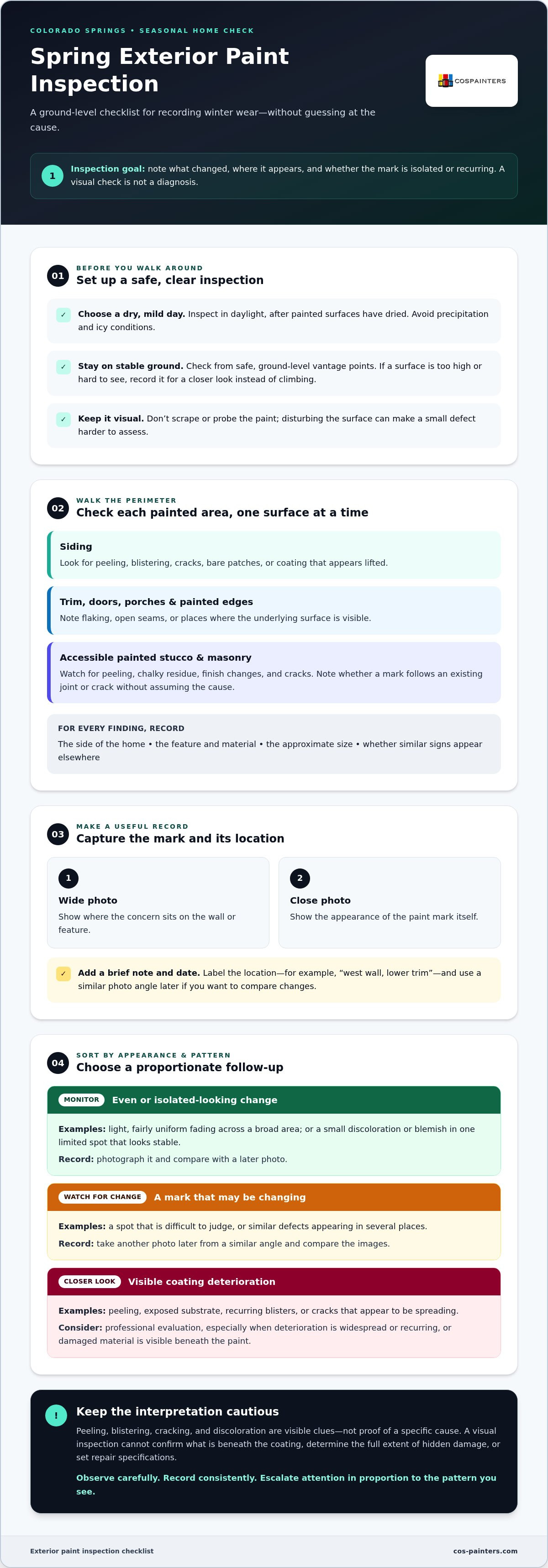
Use This Colorado Springs Spring Exterior Paint Inspection Checklist
A consistent route makes it easier to cover the whole exterior without turning a visual check into a repair project. Use these five steps to keep your spring exterior paint inspection after winter organized and separate signs that may need closer attention from changes you can monitor.
A Five-Step Walkaround for Homeowners
- Set the context. Note the date and weather conditions, and inspect only areas you can see safely from the ground.
- Walk the perimeter. Choose a direction and follow it around the home, checking siding, trim, doors, porches, and painted masonry in the same order.
- Photograph findings. Take one close view of each mark and one wider photo showing its location on the wall or feature.
- Group by severity. Separate peeling, exposed substrate, or repeated deterioration from cosmetic changes that appear small and stable. This helps you decide what merits closer attention without assuming the entire exterior needs repainting.
- Summarize, don’t repair. Record what you observed and where. Don’t scrape, sand, or pressure-wash suspected problem areas during the inspection. The goal is to document the surface as it is.
Turn Inspection Notes into a Clear Project Brief
Organize your notes by surface and location rather than labeling the entire home as having “paint damage.” For example, record a concern as “trim beside the front entry” or “painted masonry on the east side.” Include both the close-up and wider view, then note whether the same spot appears in earlier photos. These details make it easier to discuss the condition and focus attention on the areas that need review.
Keep monitoring separate from closer attention. Repeated peeling or bare areas across multiple surfaces belong in a closer-attention group. A small, unchanged discoloration can go on a monitoring list with the date of your next comparison. If you couldn’t safely see a location, note that too rather than climbing or reaching to inspect it.
When your notes point to widespread coating deterioration, a professional evaluation can help clarify preparation needs before exterior painting is planned. To discuss your findings and exterior painting with Colorado Springs Painters, bring your location notes and photos.
Choose the Right Next Step for Your Exterior Paint in Colorado Springs
Your inspection findings can help you choose a proportionate next step. A small, stable-looking blemish in one spot may call for dated photos and monitoring, not an automatic recommendation to repaint the whole house. Peeling, exposed substrate, or recurring deterioration across several surfaces presents a different picture. The extent and distribution of visible wear matter more than a single mark viewed in isolation.
Monitor, Repair, or Plan for Exterior Painting?
Think of monitoring and broader assessment as responses to different patterns, not fixed rules for every home. If a cosmetic change remains localized and looks stable in repeat photos, keep tracking it. If defects appear in multiple areas or seem to spread, a professional assessment may help clarify the coating’s condition and the preparation a painting project could require. A visual inspection alone can’t determine the cause or prescribe specific repair materials or timing.
This measured approach keeps a spring exterior paint inspection after winter useful. It helps you avoid treating every winter mark as a repainting project while still giving widespread coating deterioration the attention it deserves. Your observations can guide a conversation, but they don’t replace an evaluation of the actual surfaces.
What to Share When Discussing a Painting Project
Make your notes easy to follow. Describe each affected surface and location in plain language, such as “peeling on lower siding near the back entry” or “cracking along the trim on the south side.” Include dated photos that show both the individual defect and the larger area around it. If earlier pictures are available, note whether the same condition has changed or appeared elsewhere.
These details give the discussion a practical starting point. Colorado Springs Painters provides exterior painting with careful preparation and quality finishes, making a project assessment a sensible next step when your observations point to broader coating deterioration. The assessment can help clarify preparation needs without assuming in advance that every surface requires the same work.
Ready to discuss what you found? Explore exterior painting services in Colorado Springs.
Turn Your Inspection Notes into a Confident Next Step
A careful spring exterior paint inspection after winter helps you separate minor, stable changes from peeling, exposed surfaces, or repeated deterioration that may need a closer look. Photos and notes make it easier to track changes, while an isolated blemish doesn’t automatically mean your whole home needs repainting.
If several areas show wear, a professional assessment can help clarify the preparation your exterior may need before painting. Colorado Springs Painters is locally owned and operated, and provides exterior painting focused on careful preparation and quality finishes.
Ready to discuss your findings and explore whether a broader painting project makes sense? Explore exterior painting services in Colorado Springs. With a clear record of what you’ve seen, you can take the next step with confidence and give your home’s exterior the attention it needs.
Frequently Asked Questions
What should I look for when inspecting exterior paint after winter?
Look for peeling, blistering, cracking, bare patches, flaking trim, and areas where paint appears to separate from the surface. Also note fading, chalky residue, or changes in painted masonry and stucco. Record each mark’s location and whether it appears once or in several places. Repeated or spreading defects deserve closer attention than a small, stable blemish, though appearance alone can’t confirm the cause.
When should I inspect my house exterior after winter?
Choose a dry, mild day after the exterior surfaces have dried, and inspect in daylight so changes in the paint film are easier to see. Avoid precipitation and icy conditions. The right timing depends on safe, clear viewing conditions rather than a specific date. If a mark might be dirt or temporary discoloration, take a dated photo and compare it with another from a similar angle later.
Does peeling exterior paint mean my house needs to be repainted?
No. Peeling paint is a sign of coating separation, but one small area doesn’t automatically mean the whole house needs repainting. Note the size of the affected spot, whether bare material is visible, and whether peeling appears on other surfaces or returns in the same area. Widespread or repeated deterioration may call for a closer professional assessment to clarify the surface condition and preparation needs.
Can Colorado Springs winter weather damage exterior paint?
Yes. Colorado Springs’ seasonal temperature swings and freeze-thaw conditions can contribute to wear, while strong sun exposure can affect painted surfaces over time. South- and west-facing elevations may receive more sun, but a mark’s location doesn’t prove what caused it. During your inspection, record the wall direction and visible condition as useful context, then look for patterns across the home instead of drawing conclusions from one spot.
How do I inspect exterior paint without damaging it?
Walk around the home on stable ground and view painted surfaces in daylight. Use a phone camera, notes, and a simple sketch to record locations. Take a wider photo for context and a closer one of each concern. Don’t climb ladders or scrape, sand, probe, or pressure-wash suspected problem areas during a visual inspection. If a spot is out of safe reach, note it for a closer look rather than trying to access it.
Should I repaint my house every spring after winter?
No. A spring exterior paint inspection after winter is a way to spot and track visible changes, not a reason to repaint automatically each year. Isolated, stable-looking marks may only need dated photos and monitoring. Peeling, exposed substrate, or recurring deterioration across multiple surfaces may justify a closer evaluation. The right next step depends on the extent and pattern of wear, not simply on the arrival of spring.
What does chalky exterior paint mean?
Chalky paint has a powdery residue on its surface, which can be a visible sign of paint weathering. Note where it appears and whether it affects one small area or several surfaces. Chalkiness alone can’t establish the underlying cause or determine what work is needed. Photograph the area and monitor for other changes, such as fading, peeling, or exposed substrate, which can help clarify whether closer assessment is sensible.


