
What if the paint job that looks wrong needs a touch-up, not a complete repaint? If you’re wondering what to do if you are unhappy with a paint job, first separate a visible workmanship issue from disappointment with the color. Runs, missed spots, or uneven coverage call for a different conversation than a shade that looks unlike you expected.
It’s understandable to feel frustrated after the disruption of painting, especially when you’re unsure whether a flaw is serious enough to raise. You can address your concerns calmly and clearly without assuming the worst or agreeing to more work before you understand what’s needed.
This guide explains how to identify and document the specific areas that concern you, assess practical options, and describe what you’re seeing to your painter. A careful review can help you agree on a reasonable next step, whether that’s discussing a focused correction or reconsidering the color.
Key Takeaways
- Before repainting or raising a concern, identify whether the issue is a finish flaw, surface damage, or color disappointment.
- Record where the issue appears and what you observe so your concerns are specific and easier to discuss.
- Choose a response that fits the concern, from a targeted touch-up to a broader correction or further dispute steps.
- Use a calm, organized message to explain what you expected and start a practical conversation about next steps.
- For future painting projects, document the scope, preparation, and approved color choices to set expectations from the start.
Unhappy With a Paint Job? First Identify What Feels Wrong
Pause before repainting, confronting the painter, or making changes you can’t easily undo. First, identify what’s bothering you. Specific observations will help you decide what to do if you are unhappy with a paint job and explain your concerns clearly.
Look for application concerns such as missed areas, drips, uneven coverage, rough edges, splatter on nearby surfaces, or damage that appeared during the work. Then consider whether the issue is an unexpected color or sheen. An obvious bare patch is something you can point to; a color may simply feel different once it fills the room than it did on a sample.
- Coverage: Is the underlying color visible in a particular spot?
- Edges and drips: Are lines rough, or are there raised runs on the wall or trim?
- Damage: Is there a scrape, dent, or stain you hadn’t noticed before?
- Color or sheen: Does the finish differ from the agreed choice, or does it look different in this room?
For each concern, note its exact location and what you expected. “Thin coverage beside the bedroom window” is more useful than “the room looks bad.” Take a clear photo and note the lighting or time of day. Don’t label the finish defective based on appearance alone; the agreed scope and an in-person review of the surface matter too.
Is it a workmanship issue or color regret?
Workmanship concerns are observable details, such as a drip on a door or a missed strip near the ceiling. Color regret is a difference between how you hoped the color would feel and how it reads in your space. Write down which concern you’re noticing, where it appears, and what you expected. This distinction keeps the conversation focused without assuming the cause or outcome.
Give the finish a fair first look
Fresh paint can look different as it dries. Room lighting, surrounding colors, and changing daylight can also shape your first impression. Follow the paint product’s drying guidance, then assess the surface rather than judging the entire project while it’s still fresh. Compare it in daylight and in the evening under your usual lights. The same wall may seem warmer, cooler, brighter, or more muted as the light changes.
Once the paint has dried, compare the color with the approved selection and consider whether the room’s lighting is influencing your impression. If you’re thinking about another coat, discuss that possibility before applying more paint. Treat any test as a way to reassess, not a promise that another coat will solve the concern. Before making changes, review what was agreed for the project and avoid altering the surface if you plan to discuss a possible correction. Careful observation can help distinguish a temporary first impression from a concern that deserves follow-up.
How to Assess Paint Quality Before Requesting a Correction
A useful assessment compares what you see with what was agreed for the project. Review the written scope, selected color and finish, and documented changes alongside the painted surface. A difference between adjacent areas may be worth noting, but first consider whether those surfaces were meant to receive the same preparation, number of coats, or finish.
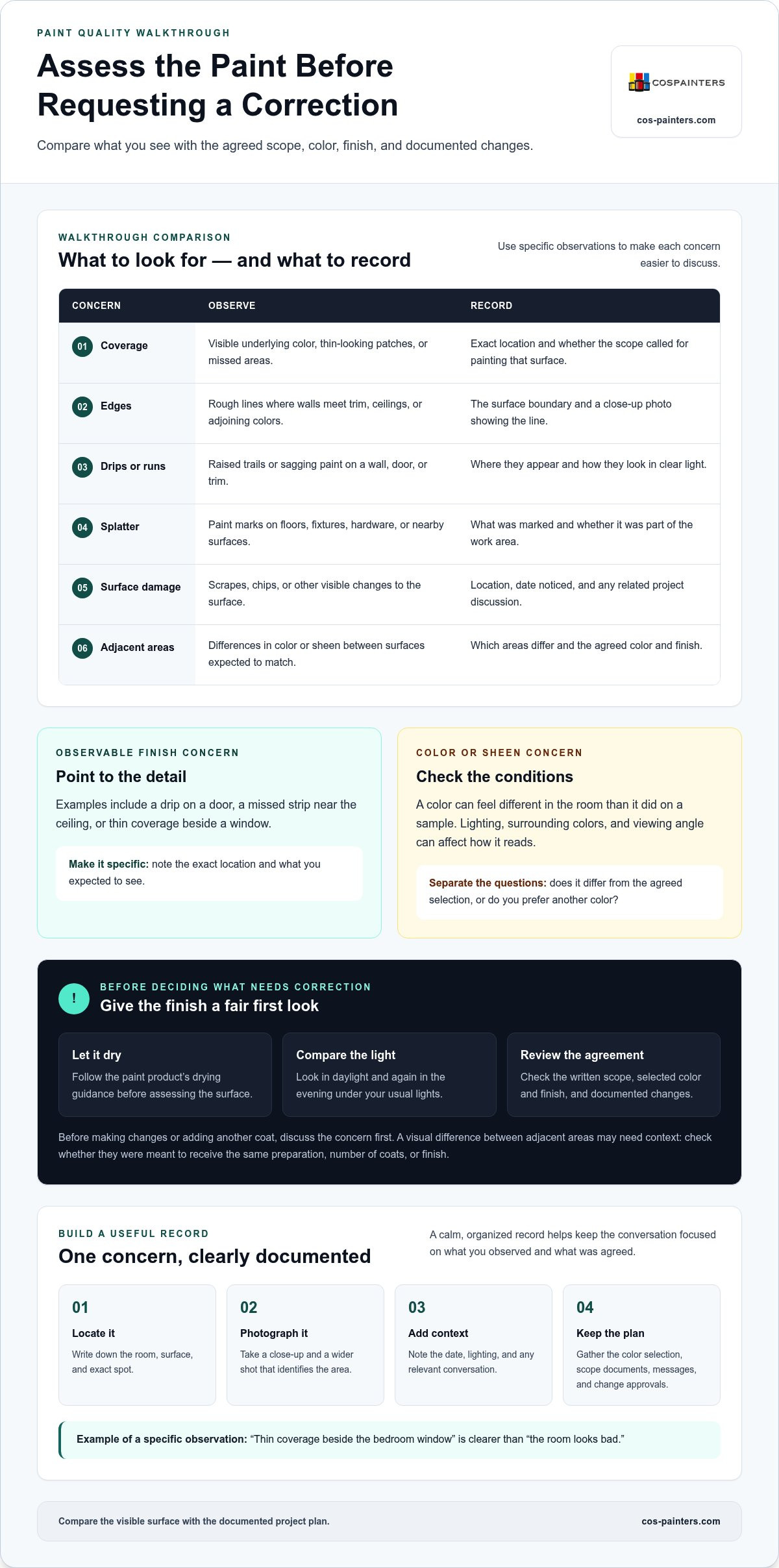
Specific observations are more useful than a general complaint because they show exactly where the concern is and what needs discussion. Use this checklist during a walkthrough:
| Concern | What to observe | What to record |
|---|---|---|
| Coverage | Visible underlying color, thin-looking patches, or missed areas | Exact location and whether the scope called for painting that surface |
| Edges | Rough lines where walls meet trim, ceilings, or adjoining colors | Surface boundary and a close-up photo showing the line |
| Drips or runs | Raised trails or sagging paint on a wall, door, or trim | Where they appear and how they look in clear light |
| Splatter | Paint marks on floors, fixtures, hardware, or nearby surfaces | What was marked and whether it was part of the work area |
| Surface damage | Scrapes, chips, or other visible changes to the surface | Location, date noticed, and any related project discussion |
| Adjacent areas | Differences in color or sheen between surfaces expected to match | Which areas differ and the agreed color and finish |
What to record during a careful walkthrough
Photograph each concern in clear light. Take a close-up to show the detail, then a wider shot that identifies the room or exterior area and surface. Note the date and any relevant conversation about that spot. Keep the original color selection, scope documents, messages, and change approvals together so you can compare the finish with the documented plan.
When appearance can be misleading
Color and sheen can look different as light changes or when viewed from another angle. A wall may look more reflective beside a matte surface, while daylight and evening lighting can shift how a color reads. Separate “I prefer a different color” from “this doesn’t appear to match the agreed selection.” Room conditions matter too: professional bathroom painting accounts for the specific expectations of that space.
If you see peeling or flaking, document it without scraping or disturbing the surface. HUD’s Identifying Deteriorated Paint resource explains how deteriorated paint may appear, including in contexts where lead-based paint is a concern. Its guidance is especially relevant to older painted surfaces; it doesn’t, by itself, determine the cause of a concern in a recent project.
This organized record gives you a clearer basis for deciding what to do if you are unhappy with a paint job. For another painting project or refresh, a clear scope and careful preparation help set expectations from the start. Explore professional painting in Colorado Springs as you plan your next space.
Compare Your Options: Touch-Up, Correction, Repaint, or Escalation
Once you’ve documented the concern, match the next step to its scope. A small, visible flaw may call for a focused discussion, while a room-wide color concern is different from a missed patch or drip. Consider the agreed work, how much of the space is affected, the disruption of further painting, and whether the color and finish are clear to everyone before work resumes.
Industry references such as the Paint Quality Standards from Master Painters Institute can provide background on paint and coating quality. For your specific project, compare your observations with its written scope and documented expectations rather than assuming a general standard settles the disagreement.
When a touch-up or agreed correction may fit
A localized concern, such as a missed spot on one section of trim or a drip on a door, may suit a focused correction discussion. Identify the exact area and describe the finish you expected. Before work begins, agree on which surfaces are included and what the follow-up should address. Put any revised scope and plan in writing, including changes to timing or access arrangements.
- Targeted touch-up: Consider discussing this for a small, isolated mark or missed spot, especially when the surrounding finish appears consistent.
- Correction of identified areas: This may suit several specific concerns, such as uneven coverage across one wall or rough edges in a defined section.
- Broader repaint: Discuss this when dissatisfaction affects a larger area or you want to change the agreed color. A color preference is not automatically a workmanship complaint, so clarify which issue you’re asking to resolve.
- Further dispute steps: If direct discussion doesn’t resolve the concern, review the contract and available consumer guidance before deciding what to do next.
When repainting or escalation may be considered
Repainting can involve moving or covering belongings and living with more disruption, so weigh the affected area against your goal. If the issue is broad color regret, first establish whether the color differs from the documented selection or simply looks different in the room. If you’re considering further dispute steps after trying to resolve the matter directly, verify current Colorado guidance for your circumstances; a general article is not legal advice.
Payment, refunds, warranties, and formal remedies depend on the agreement and the facts of the situation. Don’t assume a particular outcome or decide based only on frustration. Keep your records, describe the remedy you’re seeking, and document any agreement before additional work begins. Choosing what to do if you are unhappy with a paint job is easier when your response is proportionate to the concern. For a future refresh, professional painting in Colorado Springs can help you plan a clear scope and finish expectations from the outset.
How to Raise a Paint Job Concern Calmly and Clearly
A clear, measured message gives the painter a practical way to understand your concern and respond. Focus on what you observed, what the project documents say, and what you’d like to discuss. You don’t need to decide on a final remedy before opening the conversation.
Use this sequence to prepare:
- Organize your evidence. Select a few clear, labeled photos and note the location of each concern. Keep the images factual and easy to match to the room or surface.
- Review the scope. Check the written agreement, approved color and finish, and documented changes. This helps distinguish a concern about the completed work from a difference in expectations.
- Write clearly. State what you noticed and where, without broad accusations or assumptions about the cause.
- Discuss a remedy. Ask to review the specific areas together and talk through a practical next step. Allow a reasonable opportunity for a response without assuming how the discussion will end.
- Record what happens next. After a call or visit, send a brief summary of the areas discussed, agreed actions, and any revised scope or follow-up plan.
Write a useful first message
Lead with your goal: to discuss a specific concern and find a practical path forward. Attach a short set of photos, label each image by location, and include the relevant approved scope or color selection. Ask to review the specific areas rather than making a general accusation. A concise note is often easier to respond to than a long message that combines several issues.
Message template: “Hi [Name], I’d like to discuss a concern with the paintwork in [room or area]. I noticed [specific observation] at [exact location]. My understanding was that [relevant scope, color, or finish expectation]. I’ve attached photos and the relevant project detail. Could we discuss which areas need review and a practical next step?”
Keep the follow-up organized
After speaking, record the date, who took part, what you discussed, and any agreed actions. Save that note with messages, invoices, project documents, approved changes, and photos in one place. If the scope changes, write down which areas are included and what follow-up is expected. A brief written recap helps everyone refer to the same plan.
Keep the tone professional, even if you’re frustrated. Avoid withholding payment or making legal threats before you understand the agreement and rules that apply to your situation. If direct communication doesn’t resolve the issue, check current Colorado consumer guidance before taking formal steps. Clear records can help you explain the concern and understand your options without escalating prematurely.
If you’re planning a separate painting project, a well-defined scope and clear color choices can support a smoother conversation from the start. Plan your Colorado Springs painting project with careful preparation and expectations in view.
Choose a Confident Next Step for Your Colorado Springs Paint Project
You don’t have to solve every concern at once. First, identify whether it’s a specific finish issue, a mismatch with the agreed scope, or a change in color preference. Then use your notes and project documents to discuss a remedy that fits the concern. A proportionate next step can help you move forward without committing to a full repaint before you understand what’s involved.
Keep the practical details in view: which areas are affected, how much of the space would be disrupted, whether the selected color and finish match the project agreement, and what next step has been discussed. The answer to what to do if you are unhappy with a paint job depends on those details, not simply on how strongly the finished room differs from your expectations.
Prevent a repeat on the next painting project
Before a future project begins, put the surfaces, preparation, color, finish, and included work in writing. Approve color samples in the intended space and view them under different lighting before settling on a choice. For an exterior refresh, the Colorado Springs exterior painting guide offers context for planning the project around your home.
A clear agreement gives everyone a shared reference, from the first preparation steps to the final surfaces. If a decision changes during the work, record the updated choice and scope so expectations stay aligned.
Explore a local professional painting solution
Colorado Springs Painters provides residential and commercial painting in Colorado Springs. Careful preparation and attention to the finished surface are important parts of planning a fresh space. Whether you’re considering interior or exterior painting, a clear conversation about the project’s scope, color, and finish helps shape a more confident start.
Your current concern deserves a fair, specific discussion; a future project deserves clear expectations from day one. Those steps can restore a sense of control, whether the next move is discussing a small area or planning a different room or building.
If you’re ready to plan a painting project in Colorado Springs, explore painting services in Colorado Springs. Review local residential and commercial painting options as you consider what’s next for your space.
Move Forward With a Clear Plan for Your Space
Feeling disappointed with a finished room doesn’t mean you have to decide on a full repaint straight away. Use what you’ve observed to guide your next conversation, and give yourself room to choose a practical path that fits your expectations, schedule, and space. If you’re considering a separate painting project, clear decisions before work begins can help you feel more confident from the first discussion through the final walkthrough.
If you’re still weighing what to do if you are unhappy with a paint job, a calm, specific conversation is a constructive place to start. For a future interior or exterior project, thoughtful preparation and a shared understanding of the desired finish help set the work on a solid footing.
Colorado Springs Painters is locally owned and serves homeowners and businesses in the Colorado Springs area with painting services. If you’re ready to plan a refresh, explore painting services in Colorado Springs. Start planning your next step toward a more comfortable, polished space.
Frequently Asked Questions
Should I wait for paint to dry before deciding I dislike the color?
Yes, give the paint time to dry according to the product guidance before making a final color judgment. Wet or recently applied paint may look different from its dry appearance, and daylight, evening light, and nearby colors can also influence how it reads. Once dry, view the wall from different parts of the room under your usual lighting. If you still dislike it, distinguish a preference change from a mismatch with the approved color.
How do I document a paint job I am unhappy with?
Save original, unedited photos with the date, and take both close views and wider shots that show where each concern is. Avoid using a flash if it makes a mark or color appear unlike what you see in person. Keep the contract, color selection, messages, and approved changes together. A simple note connecting each image to a room and surface makes the record easier to follow.
Can I ask a painter to fix missed spots or drips?
Yes. Point out the exact area and ask to review it against the agreed work. For example, identify a bare patch on a named wall or a drip on a door rather than describing the whole job as unacceptable. Your agreement and the circumstances help determine what happens next, so don’t assume a particular repair is guaranteed. A focused, respectful request gives both sides a clearer starting point.
What if I dislike the paint color but the painter used the color I approved?
If the applied color matches your documented approval, disliking it once you see it across the room may be a change of preference rather than an application concern. Check the selection details and consider how the color looks in different lighting. You can discuss options for changing it, but agree separately on the scope and any additional work. Be clear that you’re asking about a color change, not alleging the wrong color was used.
Can I refuse to pay if I am unhappy with the paint job?
There isn’t a universal answer. Payment obligations can depend on your contract, what work was completed, and the circumstances of the disagreement. Before withholding payment, review the written terms and communicate your concerns in writing; an unexpected decision could complicate the dispute. For a Colorado Springs project, consult current Colorado consumer guidance or seek qualified legal advice if you’re unsure how the agreement applies to your situation.
What should I do if the new paint starts peeling?
Photograph the peeling and note where it appears and when you first noticed it. Don’t scrape, sand, or paint over the area before documenting it and raising the concern, since altering the surface may make it harder to understand what happened. Keep people and belongings clear of loose flakes. Peeling alone doesn’t establish its cause, so describe what you see and ask for the area to be reviewed.


