

A well-run painting project in Colorado Springs follows three stages: preparation, painting, and a final walkthrough. Knowing what to expect from a professional painting crew means looking beyond the fresh color to the care taken before work begins and the details checked at the end. The crew should protect the space, prepare surfaces, apply paint carefully, and leave the area orderly.
It’s natural to focus on the finished color, but the crew’s process says just as much about the work. Clear communication, thorough preparation, and consistent workmanship help keep a project organized from the first day through the final inspection.
This guide explains how to assess a painting crew, what thorough preparation and skilled application look like, and what to expect from cleanup and the final walkthrough. You’ll also see why experience and workmanship matter: a polished result depends on the people, materials, and care behind every step.
Key Takeaways
- Look for a clear project plan that explains the work, materials, and expected timing before painting begins.
- Use references to understand how a crew communicates, handles problems, and follows through on details.
- Assess preparation by checking how surfaces and belongings are protected, cleaned, repaired, and made ready for paint.
- Judge workmanship by the finished edges, coverage, and consistency, not by whether every painter uses the same technique.
- During the final walkthrough, inspect in good light, note touch-ups, and make sure the space is clean and leftover paint is labelled.
1. Final walkthrough, cleanup, and touch-ups
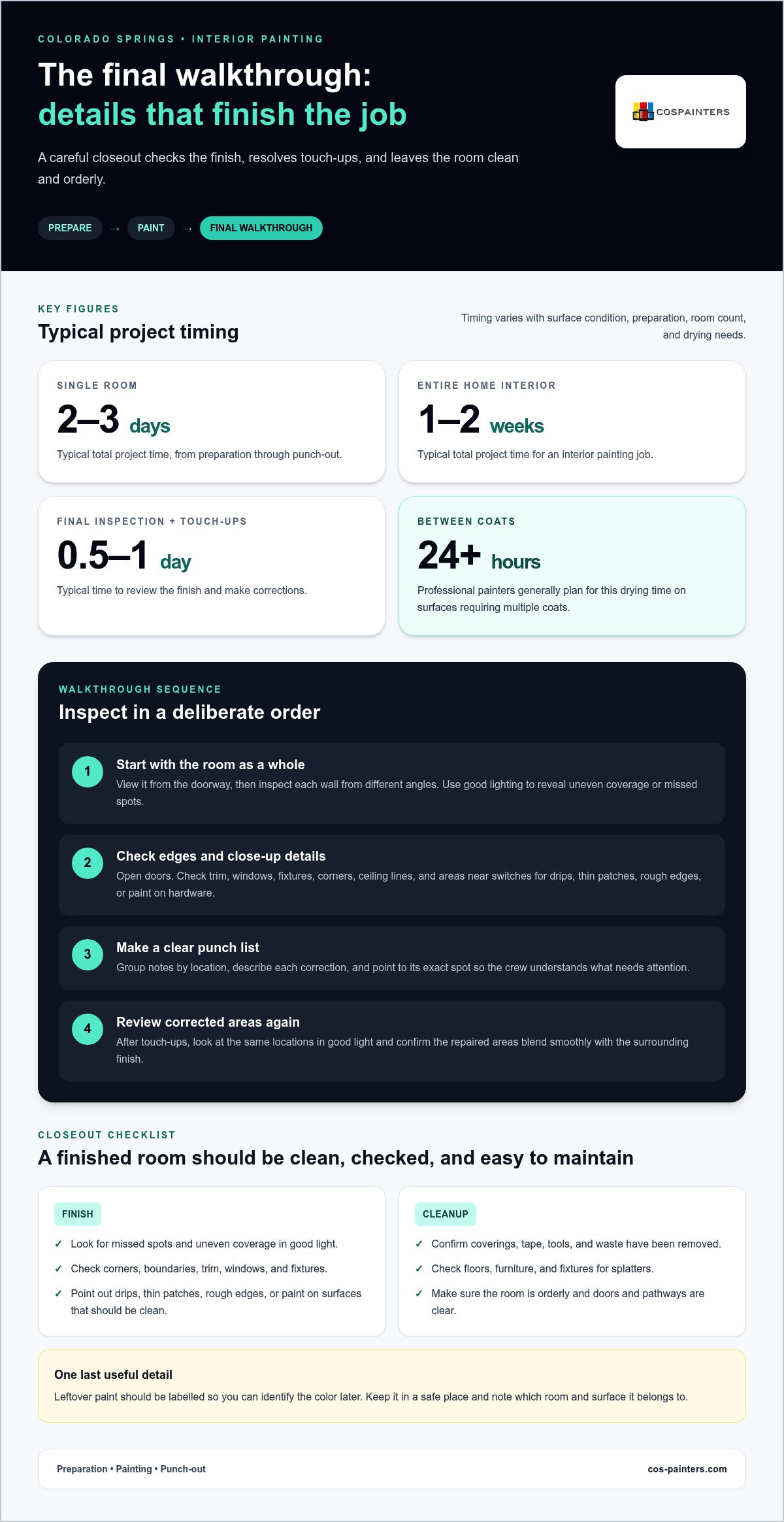
A typical interior painting job moves through three stages: preparation, painting, and punch-out. The crew protects belongings, prepares surfaces, applies paint, cleans the work area, then inspects the finish and handles touch-ups. A single room typically takes 2-3 days in total, while an entire home interior typically takes 1-2 weeks.
Before the walkthrough, the crew should remove coverings and collect tools and debris. Start by viewing the room from the doorway, then inspect each wall from different angles. Good lighting can reveal uneven coverage or missed spots that shadows hide. Open doors and check the edges near trim, windows, and fixtures.
Take your time with corners and boundaries where surfaces meet. Look for paint on hardware, floors, or trim, along with drips, thin patches, or rough edges. Check up close for small marks near switches or uneven lines along the ceiling. Describe each correction clearly and point to its exact location.
Expect the final inspection and touch-ups to typically take 0.5-1 day. The crew may need to correct small coverage issues or refine edges, then allow the repaired areas to dry. For painted surfaces requiring multiple coats, professional painters generally plan for 24 hours or more of drying time between coats. Ask the crew to distinguish a genuine missed area from a surface that still needs time to dry.
Cleanup is part of the finished job, not an afterthought. Check that floors, furniture, and fixtures are free of splatters and that coverings, tape, and waste have been removed. The room should be orderly, with doors and pathways clear. Leftover paint should be labelled so you can identify the color for future touch-ups.
Make a concise punch list during the walkthrough. Group notes by location, such as “thin coverage beside the bedroom window” or “paint on the hallway trim.” Then review each item with the crew before they leave, so the correction is understood. After touch-ups, look at those same areas again in good light and confirm that the surrounding finish blends smoothly.
A clear final review gives you and the crew a shared understanding of the completed work. Keep labelled leftover paint in a safe place and note the room and surface it belongs to. This closeout step can make later repairs easier, while a careful inspection catches small details before the project is complete.
2. Choosing and checking references for painters
References can help you understand how a painting crew works beyond what an estimate shows. Look for recent projects similar to yours, such as a bedroom repaint, bathroom, or exterior with peeling areas. Ask about communication, preparation, schedule changes, and how the crew handled corrections. Specific examples are more useful than a general comment that the work looked good.
Use a simple sequence: review the written proposal, speak with references, and compare what you learn with the project scope. A proposal should explain the work, materials, projected timeline, pricing, and payment details. Check that the paint or stain brand line, finish, and color are identified for each surface. If a reference describes different work or materials, consider how that project compares with yours.
Ask for proof of general liability, workers’ compensation, and vehicle insurance before hiring. The research guidance recommends verifying at least $1 million in general liability coverage, and workers’ compensation is required in most U.S. states. For safety, look for an organized work area, protected floors and belongings, and sensible handling of ladders and equipment. Homeowners should keep pets in a separate area during painting work hours.
How long does a professional crew need to paint a house interior or exterior? A single room typically takes 2-3 days, while an entire home interior typically takes 1-2 weeks. A home exterior typically takes 1-2 weeks, depending on weather. These timelines help set expectations, but room count, surface condition, preparation, drying time, and weather shape the actual schedule.
What paint, tools, and equipment do professional painting crews typically use? The proposal should identify the paint line, finish, and color for each surface. Crews may use brushes, rollers, trays, ladders, drop cloths, and masking materials suited to the job. A brush, for example, supports careful work around trim, while a roller covers broad wall areas efficiently. The right choice depends on the surface and specified finish.
What risks, delays, or unexpected costs can arise during a professional painting project? Weather can interrupt exterior work, while repairs or surface conditions found during preparation may affect the agreed scope and schedule. A written estimate defining included work and materials helps clarify any changes. Discuss how additional work will be documented before it begins, and keep pets away from active work areas.
As you compare proposals, use clear project details to understand what the work includes and how the schedule is planned.
Before considering the work complete, conduct a final walkthrough in good lighting. Check carefully for spots needing touch-ups, corners, edges, and areas around fixtures. Move through the painted areas at a pace that lets you examine each of these locations rather than relying on a quick overall impression. If you notice a spot that needs attention, point it out during the walkthrough so it can be considered as part of the finish review. Checking these details in good lighting helps keep the review focused on the painted surfaces and the specific places where touch-ups may be needed.
3. Consultations and assessing room conditions
A painting consultation and estimate typically take 1-2 days. During the visit, the painter assesses the rooms, discusses the desired finish, and reviews the surfaces included in the project. A written estimate should outline the work, materials, and projected timeline, giving you a practical basis for planning.
A useful site assessment looks beyond wall color. The painter considers architectural features, access, surface condition, and repairs that may affect the work. Peeling paint, small holes, rough patches, or tight spaces around trim can change the preparation required. Point out areas of concern during the walkthrough so they’re included in the project discussion.
How does a professional painting crew prepare rooms and surfaces before painting? The crew may move and protect furniture, cover floors and fixtures, fill cracks and holes, sand rough areas, and clean walls. Professional painters typically spend 1-3 days preparing surfaces, depending on the project’s condition and scope.
Furniture and belongings should be moved out of the work area or covered, while floors and fixtures are protected. For exterior work, crews may power wash surfaces and scrape away loose paint. These steps help create an orderly work zone and prepare surfaces for painting.
Before the crew arrives, clear small belongings from surfaces, remove fragile items from the room, and make a path to the work area. Keep pets in a separate area during painting. If items need special care, identify them during the consultation so the crew can plan around them.
Use the consultation to confirm which rooms and surfaces are included. Name specific details, such as bedroom walls, hallway trim, or a bathroom ceiling, rather than relying on a broad description. The estimate should also identify the paint or stain brand line, finish, and color for each surface. This helps prevent confusion between, for example, a matte wall finish and a different trim finish.
Ask how surface repairs fit into the agreed scope. Filling a small nail hole differs from addressing widespread peeling or damaged areas, and the surface condition guides the preparation. Discussing this before work starts clarifies what the crew will prepare and which areas need particular attention.
For an exterior consultation, walk around the property with the painter and point out peeling sections, trim, and hard-to-reach areas. For an interior visit, open the rooms under consideration and identify fixtures or furniture that should stay in place. These steps help the assessment reflect the actual work site, not just a general project description.
4. Painter training and workmanship standards
Training matters because careful preparation and steady application depend on sound habits. Professional painters follow the Painting & Decorating Contractors of America’s standards for craftsmanship. These standards give crews a shared reference for judging finished work, including clean edges, consistent coverage, and attention to surface details. Knowing what to expect from a professional painting crew includes looking for that care in the completed work.
A crew leader’s role is to coordinate people and keep the project moving, not to do most painting personally. Delegation is central: the leader assigns work, monitors progress, and adjusts responsibilities as needed. A strong leader treats painters with respect, takes on dirty work when it arises, and gives praise when work is done well.
Good supervision also means addressing problems promptly. If a painter leaves an uneven line where a wall meets trim, for example, the leader should explain the correction and review the result. Leaders should assess the finished work rather than insist that every painter use one particular technique. The outcome matters.
Training includes safety practices, too. Legitimate painting companies use an OSHA-based safety training program for their employees. On site, look for practical habits such as keeping work areas orderly and using painting equipment carefully. Those visible routines help protect both the crew and the home while the work progresses.
Experience can help painters recognize problems and choose sensible solutions. Painters with 25+ years in the industry have handled many projects and know how to solve problems. Still, years alone don’t show whether a crew pays attention to detail. Look at the finished surfaces: coverage should appear consistent, edges should look controlled, and paint should stay off adjacent surfaces.
Small finishing practices show whether the crew understands how materials behave. Painters should remove masking tape before the paint fully dries to help prevent peeling. Tape left until paint hardens can pull at the fresh edge when removed. Careful timing helps create a sharper boundary around trim, fixtures, and other protected areas.
A leader also needs to address repeated performance problems. One painter who cannot keep pace or follow the agreed process can undermine the rest of the team. Crew leaders should remove painters who cannot keep up, while continuing to support those who respond to clear feedback. That balance helps protect both the schedule and the finish.
A practical way to judge what to expect from a professional painting crew is to notice whether instructions are clear and corrections are followed. A steady crew leader checks work as it develops, not only at the end. This can catch missed coverage or rough edges early, while they are easier to address.
5. What services are included when hiring a professional painting crew?
A clear painting scope explains which surfaces will be prepared, coated, and finished. It should identify the paint or stain brand line, finish, and color for each surface. For example, a proposal can distinguish bedroom walls from trim instead of describing the job only as “painting the bedroom.” That detail helps everyone understand what the finished project includes.
Surface preparation is a core part of the work. Professional painters typically spend 1-3 days preparing surfaces, depending on the project’s condition and scope. Crews may clean walls, fill cracks and holes, sand rough areas, and prepare furniture, floors, and fixtures for protection. The estimate should make clear which surfaces receive preparation and how visible damage is addressed.
Paint application should also be described clearly. Professional painters typically apply two coats for coverage and durability, with 24 hours or more of drying time planned between coats. The exact paint line and finish matter because walls, trim, and other surfaces can call for different specifications. Clear product details make it easier to understand what the crew plans to apply.
Protection and cleanup belong in the project scope, too. Before painting, crews may move and protect furniture, cover floors and fixtures, and shield nearby areas from splashes. Clarify which items the crew will move and which should be cleared beforehand. A defined plan avoids confusion about a bookcase, floor lamp, or delicate objects on a shelf.
Exterior projects involve different preparation. Crews may power wash surfaces and scrape away loose paint before applying new coatings. The scope should identify the exterior areas being painted, such as siding, trim, or doors, and describe the planned preparation. This makes it easier to compare the written scope with the property walkthrough.
Read the proposal surface by surface. Check that it names the rooms or exterior areas, preparation, materials, coats, and projected timeline. “Paint walls” may leave questions about ceilings, trim, closets, or doors. Clarifying these boundaries before work starts helps you compare the plan with the result.
Finally, understand how changes are handled. If preparation reveals a condition outside the agreed scope, the crew should explain the additional work before proceeding. Widespread peeling, for example, may need more attention than a few small holes. A clearly documented scope distinguishes included tasks from changes and keeps expectations aligned through completion.
Use these scope details to plan your next painting project and set clear expectations from the start.
Distinguish what was agreed from any additional work. Ask which surfaces will be cleaned and dried before painting and how that preparation fits the scope. Professional painters clean and dry surfaces to help paint adhere properly. This complements questions about filling, sanding, protection, and coatings: each should relate to the surfaces named in the proposal. If cleaning or drying expectations are unclear, ask for an explanation before work begins. A surface-by-surface description keeps preparation and application expectations aligned and makes it easier to discuss conditions that could change the work.
Colorado Springs Painters: Interior Painting
Colorado Springs Painters provides Interior Painting for rooms that need a fresh, carefully finished look. Turn to the team when planning a room refresh or updating several interior spaces, and discuss preparation, materials, and the result you want. The company also offers Exterior Painting, Bathroom Painting, and Commercial Decorating for different spaces and property types. Clear plans help align the work with your priorities, whether you’re refreshing a bedroom or repainting a business interior. To discuss your painting project, contact Colorado Springs Painters or visit cos-painters.com.
Make Your Next Painting Project Feel Clear From the Start
Knowing what to expect from a professional painting crew gives you a stronger starting point for shaping your space. Think about how you want each room or exterior area to feel, then discuss the right scope. A calmer bedroom, a brighter bathroom, or a refreshed business interior may each call for a different plan and finish.
Colorado Springs Painters offers Interior Painting, Exterior Painting, and Commercial Decorating for homeowners and businesses. Share what you’d like to transform and which details matter most. A clear conversation can turn a general idea into a painting project with a purpose.
Contact Colorado Springs Painters today to discuss your painting plans. Take the next step toward a space that feels more like yours.
Frequently Asked Questions
How can you compare painting contractors, check references, and evaluate estimates?
Compare estimates using the same project description, then look for differences in scope, materials, and exclusions. Confirm that each proposal covers the same rooms and surfaces before comparing the work described. Ask references whether the finished project met their expectations and how the crew handled schedule changes or concerns. Specific accounts can show how communication worked after the estimate, not just how the finished space looked.
What workmanship warranties and cleanup should you expect from professional painters?
Review any workmanship warranty in writing, including its duration, covered issues, exclusions, and how to report a concern. The written terms define what is covered. For cleanup, agree on what should be removed, where furniture should be returned, and how leftover paint will be identified. This creates a practical closeout checklist and clarifies responsibilities after the crew finishes.


