

What if the most durable floor for your business isn’t the one that looks toughest in a showroom? Choosing commercial flooring installation Colorado Springs businesses can rely on means matching the material to daily traffic, the space’s needs, and the region’s dry climate and temperature swings. The right choice can look polished and perform well for years, while a poor fit may lead to avoidable wear or repairs.
It’s reasonable to want a professional result without putting business operations on hold. Commercial-grade flooring is built for different demands than many residential options, but the best fit depends on how your space is used and how the installation is planned. With 25+ years of local experience, Colorado Springs Painters brings a trusted local perspective to flooring and commercial decorating projects.
In this guide, you’ll compare practical flooring options, learn what to consider for Colorado Springs’ climate, and see how thoughtful preparation and scheduling can help minimize downtime. You’ll also find out how a durable floor can support a professional-looking space and stronger long-term value.
Key Takeaways
- Match commercial flooring to foot traffic, cleaning routines, and the demands of your space before choosing a material.
- Compare LVT and commercial carpet by considering the look, upkeep, and everyday use your business needs.
- For commercial flooring installation Colorado Springs businesses can plan with confidence, ask how project sequencing and subfloor preparation will be handled.
- Use your industry’s specific needs, from healthcare settings to industrial spaces, to narrow down suitable flooring options.
- Consider how flooring and commercial decorating can work together to create a cohesive, professional business environment.
Choosing the Right Commercial Flooring for Your Colorado Springs Business
Commercial flooring has to do more than create a polished first impression. It must handle the daily traffic, cleaning routines, and safety needs of the business using it. Compared with many residential options, commercial-grade materials are selected and constructed for sustained use, with surface layers and backing designed to resist wear in busy spaces. A material that performs well in a home may show wear sooner in a shop, office, or public corridor.
Colorado Springs businesses also contend with dry air, temperature fluctuations, tracked-in grit, and strong sunlight through storefront windows. These conditions can affect flooring differently depending on its material and installation. For a commercial flooring installation Colorado Springs project, consider the full cost of ownership: not only the initial selection, but also cleaning, upkeep, repairs, and how often the surface may need replacing. A lower upfront cost isn’t automatically the better long-term value.
Plan for safety alongside appearance. Flooring should provide suitable slip resistance for the space, especially where tracked-in moisture or routine cleaning could make surfaces slick. Accessible routes also call for attention to firm, stable surfaces and transitions. ADA requirements can depend on the space and its use, so confirm applicable accessibility needs rather than relying on a material label alone. For background on material types and subfloor considerations, see this general overview of flooring materials.
Why Commercial Grade Matters
A wear layer is the flooring’s protective top surface. In high-traffic areas, its construction and suitability for the intended use can influence how well the floor resists scuffs and everyday abrasion. Commercial flooring may also have fire-performance requirements based on the building’s use and applicable codes. Ask for product documentation and confirm which standards apply to your project. There’s no universal lifespan comparison: residential materials may wear faster under business traffic, while service life for either grade depends on use, care, and installation quality.
Local Climate Considerations: Dryness and UV
Colorado’s low humidity and temperature swings can contribute to expansion and contraction in some flooring materials. Solid hardwood, in particular, can respond to changing moisture conditions, so material acclimation and installation guidance matter. Storefronts with large windows face another challenge: repeated sun exposure may fade some finishes or colors. Ask how the selected material performs in direct light and follow its care instructions. Altitude-related dryness can change the moisture conditions that influence some adhesives’ set times, so follow the product’s specified installation and curing conditions.
With 25+ years of local experience, Colorado Springs Painters understands the value of careful material selection and craftsmanship. Matching the floor to your building’s conditions helps create a professional surface that’s better prepared for everyday business use.
Top Commercial Flooring Materials for High-Traffic Spaces
The right surface depends on more than foot traffic. A retail floor needs to support frequent cleaning and reinforce the store’s look, while an office may benefit more from quiet underfoot and a refined finish. In Colorado Springs, compare materials for their intended use and their response to sunlight and the region’s dry conditions. There’s no single best choice for every business, and a lower-maintenance option may offer better long-term value in one setting than another.
Luxury Vinyl Tile and Plank
LVT and LVP are popular for retail and hospitality because they can combine a hard-wearing surface with the appearance of wood, stone, or patterned designs. Many products resist surface moisture, but performance depends on the specific material, seams, and installation, so verify suitability for your space. Individual planks or tiles may be replaceable if the installation allows it, which can make localized repairs simpler. Regular sweeping and manufacturer-approved cleaning help manage grit and preserve the finish.
Carpet tiles offer a different balance: they soften footfall and help absorb sound, which can make open-plan offices feel calmer. They’re less suited to areas where spills and frequent wet cleaning are routine. Tiles can often be replaced individually, but their seams and texture need consistent vacuuming and prompt attention to stains.
Concrete, Laminate, Carpet, and Hardwood
Polished concrete is gaining renewed attention for its clean, contemporary appearance and durable surface. It can suit busy commercial interiors, though the existing slab’s condition and the desired finish affect whether it’s a practical choice. High-performance laminate can provide a wood-like look, but check its commercial-use rating and moisture limitations before specifying it, especially near entrances or areas exposed to spills.
For executive suites, engineered hardwood can bring warmth and a premium feel. Its layered construction differs from solid wood, but it still needs care to protect the surface from scratches, moisture, and intense sunlight. Use cleaning products recommended for the floor, and address spills promptly. Carpet tiles call for regular vacuuming and quick stain treatment; polished concrete and LVT need routine dust and debris removal to limit surface abrasion.
Food-service spaces have their own cleaning and surface considerations. Review the relevant FDA food safety standards for flooring alongside local requirements when evaluating materials for a restaurant. For a thoughtful comparison tailored to your business, explore commercial flooring services from a local team with 25+ years of experience.
Professional Installation: How We Minimize Your Business Downtime
A commercial flooring project takes more than laying material. It requires a clear plan for access, furniture, preparation, work zones, and the return to normal operations. For commercial flooring installation Colorado Springs businesses should ask how the installer will sequence the work, communicate changes, and protect nearby areas. A neighborly approach means listening to how your business runs, setting expectations clearly, and treating your staff and customers with care.
Before work begins, agree on a communication rhythm: confirm the scope and access needs, review the sequence and any decisions still outstanding, then receive progress updates and a final walkthrough. Colorado Springs Painters is locally owned and brings 25+ years of experience to its construction and flooring work. The World Floor Covering Association also offers industry resources that can help readers understand professional flooring practices.
Plan the Work in Phases
Dividing a project into sections may help keep parts of a business accessible, depending on the floor plan, material, and work involved. Ask whether evening or weekend work is available for your project, and confirm any scheduling limits before planning around those hours. Decide who will clear furniture, where items can be stored, and who will coordinate their return. A written sequence helps staff know which areas are temporarily unavailable.
Prepare the Surface Before Installation
Subfloor preparation affects how evenly flooring sits and how well it performs. Discuss what inspection, cleaning, repairs, and leveling may be needed, and how the installer will determine whether the surface is ready. In the Pikes Peak region, moisture testing can help identify conditions that may affect flooring or adhesives; dry outdoor air doesn’t guarantee a dry slab. Testing methods and acceptable readings depend on the flooring and adhesive specifications.
Manage Dust, Underlayment, and Installation Details
Ask what equipment and containment measures are planned for any surface grinding or preparation that could create dust. Dust-extracting tools and barriers may be appropriate, but the right approach depends on the site and scope, so confirm details rather than assuming a dust-free process. Underlayment should also be selected for the flooring system and space, since the appropriate layer can support comfort or sound control but won’t correct an inadequately prepared subfloor.
Before installation starts, clarify access routes, furniture responsibilities, work-zone boundaries, and how progress or unexpected conditions will be shared. That practical conversation helps everyone plan around the project and reduces surprises. A carefully prepared surface and coordinated schedule support a professional finish while helping your team understand what to expect at each stage.
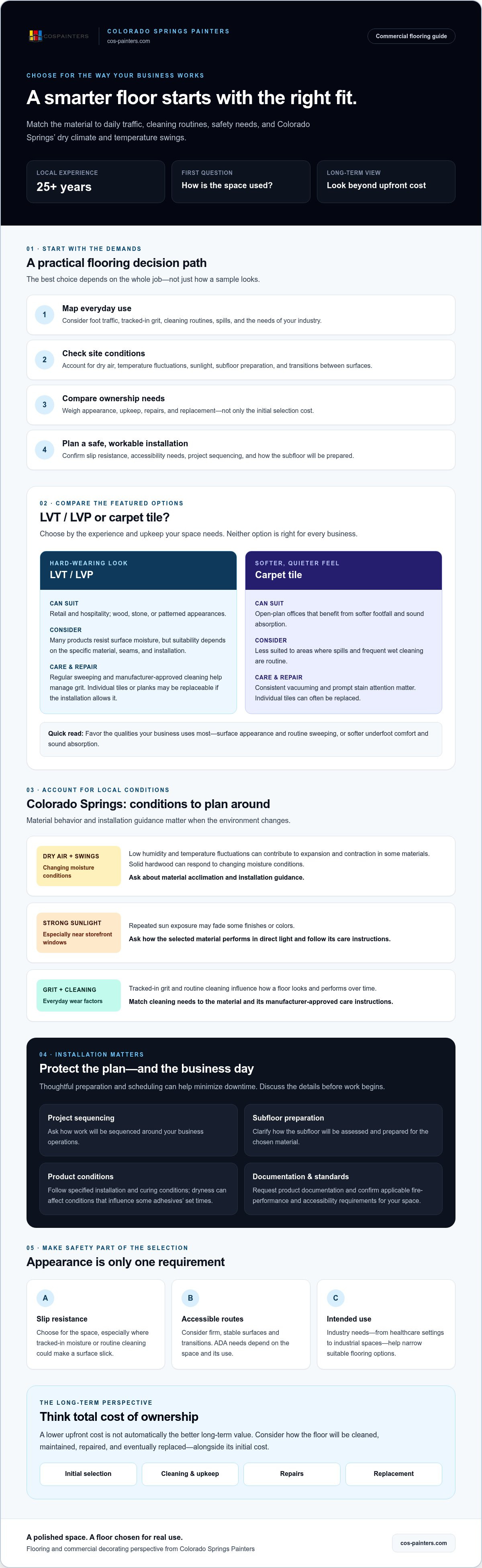
Selection Guide: Matching Flooring to Your Industry
Start with the work happening in each room, not just the overall look. Consider foot traffic, spills, cleaning products, equipment, noise, and how much disruption routine maintenance can cause. A showroom and a treatment room may both need a professional finish, but their daily demands are very different. For commercial flooring installation Colorado Springs businesses should evaluate each area individually, then balance performance, appearance, and upkeep across the whole space.
- Retail and hospitality: Prioritize a welcoming appearance, reliable performance under foot traffic, and a cleaning routine staff can maintain.
- Healthcare: Look for surfaces suited to the facility’s sanitation routines, with seams and transitions considered as part of cleaning.
- Industrial: Assess expected equipment loads, potential impacts, spills, and the cleaning methods used in the work area.
- Offices: Weigh sound, comfort, appearance, and traffic patterns, especially in shared or open-plan spaces.
Retail and Hospitality Flooring
In a shop, lobby, or dining area, flooring contributes to the first impression and should support the brand’s atmosphere. It also faces grit and moisture tracked in from outside, including winter snow and salt. Consider how the entry can be managed and how readily the floor can be cleaned without disrupting daily use. Pairing a suitable floor with coordinated commercial decorating can create a welcoming, cohesive setting.
Medical and Industrial Needs
Clinics should assess whether a surface and its installation details suit the facility’s hygiene practices, including how staff sanitize floors and manage spills. For industrial spaces, focus on the demands of equipment, work processes, and cleaning routines rather than selecting a finish based on appearance alone. In both settings, confirm material suitability with the facility team and follow the manufacturer’s maintenance guidance.
Offices, Comfort, and Maintenance
For offices, consider how the floor affects sound and comfort for employees who spend long periods standing or moving between work areas. Flooring alone can’t address every ergonomic concern, so account for workstations and task needs too. Warm, natural-looking finishes can complement contemporary interiors; coordinate the surface with wall colors and other decorating choices. Set a maintenance schedule based on traffic, entry conditions, and product care instructions, then adjust it as use changes.
Colorado Springs Painters brings local flooring and commercial decorating experience to business projects. Explore commercial flooring options and consider how the right surface can support your space’s daily needs and overall look.
Expert Commercial Flooring Services by Colorado Springs Painters
A commercial floor shapes how a business looks and works every day. Colorado Springs Painters is locally owned and brings 25+ years of experience to flooring, construction, and professional decorating. That local history means your project is handled by a team rooted in the community, with craftsmanship and clear communication at the center of the work.
Flooring and commercial decorating can be planned together to give a space a more cohesive finish. For example, a new floor can be considered alongside wall colors and the overall feel you want customers and staff to experience. With commercial flooring installation Colorado Springs businesses can look for a partner who understands that material choice, appearance, and day-to-day use all matter.
The Locally Owned Advantage
Local roots can make conversations about a project feel more direct and connected to the community you serve. A knowledgeable partner can help you think through practical questions, such as how customers enter the space, where traffic is heaviest, and what the floor needs to withstand. Share your priorities openly, and ask how the proposed material and installation plan address them. Clear expectations support accountability from the first discussion through project completion.
Getting Your Commercial Project Started
A useful first conversation begins with the basics: your business type, areas to be updated, expected traffic, cleaning needs, preferred look, and any operational constraints. For an estimate discussion, ask what information is needed and whether a site walkthrough is appropriate for assessing the space. During a walkthrough, you can point out transitions, busy entrances, furniture, and areas with special requirements.
Before approving a project, review the recommended flooring category, preparation needs, and proposed sequence. Confirm which materials are being considered, how the work may affect access, and what timeline is realistic for the agreed scope. Specific products, availability, and scheduling should be discussed directly, since they can vary by project. This gives you a clearer basis for comparing options and planning around the work.
Thoughtful craftsmanship starts with listening, then matching the project plan to the needs of the business. If you’re considering a flooring update, discuss your commercial flooring project with Colorado Springs Painters and explore how flooring and decorating can come together in a professional, welcoming space.
Build a More Durable, Welcoming Business Space
The right commercial floor starts with your business’s real needs: daily traffic, cleaning routines, climate conditions, and the impression you want to make. Choosing a suitable material and planning careful preparation can help support a professional finish and reduce avoidable disruption. A coordinated approach to flooring and decorating can bring the whole space together.
Colorado Springs Painters is locally owned, with more than 25 years of experience serving the Colorado Springs community. Its flooring, commercial decorating, and construction expertise offers businesses a knowledgeable local partner focused on meticulous craftsmanship and reliable communication. For commercial flooring installation Colorado Springs businesses can feel confident about, begin with a conversation about your space, priorities, and project requirements.
Ready to explore the right flooring solution for your business? Schedule Your Professional Commercial Flooring Consultation and take the next step toward a durable, polished space built around the way you work.
Frequently Asked Questions
How long does a typical commercial flooring installation take in Colorado Springs?
There’s no single timeline for a commercial flooring installation in Colorado Springs. Project duration depends on the size and layout of the space, material choice, subfloor condition, and any preparation required. A straightforward room may take less time than a large, occupied business with several work zones. Before scheduling, ask for a project-specific timeline that includes preparation, installation, and any product-specific time before the floor can be used.
Can you install commercial flooring without closing my business?
It may be possible to keep some business areas operating by planning the work in phases, but it depends on the layout, installation method, and access needed. Discuss entrances, customer routes, furniture, and any areas that can be temporarily unavailable. Ask which scheduling options are available for your project and what restrictions apply. A clear work sequence and regular updates can help your team prepare, though uninterrupted operation can’t be assumed.
What is the most durable flooring for high-traffic retail spaces?
Commercial-grade LVT or LVP can be a practical choice for many retail settings, while polished concrete may suit some spaces. The most durable option depends on foot traffic, tracked-in grit, spills, cleaning routines, and the condition of the existing floor. Compare product specifications for the intended use, and consider how repairs and maintenance will work over time. A material that fits your store’s daily demands is more useful than a one-size-fits-all recommendation.
Do you provide subfloor repair as part of the installation process?
Don’t assume subfloor repair is automatically included in a flooring project. The surface should be assessed, and any preparation or corrective work should be clarified in the project scope before work begins. Colorado Springs Painters offers flooring and construction services, but the specific work included depends on the project. Ask what inspection is planned, whether repairs or leveling are proposed, and how any additional work could affect the schedule.
How does the Colorado climate affect commercial hardwood flooring?
Colorado Springs’ dry air and temperature fluctuations can affect wood flooring, which may expand or contract as moisture conditions change. Sunlight through storefront or office windows can also influence the appearance of some finishes over time. Ask whether the selected hardwood product suits the building’s conditions, and follow its installation and care guidance. Proper acclimation and installation details matter, so confirm the manufacturer’s recommendations with your flooring professional.
What is the difference between residential and commercial vinyl plank?
Commercial and residential vinyl plank products may differ in construction and intended-use specifications, so compare the product documentation rather than relying on appearance alone. For a business, review the stated suitability for expected traffic, cleaning practices, and the type of space. Ask about wear-layer details, maintenance instructions, and installation requirements for the specific product under consideration. Commercial-grade labeling helps guide selection, but the product still needs to match your actual conditions.
Are there specific ADA requirements for commercial flooring in Colorado?
Accessibility requirements can apply to routes and surfaces in commercial spaces, but the right details depend on the building and project. Flooring selection should account for stable walking surfaces, transitions, and changes in level along accessible routes. Don’t rely on a product description alone to establish compliance. Confirm applicable requirements with the appropriate building authority or a qualified accessibility professional before finalizing materials or installation plans.
How do I maintain my new commercial floors to ensure they last?
Follow the care instructions for the exact flooring product, since cleaning methods vary by material and finish. In general, remove grit regularly, clean spills promptly, and use only approved products to avoid damaging the surface. Keep an eye on entrances and high-traffic paths, where debris and wear may build up faster. Ask your installer for product-specific maintenance guidance and a routine that fits your business’s cleaning schedule.


