

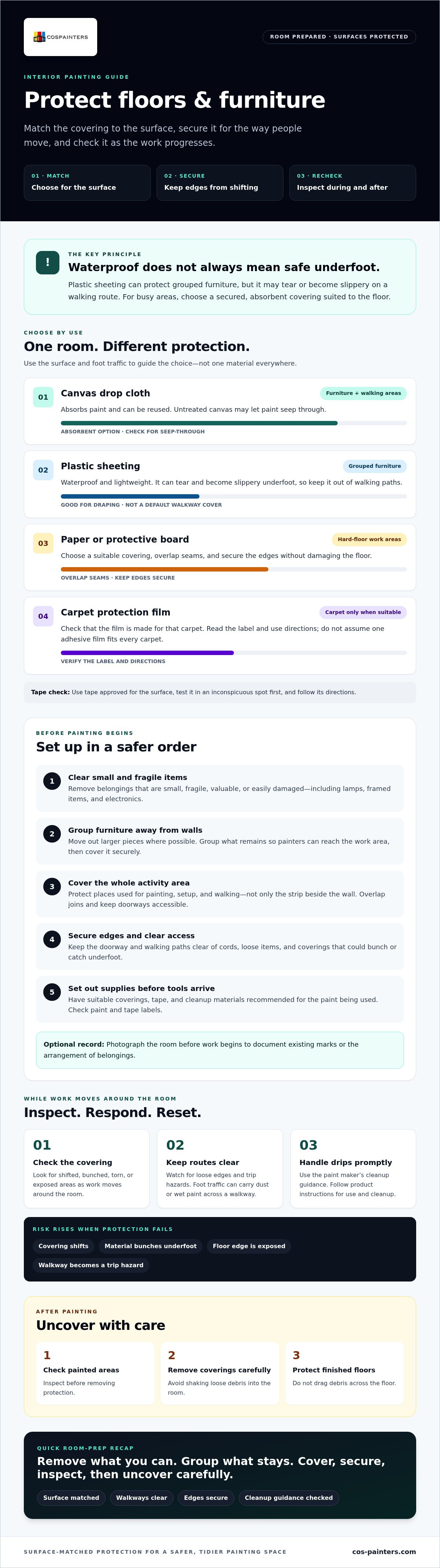
A waterproof cover can still put your floors at risk if it slips underfoot. Plastic sheeting may work well over furniture, while a secured, absorbent covering is often a better choice for busy walking areas. Knowing how to protect furniture and floors during interior painting starts with matching the protection to each surface, not covering everything with the same material.
It’s natural to worry about drips, splatters, and tape damaging delicate finishes. A little preparation can make the room safer to work in and help keep paint off the places you want to protect. Clear what you can, cover what stays, and secure each layer without creating loose edges or trip hazards.
This guide walks through a practical room-preparation sequence, from moving furniture and choosing coverings for carpet or hard flooring to protecting items that remain in place. You’ll also learn how to check that protection stays effective while painting and during cleanup.
Key Takeaways
- Learn how to protect furniture and floors during interior painting by choosing coverings suited to each material and the room’s foot traffic.
- Follow a practical setup order, from clearing small items to grouping furniture and laying floor protection before tools arrive.
- Check coverings as work moves around the room, and handle drips promptly using the paint maker’s cleanup guidance.
- Remove protection carefully after checking the painted areas, so debris doesn’t get dragged across finished floors.
Why learn how to protect furniture and floors during interior painting?
Painting involves more than a brush touching a wall. Splashes can reach nearby furniture, drips can land beside trim, and dust from surface preparation can settle on belongings. Foot traffic may also carry dust or wet paint across a walkway. Removing paint from a surface can be harder than preventing contact in the first place.
Preparation protects the room and gives painters clearer access to the areas they need to work on. A tidy, safely covered space can reduce interruptions caused by moving belongings or resetting loose coverings. For a general overview of preparation and methods, see House painting techniques.
Quotable takeaway: Protection works best when each covering is matched to the surface and secured where it belongs, rather than using one material everywhere.
What can go wrong when a room is not protected?
Paint can transfer from a brush, roller, or paint-covered hand onto furniture near a wall. Drips may collect where trim meets the floor, while foot traffic can spread dust or track a spill. These are usually preventable messes. Risk increases when a covering shifts, bunches underfoot, or leaves a floor edge exposed. Loose material can also become a trip hazard, so keeping walkways clear matters as much as covering surfaces.
What should you prepare before painting starts?
Before tools or ladders enter the room, make a plan for furniture, flooring, access, and supplies. If you’re unsure how to protect furniture and floors during interior painting, use this checklist:
- Furniture: Remove small and fragile items. Decide which larger pieces can leave and which need to be grouped away from the walls.
- Floors: Identify the surface and choose a suitable covering. Plan how to protect edges and keep a clear route in and out.
- Access: Clear the doorway and walking paths of cords, loose items, and anything that could catch on a covering.
- Supplies: Set out suitable coverings and tape, along with cleanup materials recommended for the paint being used.
Photographing the room before work begins can document existing marks or the arrangement of belongings. Check paint and tape labels, and follow the manufacturers’ instructions for use and cleanup. With the room planned, the sequence is straightforward: remove what you can, group remaining furniture, cover, secure, inspect, then uncover carefully.
Choose furniture and floor coverings that fit each surface
The right covering depends on what you’re protecting and how people will move through the room. A material that works over a sofa may be slippery or easy to puncture underfoot. When planning how to protect furniture and floors during interior painting, consider the surface, spill risk, and expected foot traffic.
| Covering | Useful for | Keep in mind |
|---|---|---|
| Canvas drop cloth | Furniture and areas where people need to walk | Absorbs paint and can be reused, but untreated canvas may let paint seep through. |
| Plastic sheeting | Draping over grouped furniture | Waterproof and lightweight, but can tear and become slippery underfoot. |
| Paper or protective board | Hard-floor work areas and walkways | Choose a suitable covering, overlap seams, and secure edges without damaging the surface. |
| Carpet protection film | Carpet, when the film is made for that surface | Check the label and use directions. Don’t assume one adhesive film suits every carpet. |
How should you cover carpet and hard floors?
Cover the areas where painting, setup, and walking will take place, not just the strip beside the wall. On carpet, use protective film made for carpet or another covering that won’t shift easily. For hardwood or tile, paper, board, or canvas with a leak-resistant backing can help guard against drips. Plain plastic may slide underfoot. Overlap joins, keep doorways accessible, and secure edges with tape approved for that surface. Test tape in an inconspicuous spot first and follow its directions.
How should you protect furniture and delicate belongings?
Take small, fragile, valuable, or easily damaged belongings out of the room, including lamps, framed items, and electronics. If larger furniture can’t be removed, group it away from the walls so painters can reach the work area, then cover it securely. Keep covers out of walkways, and don’t enclose lamps, heat sources, or items that need ventilation. If you’d like to discuss room preparation alongside interior painting in Colorado Springs, talk with Colorado Springs Painters about your project.
Remember: The best covering depends on the surface, spill risk, and movement through the room. One material isn’t right for every area.
Prepare the room in order before interior painting begins
A clear sequence keeps preparation manageable and helps prevent freshly placed coverings from being disturbed by last-minute moving. Before paint, tools, or ladders enter, decide what leaves the room, where remaining furniture will sit, and how people will carry supplies in and out. Use this order:
- 1. Remove small items. Take out decorations, lamps, electronics, plants, and anything stored on the floor or near the walls. Set them outside the work area where they won’t block the entrance.
- 2. Clear a route. Plan a direct path through the doorway for people carrying belongings, paint, and tools. Move cords and loose objects, and keep access to supplies clear without turning the walkway into storage.
- 3. Decide what to do with larger furniture. Remove pieces that are easy to carry and would obstruct painting. If a large item can’t reasonably leave, group it away from the walls, leaving room for painters to reach the work area. Avoid shifting heavy or awkward pieces without suitable help.
- 4. Protect the floor. Once furniture is in place, lay the chosen floor covering across the work area and intended walking route. Doing this before equipment arrives helps avoid dragging tools over unprotected flooring.
- 5. Cover grouped belongings. Drape furniture securely, keeping covers out of the doorway and clear of items that shouldn’t be enclosed. Check that the covering won’t fall into the work area as people move around it.
- 6. Walk the room. Look for exposed floor edges, loose corners, folds, blocked access, and anything that could catch a foot or tool. Fix problems before work starts.
How can you secure coverings without creating hazards?
Lay coverings flat, smooth out folds, and secure loose edges using a method suited to the floor. Don’t stretch tape tightly or use it in a way that could pull up a finish. Keep materials away from stair edges, and avoid placing tape or raised overlaps across frequently used walking routes. A clear doorway and stable path are more useful than covering every inch at the expense of safe access.
Check the room again after furniture or equipment has been moved through it. A corner that was flat can lift, and a covering can shift as items pass over it. Confirm that the route remains clear and the floor is still protected before painting begins. If the setup needs to change, pause and reset the covering rather than stepping over a loose or bunched section.
Keep furniture and floor protection effective while painting
Protection needs attention throughout the job, not just during setup. As work moves from one wall to trim or another section of the room, coverings can shift, tear, or pick up wet paint. Build brief checks into each change of area. Look over the floor, furniture covers, and walking route before moving ladders, supplies, or tools.
How do you prevent coverings from shifting during the job?
After moving a ladder or carrying supplies across the room, check that floor coverings still lie flat and their edges remain secured. If a cover is wet, torn, bunched, or displaced, pause and replace or reposition it before work continues. Keep doorways and routes clear so people don’t have to step over coverings or repeatedly push them out of place.
Pay extra attention where the work area meets an uncovered section. A small gap near a wall or doorway can expose flooring to drips, while a curled edge can catch a shoe or tool. Keep paint containers and tools on the protected side of the work area, and avoid setting them where they could tip or block access. Recheck the setup whenever the work zone changes.
What should you do if paint reaches a protected surface?
Act promptly, but follow the cleanup directions on the paint label. Different paints and surfaces may call for different approaches, so don’t assume a familiar cleaner or tool is suitable. Blot or lift a fresh spill gently as directed rather than rubbing it deeper into carpet or across a floor finish. Avoid unapproved solvents, scrapers, or abrasive materials that could create another problem.
If paint has dried or you’re unsure how the surface will respond, check the floor or furniture maker’s care guidance before attempting removal. When instructions aren’t clear, ask a qualified professional rather than testing a strong cleaner in a visible spot.
Consistent checks and careful spill response help keep protection effective from the first wall through the final section. If you’d like professional help planning and completing an interior painting project in Colorado Springs, contact Colorado Springs Painters to discuss your room and preparation needs.
Remove protection carefully and plan your next painting step
Before uncovering the room, check the paint manufacturer’s instructions for drying and cleanup, and avoid brushing against freshly painted areas. Careful removal matters as much as setup. A paint-speckled cover dragged across a clean floor can undo the protection you maintained throughout the project.
How should you remove coverings without spreading paint or dust?
Work in stages, starting with items and coverings farthest from the doorway. Inspect each section for drips before lifting it. Fold used coverings inward so paint, dust, and debris stay contained, and lift them instead of pulling them across the floor or against painted walls and trim.
- Check the edges first. Look along furniture legs, floor borders, and covering edges for paint spots or trapped debris.
- Lift and fold inward. Gather one section at a time, keeping the dirty side enclosed as you fold.
- Carry coverings out. Don’t shake them indoors or drag them through the room. Keep the walkway clear as you work.
- Sort by condition. Store reusable coverings only when they’re clean and dry. Dispose of used materials according to their labels and local waste guidance.
Once the floor is uncovered, inspect it and nearby furniture before returning belongings. If you spot dried paint or aren’t sure how to clean a surface safely, consult the paint instructions and the surface manufacturer’s care guidance rather than reaching for an unapproved solvent or tool. Return furniture only when you can avoid brushing against freshly painted areas.
When can professional interior painters help?
Professional painters can help homeowners plan room preparation around the furniture, access, and surfaces that matter most. Before work begins, ask what preparation is expected of you, who will move furniture, and how the room should be left ready for the crew. Clear expectations make it easier to decide what to remove, what can stay, and how to keep the work area accessible.
For Colorado Springs homeowners considering how to protect furniture and floors during interior painting, preparation is a useful part of the project conversation. Discuss your priorities and room layout with Colorado Springs interior painting professionals as you plan your next step.
Set your room up for a smoother painting project
Good protection comes down to thoughtful choices and coordination. Match coverings to the floor and furniture, keep access routes safe, and check that protection stays in place as work progresses. Before uncovering the room, follow the paint instructions and remove coverings carefully so cleanup doesn’t create a new mess.
Knowing how to protect furniture and floors during interior painting can help you prepare confidently, whether you’re handling setup yourself or discussing it with a painting team. Ask what needs to be moved, what preparation is expected, and how your room’s surfaces will be considered.
Colorado Springs Painters is locally owned and operated and serves homeowners with interior painting. Talk with a local team about your interior painting project and discuss your room preparation needs.
Frequently Asked Questions
How do you protect furniture when painting a room?
Move small, fragile, valuable, and easily damaged items out of the room, then shift larger furniture away from the walls. If a piece must stay, cover it securely with plastic sheeting or a suitable drop cloth, keeping the covering clear of lamps and heat sources. Leave a clear path for painters and supplies, and check that the cover won’t trail into walkways or slip off during work.
What is the best way to protect floors during interior painting?
Choose floor protection to suit both the surface and how much people will walk over it. Carpet needs a covering intended for carpet, while hardwood and tile can be protected with suitable paper, board, or canvas. Cover the work area and walking route, overlap joins, and secure edges with a method approved for that flooring. When considering how to protect furniture and floors during interior painting, avoid relying on loose plastic underfoot, since it can shift or become slippery.
Can you use plastic to cover furniture while painting?
Yes, plastic sheeting can be useful for covering grouped furniture because it helps shield belongings from dust and paint splashes. Secure it so it won’t slide off, fall into the work area, or block a walkway. Plastic is less suitable as a floor covering in busy areas because it can tear or become slippery. Keep it away from lamps, heat sources, and anything that should not be enclosed.
Should you use tape on hardwood floors before painting?
Use tape on hardwood only if its label says it’s suitable for that surface, and test it first in an inconspicuous spot. Tape adhesive can affect some finishes, so don’t assume painter’s tape is safe for every floor. Follow the manufacturer’s instructions for application and removal, and avoid leaving tape in place longer than directed. If you’re uncertain about the floor’s finish, choose a protective method that doesn’t require taping directly to it.
How do you keep drop cloths from moving while painting?
Lay drop cloths flat, smooth out folds, and secure loose edges using a method appropriate for the floor underneath. Avoid stretching cloth tightly or placing raised folds across a walkway. Recheck the setup after moving a ladder, furniture, or paint supplies, since traffic can displace a corner. If a cloth becomes wet, torn, or bunched, pause to reposition or replace it before working nearby.
What should you do if paint spills on a protected floor?
Follow the paint manufacturer’s cleanup instructions and address a fresh spill promptly. Avoid rubbing, which can spread paint or work it into carpet, and don’t use solvents, scrapers, or abrasive tools unless the paint and floor-care directions approve them. If the paint has dried or you’re unsure what the flooring can tolerate, check the floor manufacturer’s guidance before attempting removal. Confirming first can help prevent damage from an unsuitable cleanup method.
When should you remove floor coverings after painting?
Wait until the paint instructions indicate the area is ready for nearby activity, rather than relying only on whether the surface feels dry to the touch. Then lift coverings carefully, folding used material inward instead of dragging it across the floor. Check for drips and debris as you uncover each area. Homeowners in Colorado Springs can also ask Colorado Springs Painters what room preparation and furniture moving to plan for before scheduling interior painting.


