

Paint walls and ceilings before most new flooring is installed, then finish the baseboards and touch-ups afterward. Coordinating paint and flooring installation schedules in this order helps protect the new floor from paint and leaves room to fix marks from installation. For carpet, complete the main wall work first and plan any trim touch-ups after the carpet is installed.
It’s natural to want both crews scheduled without delays or repeat work. Booking the painter before the flooring installer usually gives wall work room to happen first, while early communication helps both trades plan around trim, floor removal, and finishing details. The best sequence can vary with the flooring type and the work each room needs.
Here’s how to choose the order, map out a practical project sequence, and coordinate schedules so painting and flooring come together with fewer surprises.
Key Takeaways
- Plan wall and ceiling work around the flooring type, with trim painting and touch-ups timed for after installation when needed.
- Set the sequence for repairs, floor removal, installation, baseboards, and final paint work before crews begin.
- Discuss baseboards, floor height, and any wall or ceiling preparation early to reduce schedule conflicts and rework.
- Choose flooring and paint colors together, then use samples at home to see how they look in natural light.
1. Should You Paint Before Installing New Flooring?
For most remodels, paint walls and ceilings before installing new flooring. This keeps paint splashes, rollers, and ladders away from finished surfaces and reduces cleanup around hardwood seams or carpet fibers. Complete major repairs, sanding, and color changes before the floor goes down. Then schedule flooring installation, followed by baseboard work and careful touch-ups.
Protect the floor if painting happens after installation. Keep furniture and tools off newly installed areas, and cover floors before moving ladders or supplies through the room. For vinyl or hardwood, painters can place paper beneath baseboards and slide it out after painting. Tell the flooring installer about this plan. If spraying over raw wood, cover it with heavy paper first. Construction traffic can also carry dust and debris, so keep the work area clear between trades.
Local requirements and flooring warranties can depend on the project and product. Follow applicable local requirements and the flooring manufacturer’s installation instructions when planning the sequence. Use those instructions to guide preparation and protection for the specific floor.
How long should furniture stay off the new floor? There isn’t one interval that works for every flooring type. The surface, installation method, and product instructions determine when it’s ready. Keep furniture out until the installer’s instructions allow it, and take care when moving heavy pieces back.
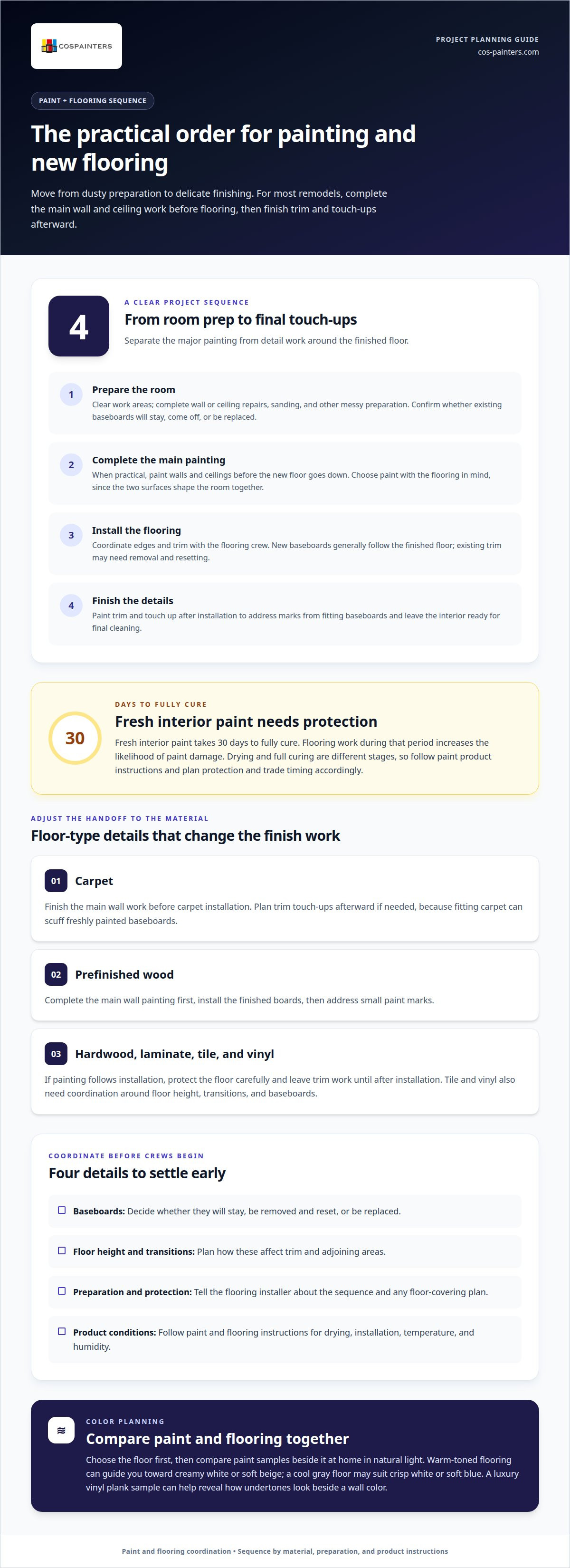
Installing flooring before painting is complete can expose it to drips, sanding dust, ladders, and repeated cleanup. It may also mean extra protection and touch-up work. Fresh interior paint takes 30 days to fully cure, and flooring work during that period increases the likelihood of paint damage.
Temperature and humidity requirements depend on the paint and flooring products being installed. Follow each product’s stated conditions, since the room environment can affect application and installation. Plan both trades around those requirements rather than assuming one setting suits every material.
2. Typical painting and flooring project sequence
A practical interior remodel moves from dusty preparation to delicate finishing. First, complete wall or ceiling repairs, sanding, and other messy preparation. Paint ceilings and walls before the new floor when that sequence suits the material and project. After flooring installation, fit or reset baseboards, then finish trim and paint touch-ups. This order separates major painting from detail work around finished flooring.
- Prepare the room. Clear work areas and complete repairs before flooring begins. Confirm whether existing baseboards will stay, come off for installation, or be replaced.
- Complete major painting. Apply the main wall and ceiling coats before floor installation when practical. Choose the paint color with the flooring in mind, since the two surfaces shape the room together.
- Install the flooring. The flooring type affects how crews handle edges and trim. New baseboards generally follow the finished floor, while existing trim may need removal and resetting.
- Finish the details. Complete trim painting and touch-ups after installation. This catches marks from fitting baseboards and leaves the interior ready for final cleaning.
Prefinished wood floors call for a planned handoff. Complete the main wall painting first, install the finished boards, then address small paint marks. For hardwood or laminate projects where painting follows flooring, protect the surface carefully and leave trim work until after installation. The sequence depends on the floor and the scope of painting.
Carpet has a distinct trim concern: finish the main wall work before the carpet goes in, then touch up trim afterward if needed. Carpet installation can scuff freshly painted baseboards during fitting. Tile and vinyl also require coordination around floor height, transitions, and baseboards, so include those details when setting the crew order.
How long should paint dry before flooring installation? There isn’t one interval that works for every paint, room, and floor. Allow the paint to dry according to its product instructions, and account for room conditions and the flooring installation method. Drying and full curing are different stages, so plan protection and trade timing accordingly.
3. Benefits of painting before installing flooring
Painting first keeps wet paint, sanding dust, and routine work traffic away from finished surfaces. A roller can drip near a wall, while ladders and paint trays can leave marks on a new floor. With flooring installation still to come, crews have more direct access to wall edges and corners. This makes detailed cutting-in easier than working around delicate flooring seams or carpet fibers.
The sequence also simplifies floor protection. Before painting, furniture can usually be moved toward the center of each room, leaving perimeter walls accessible. Once the main coats are complete, the flooring crew can bring materials and tools into a room without crossing a newly finished floor. This is especially useful during a major color change, when wall preparation and multiple paint coats may increase activity near the floor.
Color planning works best when flooring is treated as a key part of the room’s palette. Choose the floor first, then compare paint samples against it at home in natural light. For example, warm-toned flooring can guide you toward creamy white or soft beige, while a cool gray floor may suit crisp white or soft blue. A luxury vinyl plank sample can help reveal how undertones look beside a wall color.
There are exceptions to consider. If the newly installed flooring can be protected carefully, painting afterward may suit some projects. Carpet installation can also affect painted baseboards, so trim work may need to wait. The best sequence depends on the material, the amount of wall preparation, and which surfaces crews need to cross. Discuss those details before setting the schedule, then leave final touch-ups for marks that appear during installation.
4. Scheduling painters before flooring installers
Book the painter before the flooring installer whenever possible. This gives wall and ceiling work a place in the schedule before new surfaces arrive. Share the planned floor type, room access, baseboard plan, and any major repairs with both trades. A painter who knows flooring work is scheduled can plan around removal, installation, and final trim details. A shared plan for coordinating paint and flooring installation schedules gives each crew a clear handoff.
Set the sequence together rather than keeping separate calendars. First, identify which rooms need repairs or paint. Next, decide where flooring will be removed and installed, then agree on when each crew needs clear access. For example, if a hallway connects two bedrooms, plan where materials and foot traffic will pass. This helps prevent crews from crossing freshly painted areas or newly installed floors unnecessarily.
For a multi-room remodeling project, group work by room or task. Crews can complete messy wall preparation across accessible rooms, then schedule painting before flooring installation in those spaces. Flooring can follow in a planned order, with trim and touch-ups handled afterward. If the home will remain occupied, consider how that affects room access and where furniture can go during each phase.
Build communication into the schedule. Before work begins, share the intended start order and tell each trade if a date changes. Flooring removal can reveal preparation needs that affect the next steps, while hardwood sanding creates substantial mess. If sanding is part of the project, coordinate it separately from paint finishing and protect completed surfaces from dust and traffic. Clear communication helps coordinate paint and flooring installation schedules across rooms.
A careful schedule won’t make every task line up perfectly, but it can reduce avoidable conflicts. Keep one shared sequence showing room access, floor removal, painting, installation, and trim completion. If your project includes new flooring, plan your flooring installation as part of the full room schedule, rather than as a standalone visit.
Colorado Springs Painters: Flooring
Colorado Springs Painters provides flooring and interior painting for projects that update both a room’s walls and floors. These services suit plans that bring both upgrades into one renovation rather than treating them as unrelated tasks. Sharing your intended sequence, room priorities, and flooring plans helps shape a practical project discussion.
For a home refresh, that might mean planning new flooring alongside a fresh wall color. For a commercial space, commercial decorating can support a coordinated interior update. The right scope depends on the rooms and improvements you have in mind.
If you’re planning a flooring project, contact Colorado Springs Painters to discuss your renovation.
Plan Your Next Room Refresh
A renovation is a chance to make a room feel cohesive, not simply newer. Before setting dates, decide how you want the finished space to function and feel. A clear vision gives each trade a shared direction and helps keep decisions about color, flooring, and finishing details connected.
Thoughtful coordination of paint and flooring installation schedules can turn separate choices into one considered update. Colorado Springs Painters offers Interior Painting, Exterior Painting, and Commercial Decorating alongside flooring, bringing these improvements together for homes and businesses in Colorado Springs.
As you prepare, note which rooms matter most, the changes you’re considering, and any access needs that could shape the work. This gives the project conversation a useful starting point without locking you into details too early.
Ready to discuss your plans? Contact Colorado Springs Painters and take the next step toward a refreshed space.
Frequently Asked Questions
Should You Paint Before Installing New Flooring?
Usually, complete the main wall painting before new flooring arrives, especially if the room needs sanding or substantial surface preparation. The trade-off depends partly on trim: carpet fitting can scrape freshly painted baseboards, while hard-surface flooring may require trim removal and resetting. If painting must happen after installation, protect the finished floor carefully and plan for detail work around the edges.
Should painting or flooring be installed first during a renovation?
For most renovations, schedule major painting before flooring, then complete trim and touch-ups after the floor is installed. This keeps paint tools and wall preparation away from the finished surface. Room details can change the sequence: replacing baseboards or changing floor height may affect when trim is fitted and painted. Coordinate those tasks before booking crews.
What is the recommended sequence for painting walls, installing flooring, and adding trim?
Complete wall and ceiling repairs first, then apply the main paint coats. Install the new flooring next, fit or reinstall baseboards afterward, and finish with trim paint and touch-ups. For example, new baseboards can be fitted to the finished floor height. If existing trim stays in place, protect its edges during installation and address any marks afterward.
How do labor costs and project timelines compare when painting before versus after flooring?
Painting afterward can require extra floor protection, careful edge work, cleanup, or another visit for touch-ups. The schedule can still vary with the room’s preparation needs and how the flooring and trim work are coordinated. The price depends on the project and is provided after a quote request; scope, preparation, and finishing needs affect the estimate.


