

What if a clubhouse refresh could improve the community without making everyday access a headache? With HOA common area and clubhouse painting services, the finish matters, but so does the plan: residents still need to reach shared spaces, and the clubhouse may have events on the calendar. A clear scope and thoughtful coordination can help balance a fresh, consistent look with the routines that make the community feel like home.
It’s understandable to be unsure where to begin. Should the project include hallways, entryways, amenity rooms, or exterior shared spaces? Which areas need attention first, and how can painting proceed with less disruption? This guide offers a practical framework for defining and evaluating an HOA painting project in Colorado Springs. You’ll learn how to prioritize spaces, compare preparation and finish choices for different surfaces, and plan resident communication and project phases around how the property is used. A room-by-room scope helps the board compare options and plan finishes around each space’s condition and use.
Key Takeaways
- Start with a space-by-space list so the HOA can set priorities and define exactly what the painting project covers.
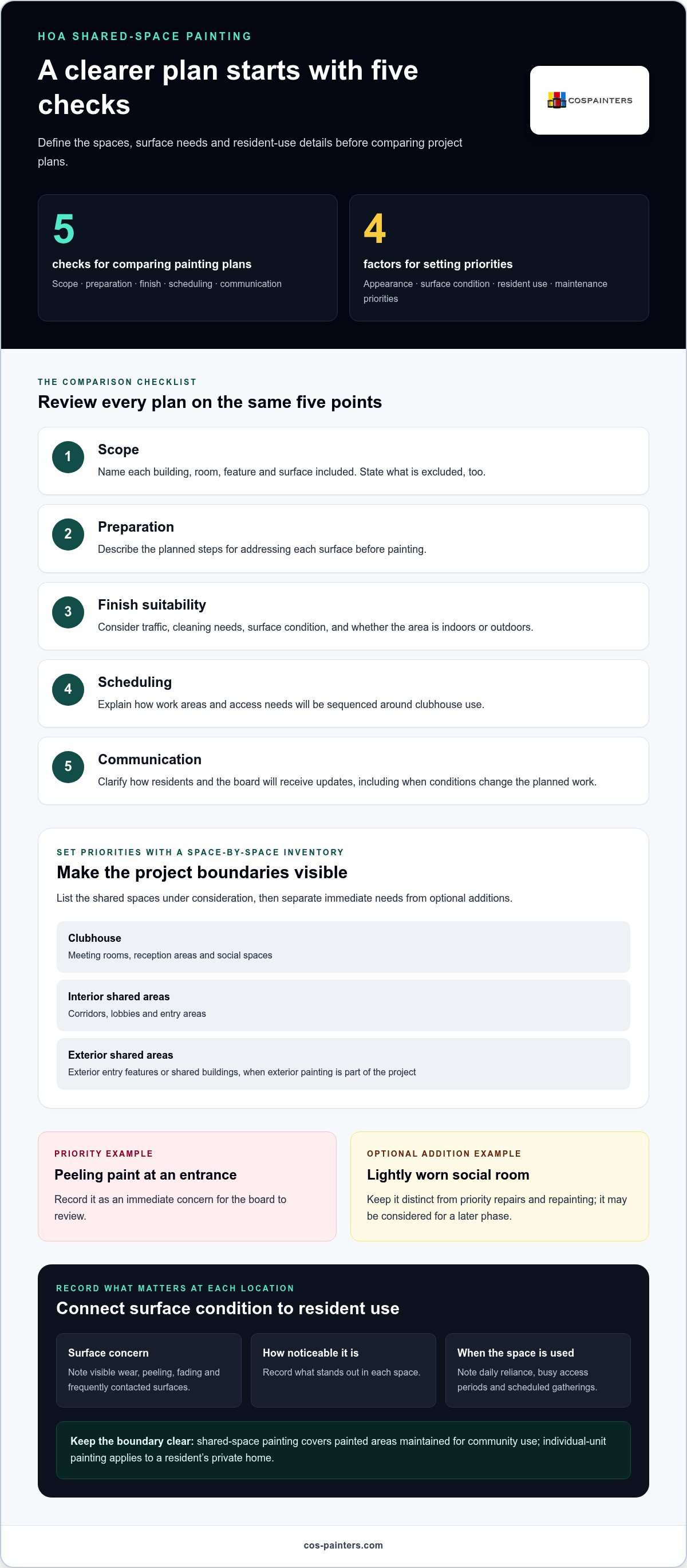
- Use a five-point checklist to compare scope, preparation, finish suitability, scheduling, and resident communication.
- Plan HOA common area and clubhouse painting services around the different demands of clubhouses, corridors, lobbies, and exterior shared spaces.
- Coordinate calendars, access needs, work sequence, and resident updates to help keep unaffected areas available where the plan allows.
- Gather surface concerns, event dates, and board priorities to give Colorado Springs Painters’ painting and commercial decorating team a clear starting point.
HOA Common Area and Clubhouse Painting: Define the Project Before Comparing Options
Before comparing paint choices or project plans, give the board a shared picture of what needs attention. HOA painting renews painted surfaces in spaces residents use together, inside or outside. The work might cover a clubhouse, corridors, entrances, or shared buildings, but those spaces don’t necessarily belong in one all-or-nothing project.
Shared-space painting renews painted areas maintained for community use, while individual-unit painting applies to a resident’s private home. This distinction helps the board set a clear boundary around the work. A Homeowner Association (HOA) may oversee shared facilities and common areas, so the project scope should name the specific spaces and surfaces under consideration.
Build the scope around four practical factors: appearance, surface condition, resident use, and maintenance priorities. A meeting room may look tired but be used only occasionally; a corridor may show scuffs from daily traffic. Listing both concerns lets the board weigh what is most noticeable against what is most heavily used, then decide whether to prioritize one or address both.
Which HOA common areas may belong in the painting scope?
Start with a complete inventory, then separate immediate needs from optional additions. Depending on the property and project, the list might include:
- Clubhouse meeting rooms, reception areas, and social spaces.
- Shared corridors, lobbies, and entry areas.
- Exterior entry features or shared buildings when exterior painting is part of the project.
Mark each area as a priority or an option rather than combining every location into a single vague request. For example, the board might identify peeling paint in an entrance as an immediate concern, while treating a lightly worn social room as a possible later phase. This gives decision-makers a clear scope to review and keeps optional work distinct from priority repairs and repainting.
How should an HOA identify its main painting priorities?
Walk the property and record observations by location. Note visible wear, peeling, fading, and frequently contacted surfaces, then add how residents use each area and when access is busiest. A room-by-room list gives the board a practical basis for setting priorities instead of relying on broad impressions such as “the clubhouse needs painting.”
For each location, record the surface concern, how noticeable it is, and whether residents depend on the space throughout the day or for scheduled gatherings. This connects surface condition to use: a worn corridor may deserve attention because residents pass through it continually, while a clubhouse room may need a schedule that accounts for events. For broader ideas on how appearance and function work together in shared interiors, explore this commercial decorating and painting guide.
This inventory gives HOA common area and clubhouse painting services a defined starting point: specific spaces, observed needs, and resident-use priorities. With that foundation, the board can compare project options against the property’s actual needs.
How to Evaluate HOA Clubhouse Painting Services in Colorado Springs
A clear comparison starts with more than a paint color or a broad estimate. The board needs to understand what work is proposed, how surfaces will be prepared, whether the finish suits each location, and how the project will fit around community use. Use this five-point checklist to compare plans on the same terms:
- Scope: List each building, room, feature, and surface included, along with exclusions.
- Preparation: Describe the planned steps for addressing each surface before painting.
- Finish suitability: Consider traffic, cleaning needs, surface condition, and whether the area is indoors or outdoors.
- Scheduling: Identify how work areas and access needs will be sequenced around clubhouse use.
- Communication: Explain how residents and the board will receive updates, including if conditions change the planned work.
These points make it easier to compare proposals without treating different scopes as though they were equivalent. For HOA common area and clubhouse painting services, the written plan should be specific enough that board members can picture what will be painted and what the work involves.
What should an HOA painting scope make clear?
Name every included room, building, or shared feature rather than relying on general phrases such as “clubhouse painting.” Identify the surfaces to be painted, such as walls, trim, doors, or exterior elements, and state what is excluded. Then describe preparation and finish application in plain language. If surface conditions or scope changes arise, the plan should explain how they’ll be documented and communicated before work proceeds.
This clarity helps prevent mismatched expectations. For example, a scope that names a meeting room but doesn’t say whether its trim is included leaves room for different interpretations. A room-by-room description gives the board a more useful basis for reviewing the work and understanding proposed changes.
How do use and local exposure affect finish decisions?
Surface use and exposure should inform finish selection, so each area is considered on its own rather than treated as interchangeable. A frequently used corridor may need a finish suited to regular cleaning, while a quieter meeting room may have different demands. For an exterior surface, consider its actual sunlight and weather exposure. Record the conditions at the specific property instead of assuming every Colorado Springs HOA has the same exposure.
Colorado Springs Painters provides careful preparation and quality finishes for interior and exterior painting, including commercial decorating for shared community spaces. Boards can use the checklist to shape a focused project discussion with a Colorado Springs painting team and keep priorities tied to the property’s needs.
Compare Painting Plans for Clubhouses, Lobbies, and High-Traffic Areas
A shared facility doesn’t have one uniform painting need. A clubhouse room might be occupied for scheduled gatherings, while residents pass through a lobby or corridor throughout the day. Exterior entries and shared buildings add different surfaces and access considerations. Comparing locations side by side helps the board shape a scope around actual use, condition, and access instead of assuming one finish or work sequence fits every space.
| Space | Traffic and access | Visible condition and preparation | Finish considerations |
|---|---|---|---|
| Clubhouse rooms | Use may rise around meetings or social events; access can be planned around the calendar. | Review walls and trim for marks, peeling, or fading, and note surface concerns before work. | Consider the room’s use, cleaning needs, and desired appearance. |
| Corridors | Regular circulation makes access planning especially important. | Check for scuffs and wear along frequently contacted surfaces; preparation depends on their condition. | Choose with expected traffic and cleaning routines in mind. |
| Lobbies and reception areas | Residents and visitors may pass through throughout the day. | Assess visible marks on walls, trim, and other included surfaces. | Balance appearance with the area’s use and maintenance needs. |
| Shared exterior surfaces | Consider resident entry routes and access around the work area. | Note peeling, fading, and surface condition on shared entries, trim, or buildings. | Account for the specific surface and its sunlight and weather exposure. |
The table is a planning aid, not a fixed specification. The right scope depends on the property’s surfaces and how residents use them. A lobby with frequent cleaning needs may call for a different finish discussion than a lightly used meeting room. Exterior trim and an interior corridor also face different conditions, so don’t assume one coating or finish suits every HOA facility.
How do clubhouse rooms differ from corridors and lobbies?
Event rooms can often be planned around a known calendar, making closure windows and room availability central to sequencing. Corridors and lobbies serve as circulation routes, so access needs deserve close attention even when only one section is being painted. Their visible wear may also differ: repeated contact can leave marks in passageways, while gathering rooms may show wear around seating or activity areas. Consider cleaning frequency and observed condition by location rather than making blanket assumptions about durability.
When should exterior common areas be part of the same project?
Include shared entries, trim, or buildings when their appearance or surface condition makes them a board priority. Exterior work may need separate access and weather planning, so the board can list it as a separate phase even if it’s approved alongside interior painting. For added context on exterior-specific considerations, the Colorado Springs exterior painting guide offers a useful companion to the space-by-space comparison.
Plan HOA Painting Around Residents, Events, and Shared-Space Access
A painting plan works best when it reflects how residents use the property. Before setting work dates, the board can map clubhouse bookings, daily access routes, and spaces that need to stay available. A shared-space schedule should fit resident access and event calendars, not leave the community facing an avoidable surprise.
Use these four steps to turn that principle into a practical coordination plan:
- Gather calendars. Collect recurring clubhouse bookings, community events, and known high-use periods. Include regular activities as well as one-time gatherings, so the plan accounts for more than the usual weekly routine.
- Identify access constraints. Note which rooms need to remain open, which can be temporarily restricted, and which entrances or corridors residents rely on. Consider how people can reach other shared spaces if a route is affected.
- Sequence spaces. Group work with adjacent rooms and resident movement in mind. Where the approved plan allows, phased work can leave unaffected areas available while another space is being painted.
- Communicate updates. Share the planned work areas, access changes, and expected project milestones through the HOA’s established resident channels. Update notices if the approved schedule changes.
This sequence gives the board and painting team a common reference for planning. A phased approach may help limit disruption, but the available options depend on the property layout and agreed scope. Avoid promising that every area will remain accessible. Instead, state what the plan allows and identify any temporary restrictions plainly.
How can an HOA coordinate painting with clubhouse events?
Start with the clubhouse calendar before arranging work around individual rooms. Mark recurring bookings, community events, and high-use periods, then distinguish spaces that need to stay open from rooms that could be temporarily unavailable. If a meeting room is booked on a particular evening, for example, the schedule should make clear whether the room or its access route is affected. Share schedule changes through the HOA’s usual resident channels.
What should resident communication cover during painting?
Each notice should name the affected spaces, explain how residents can reach other shared areas, and flag changes to entrances or room availability. Include the current schedule and expected milestones, while making clear that updates will follow if the approved plan changes. Keep the wording direct and consistent across notices, so residents aren’t left to interpret conflicting directions.
A useful notice answers three questions: where will work take place, what access will change, and when should residents expect the next update? That simple structure makes communications easier to scan and helps residents plan around the work. Colorado Springs Painters’ HOA painting project information can help the board organize a discussion around the community’s spaces and schedule.
Choose a Colorado Springs Painting Partner and Move the HOA Project Forward
With the spaces and priorities taking shape, the next step is turning the board’s notes into a practical project brief. A useful brief aligns painting work with the property’s needs, resident routines, and the association’s goals. It also gives the project team a clearer starting point for discussing scope, preparation, finishes, and coordination.
What information helps define the HOA painting project?
Gather the essentials before beginning project discussions. A concise, organized set of notes helps the board explain what matters most without requiring every detail to be settled in advance.
- Property locations and an inventory of the clubhouse and other shared spaces under consideration.
- Visible surface concerns, such as peeling, fading, or worn areas, noted by room or feature.
- Clubhouse uses, resident access needs, and known event dates that may affect planning.
- Board priorities for appearance, maintenance, and the order in which spaces should be addressed.
Keep observations distinct from decisions. For instance, record that a lobby wall is visibly worn, then note separately whether the board considers it a priority for this project. This gives the project conversation room to weigh the property’s needs, how residents use each space, and how the board wants to sequence the work.
How can Colorado Springs Painters support shared-space improvements?
Colorado Springs Painters provides interior and exterior painting and commercial decorating for shared community spaces. The locally owned and operated team has served Colorado Springs for more than 25 years. Careful preparation and quality finishes are central to the work, with the scope organized around the property’s needs rather than treating every room or building as identical.
For an HOA, the project brief can guide a focused conversation about included areas, surface condition, and how the work relates to community use. Clear communication helps the board understand the planned scope and coordinate it with resident needs. Careful preparation matters too: the condition of each surface should inform the work planned before paint is applied.
Bring the space inventory, surface notes, event calendar, and board priorities together as a starting point. These details connect HOA common area and clubhouse painting services to the community’s actual needs and keep the project discussion grounded in a clear scope. Colorado Springs Painters brings local experience and a thoughtful approach to shared-space improvements.
Ready to put your notes into action? Discuss an HOA painting project with Colorado Springs Painters and take the next step toward refreshed shared spaces.
Turn Your HOA Painting Plan Into a Welcoming Shared Space
A well-planned refresh can help shared spaces feel cared for and ready for the moments residents gather, pass through, and use them. The next step is to turn the board’s priorities into a clear project conversation, with the spaces, surface concerns, and community needs in view.
With HOA common area and clubhouse painting services, a thoughtful plan connects the finish to how each area serves the community. That keeps the focus on more than a new coat of paint: it helps shape spaces that feel cohesive, considered, and comfortable to use.
Colorado Springs Painters provides painting and commercial decorating for shared spaces in Colorado Springs. Discuss your HOA painting project with Colorado Springs Painters and move from planning to a clear project scope.
Frequently Asked Questions
How often should an HOA repaint its clubhouse and common areas?
An HOA should plan repainting based on documented surface condition and use, not a fixed calendar interval. During routine property reviews, note where paint is intact, scuffed, peeling, or fading, and compare the same locations over time. If a corridor’s finish shows repeated wear sooner than a meeting room, the board can prioritize that area in its maintenance plan. This helps shape HOA common area and clubhouse painting services around actual need.
What is the best time of year to paint an HOA clubhouse in Colorado Springs?
The best timing depends on the surfaces, product instructions, and community schedule, rather than one universal season. Interior painting can be coordinated around room bookings, while exterior work needs conditions suited to the materials and application plan. In Colorado Springs, base weather decisions on current site conditions and product guidance, not broad assumptions about local climate. Keep the schedule flexible for weather-sensitive exterior work.
Does an HOA need board approval before painting common areas?
Board approval depends on the HOA’s governing documents and established decision-making process. Before placing the project on an agenda, define the proposed locations and work boundaries so members can review a specific plan rather than a general request to repaint. The board can record its decision and any conditions in the project notes, then use the approved scope to guide coordination. The association’s procedures determine the formal steps.
Can a clubhouse stay open while painting is underway?
A clubhouse may remain partly open only if the room layout, work sequence, and access arrangements make that practical. For instance, the HOA might plan work in one room while another remains available, provided the project plan supports separation and access. Identify where residents should enter, which rooms are temporarily unavailable, and how updates will be shared. Treat continued access as a project-specific possibility, not an assumption.
How can an HOA keep paint colors consistent across multiple buildings?
Keep a written color record for each included building and feature. Note the approved color identification and finish beside the surface it applies to, such as clubhouse walls, entry trim, or corridor doors. Avoid relying on a broad description like “community beige.” Store the schedule with HOA maintenance records and refer to it for later touch-ups or project phases. This gives the association a clear reference as shared spaces are maintained over time.
What should an HOA prepare before requesting a painting proposal?
Gather a property map or labeled photos, records of previous painting if available, and notes on surfaces that may need closer assessment. Identify who will coordinate access and who can answer project questions on the HOA’s behalf. Along with the space inventory and event dates, these details help a painting team understand the site and discuss preparation, finish expectations, and workable sequencing for the community.


