

What if your home office feels distracting because its visual setting isn’t working for you? Interior painting to improve home office productivity won’t transform your workday on its own, but thoughtful color and finish choices can help create a calmer, more comfortable place to focus.
The right shade depends on the work you do, the room’s natural and artificial light, and how you use the space outside work hours. A quiet neutral may suit a reading or screen-based workspace, while a gentle green or blue can add a different mood without overwhelming the room. Instead of choosing from general color rules, compare samples in your actual office and look at them from your desk.
This guide explains how to weigh color, finish, lighting, and room use before deciding whether to repaint. It also covers practical preparation and common planning mistakes. Colorado Springs Painters provides professional interior painting in Colorado Springs, including carefully prepared finishes for home-office refreshes. A clear plan can help create a clean, considered backdrop for the routines and tools that support your work.
Key Takeaways
- Use color as one part of a comfortable workspace. Choose a visual backdrop that suits your tasks rather than expecting paint alone to boost output.
- Compare warmer and cooler shades in the room, considering your comfort, other uses for the space, and changes in daylight.
- Match paint finish to the room’s surfaces and daily use so the refreshed office feels cohesive and practical.
- Plan interior painting to improve home office productivity by defining a goal, assessing light and furnishings, testing colors, and organizing the work.
- Careful preparation and a quality finish can make a professional interior paint refresh a practical next step for your Colorado Springs home office.
How Interior Painting Can Support a More Productive Home Office
Productivity-supportive paint is not a shortcut to better work. It’s one part of a comfortable, intentional workspace, alongside useful lighting, a well-positioned desk, manageable routines, and reliable technology. A considered wall color can help the room feel calmer or more clearly set apart for work, but the right choice depends on the space and the person using it.
Worn paint, uneven color, scuffs, and distracting marks can make a room feel unfinished. A fresh, consistent finish can reduce visible signs of wear and give your workspace a cleaner appearance. That is a visual improvement, not a measurable promise about concentration. Paint can shape a workspace’s visual context, but it cannot guarantee higher productivity.
Color psychology is a broad way to consider how colors may be perceived, not a formula for performance. Your response to a shade is personal, and its appearance changes with the room’s light and furnishings. The practical question is whether the finished setting feels comfortable for the work you do.
What a home-office refresh can change
Fresh paint can cover marks and uneven color, creating a more consistent backdrop behind your desk, shelves, or video-call area. That visual reset may make the room feel more finished without changing its layout. If your office also serves as a guest room or family space, a deliberate palette can help distinguish the work zone while still feeling appropriate for the room’s other uses.
For example, a continuous, quiet wall color can look less visually scattered than a wall with patchy touch-ups or contrasting marks. The difference is in the room’s appearance, not a promise that tasks will suddenly take less time. Interior painting to improve home office productivity is most useful when it addresses a specific visual concern.
Set realistic expectations before choosing paint
Start by naming what feels wrong: tired-looking walls, a backdrop that competes with furnishings, or a work area that blends into the rest of the home. A refresh may support visual order and comfort, but it won’t resolve noise, interruptions, an uncomfortable chair, poor desk ergonomics, or a workflow that needs attention.
Consider the other conditions that shape your workday. Daylight, artificial lighting, screen glare, and desk placement can matter as much as wall color. If the room is visually distracting but otherwise works well, paint may be a practical part of the solution. If the main issue is functional, address that need as well.
- Visual condition: Note scuffs, faded areas, uneven color, and walls that feel busy.
- Work setup: Look at desk placement, seating comfort, screen glare, and task lighting.
- Room use: Decide whether the space is dedicated to work or must serve other daily purposes.
- Desired feel: Describe the atmosphere you want, such as calm, warm, or visually simple.
With a clear goal, you can decide whether paint is the right next step or one part of a broader workspace adjustment. A thoughtful refresh can make the office feel more cohesive and cared for. Realistic expectations keep the project grounded in what paint can actually change.
Compare Home-Office Paint Colors and Finishes for Your Workday
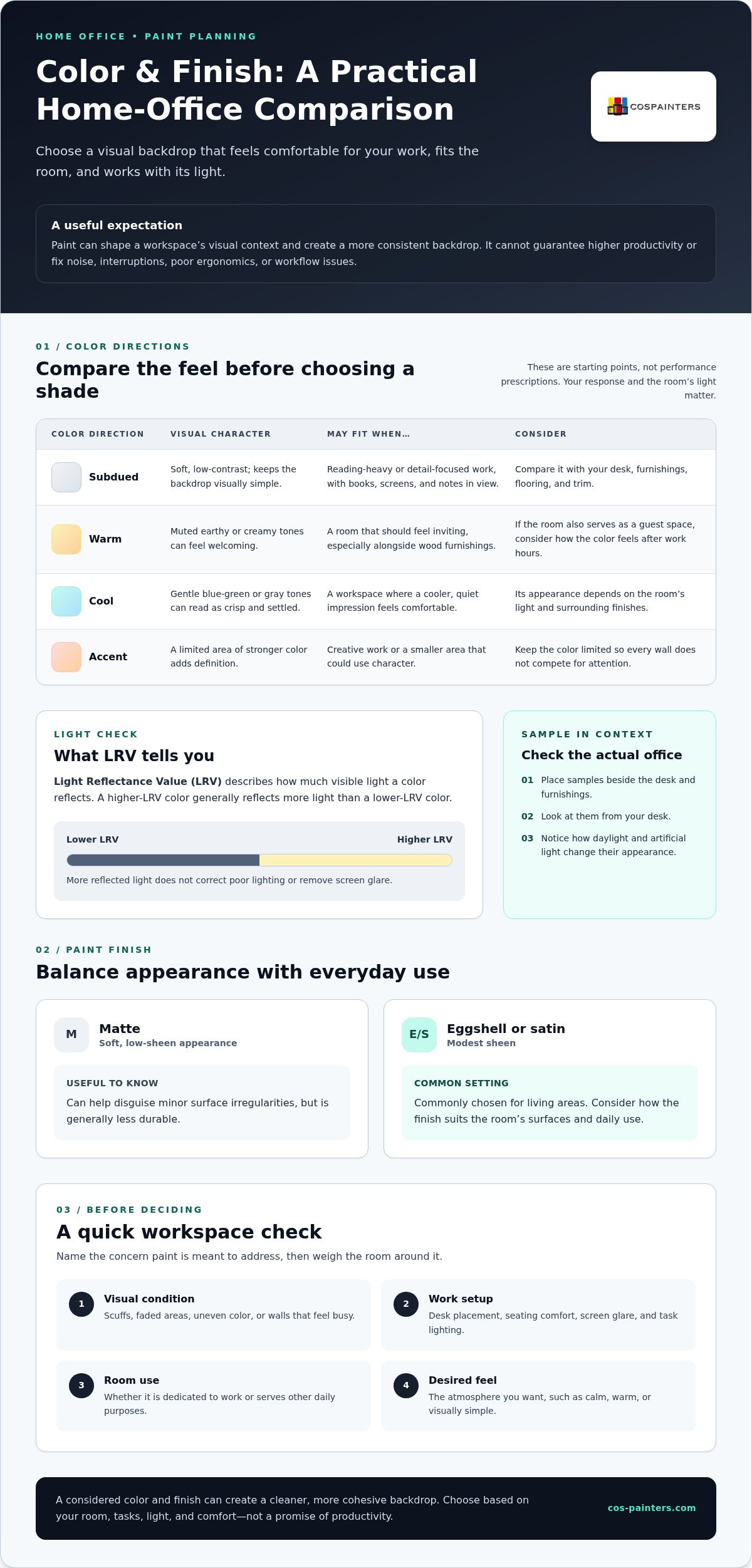
Color advice is most useful when it accounts for what you do in the room and how the room behaves. A restrained palette can feel visually quiet, while warmer shades may make a space feel more inviting and cooler hues can bring a crisp, settled impression. None is a universal productivity prescription. For interior painting to improve home office productivity, choose a direction that feels comfortable for your tasks and the rest of your home.
Match color direction to the kind of work you do
For reading-heavy or detail-focused work, consider subdued colors that give books, screens, and notes a simple backdrop. If your work is creative, a measured accent wall or color on a smaller area can add character without surrounding you with high-impact color. In a room that doubles as a guest space, a warm neutral or muted shade may feel at home after work hours, too.
- Subdued: Soft, low-contrast shades can keep the overall backdrop visually simple.
- Warm: Muted earthy or creamy tones can create a welcoming feel, especially alongside wood furnishings.
- Cool: Gentle blue-green or gray-toned colors can read as crisp, though their appearance depends on the room’s light.
- Accent: A limited area of stronger color can add definition without making every wall compete for attention.
Light Reflectance Value, or LRV, describes how much visible light a color reflects. A higher-LRV color generally reflects more light than a lower-LRV one, but it won’t correct poor lighting or remove screen glare. Compare samples beside your desk, flooring, trim, and larger furnishings before settling on a shade. A paint color’s appearance changes with the room’s light, surrounding finishes, and viewing time.
Choose paint finish and test color in the room
Finish affects both a wall’s appearance and how it handles everyday use. Matte has a soft, low-sheen appearance and can help disguise minor surface irregularities, but it is generally less durable. Eggshell and satin have a modest sheen and are commonly chosen for living areas because they’re more durable and easier to clean. A glossier finish reflects more light, so consider whether that reflection could distract you near a screen.
Before committing, view sample patches where you’ll see them during a normal workday. Compare them in daylight and under your usual lamps, then look at how they sit alongside existing trim and furnishings. A small paint chip can help narrow choices, but it won’t show how a larger area will look in the room.
- Place samples on the wall rather than relying only on a small chip.
- Look at them in the morning, during brighter daylight, and after dark with your work lighting on.
- Check the color from your desk and note any sheen or reflections near your monitor.
Once you’ve settled on a direction, Colorado Springs Painters can bring the plan together with professional interior painting in Colorado Springs, careful preparation, and a quality finish suited to a considered home-office refresh.
Does Paint Really Improve Productivity, or Is It Only One Part of the Fix?
Fresh paint alone doesn’t guarantee better concentration, faster work, or stronger output. It changes the room’s visual setting, which may make a workspace feel more cohesive or comfortable, but it can’t remove every source of friction in your workday. A productive home office combines a comfortable visual setting with functional work habits.
Think of paint as one possible adjustment among several. If the walls look worn or the room feels visually unfinished, a refresh may address that specific concern. If the main problem is screen glare, an uncomfortable chair, or frequent interruptions, changing wall color won’t solve it. Interior painting to improve home office productivity makes the most sense when the room itself is part of what you want to improve.
Signs that paint may be the right first refresh
Look for a clear visual issue: scuffed walls in your field of view, patchy touch-ups, fading, or wall colors that make the work area feel incomplete. These are different from noise, papers piling up, or equipment that doesn’t meet your needs. Before choosing a full-room repaint, name one result you want, such as a more consistent backdrop behind your desk or a clearer visual boundary between work and home activities.
That goal helps keep the project grounded. A fresh finish may make the room look more cared for, but don’t treat a polished background as a fix for every distraction. If the wall condition is the concern, paint may be a reasonable upgrade. If your attention is pulled away by household noise or clutter, those issues need their own plan.
When paint should be paired with other changes
Consider the full work area before deciding what to change. A desk facing a bright window may put daylight directly on a screen. Repositioning the desk or adjusting light control may help more than repainting. If a room feels dim, review both natural light and task lighting before assuming a lighter wall color will solve the problem. Paint can contribute to the overall look, but it isn’t a substitute for suitable lighting or screen-glare control.
- Desk and seating: Check that your setup supports the way you work and that essential items are within comfortable reach.
- Light: Notice when daylight shifts across the room and whether lamps make your desk or screen difficult to see.
- Storage: Identify whether accessible storage could reduce visible work materials when the room serves other purposes.
- Routine: Consider whether interruptions or unclear work habits are a bigger obstacle than the room’s appearance.
These changes can work alongside a paint refresh, but they address different needs. A cohesive color plan may help the room feel intentional, while practical adjustments make the space function more comfortably. Set priorities based on what you notice during an ordinary workday, then decide whether painting is the next useful step or one part of a wider workspace update.
Plan a Home-Office Paint Refresh in Four Practical Steps
A successful home-office refresh starts before you choose a color. Define what you want the room to feel like, notice how it works throughout the day, and plan around how you use the space. This sequence connects interior painting to improve home office productivity with a practical, room-specific goal rather than a guess.
-
Define the goal.
Choose one clear improvement to guide the project. Do you want a calmer-looking backdrop for long reading sessions, a brighter impression in a dim corner, or a more distinct work zone in a room shared with household activities? Keep the goal focused. “Make the room feel more finished” is easier to act on than expecting paint to solve every frustration in your workday.
-
Assess the room.
Notice when natural light enters and how it shifts across the walls. Check your artificial lighting after dark, where your desk sits, and which walls appear behind you on video calls. Look for visible wear and note nearby room colors, trim, flooring, and major furniture finishes. Consider daily use, too. A dedicated office and a room that also hosts guests may call for different levels of contrast and formality.
-
Test your choices.
Compare sample areas on the walls you’ll see most often, including the background visible from your desk. View them in the morning, afternoon, and under your usual artificial lighting. A shade that seems soft in daylight may feel different at night beside warm lamps or darker furniture. Check how the color sits with existing trim and whether the chosen finish creates distracting reflections near your screen.
-
Plan the work.
Decide how to protect furnishings, relocate monitors and other equipment, and keep essential work items accessible. If the office is your daily workspace, arrange a temporary setup elsewhere or plan the project around a natural break in use. Clear expectations about the room’s contents and routine help the painting work fit more smoothly into home life.
Professional interior painting brings these choices together through coordinated preparation, application, and finish selection. Colorado Springs Painters emphasizes careful preparation and quality finishes, helping create a clean, cohesive backdrop for the goals you’ve defined. If a refresh is the right next step, explore interior painting services for your Colorado Springs home office.
Refresh Your Colorado Springs Home Office with Professional Interior Painting
Once you’ve identified what you want from the room, professional interior painting can help bring the visual plan together. Colorado Springs Painters provides residential interior painting in Colorado Springs, including home-office refreshes. A new finish won’t guarantee more focus or output, but it can create a cleaner, more cohesive backdrop that better fits the way you use the space.
What to expect from a professionally painted home office
A considered project starts with the room as it is and the result you want. Wall condition, chosen color and finish, nearby furnishings, and the office’s day-to-day use all inform the refresh. For example, a room used for both work and family activities may call for a palette that feels suitable throughout the day. The desk wall may need particular attention if it appears on video calls.
Preparation matters. Colorado Springs Painters focuses on meticulous preparation and quality finishes to create a consistent, polished appearance across the room. A well-prepared surface and careful application support an even-looking result, so refreshed walls feel like part of the room rather than drawing attention to patchy or unfinished areas. The project can be planned around the interior paint refresh you have in mind.
Plan around your furnishings and work equipment, too. Before painting begins, consider which items need to be moved or protected and how you’ll maintain access to essential work tools. Sharing your room goals and selected finish gives the project a clear direction. Considering the room’s condition also helps set practical expectations for the refresh.
Turn your workspace plan into a polished room
Bring your choices together before the work starts. Keep the purpose of the office in mind, along with the palette you selected, how daylight and artificial lighting affect it, and the finish that suits the room’s use. A clear plan connects those decisions to one result: an office that feels intentional and visually complete, without expecting paint to take the place of good lighting, a workable setup, or daily routines.
For homeowners considering interior painting to improve home office productivity, a professional refresh is a practical way to address worn walls or a backdrop that no longer suits the space. The value is in a carefully executed room update, not a promise that paint alone will change your workday. Colorado Springs Painters provides interior painting in the local area, with careful preparation and a focus on quality finishes.
Ready to turn your workspace plan into a polished room? Plan your home-office paint refresh with Colorado Springs Painters.
Make Your Home Office Feel Ready for What’s Next
A workspace doesn’t need to be perfect to feel more purposeful. Start with one question: what would make this room feel more welcoming when you sit down to work? A more settled backdrop, a clearer sense of separation from household activities, or a refreshed look may be enough to guide your next decision.
Use your answer to decide whether interior painting to improve home office productivity fits your plans. Paint can contribute to the room’s atmosphere, but the goal is a space that feels considered and works alongside your habits, setup, and daily needs. You can move forward with a clear idea of how you want the room to look and feel, without expecting a new color to do the work for you.
For a home-office refresh in Colorado Springs, Colorado Springs Painters can help turn your painting goals into a polished room. Start planning your home-office painting project, and take a confident step toward a workspace that feels more like your own.
Frequently Asked Questions
Does interior paint color alone improve home-office productivity?
No, paint color alone can’t guarantee better concentration or output. It can shape the room’s visual atmosphere, but practical factors such as lighting, ergonomics, interruptions, and work habits also affect how the office functions. To set a realistic goal for interior painting to improve home office productivity, identify one visible issue you want to change, such as a distracting wall behind your monitor. Then consider whether a paint refresh addresses that issue directly.
Can I use an accent wall in a small home office?
Yes, an accent wall can help distinguish a desk area, but the result depends on the room’s layout, light, and your own taste. In a compact office, a dark or high-contrast shade may feel more prominent than expected, especially if the wall is close to your desk. Test the color on the intended wall first, and coordinate nearby walls, trim, and furnishings so the accent feels connected to the room.
How can I tell whether a paint color will look right in my office?
Test a sample directly on the wall you plan to paint, then observe it in daylight and under the artificial lighting you use after dark. A color may look different beside a desk, bookcase, or trim than it does on a small card. Check it from your usual seated position, too. Screen images can help narrow options, but they can’t show exactly how a shade will appear in your Colorado Springs home.
Should my home-office color match the rest of my house?
It doesn’t have to match exactly. Give the office its own character while connecting it to nearby rooms through a shared undertone, consistent trim color, or a restrained palette. If the office opens directly onto a hallway or living area, consider how the colors look together from that shared sightline. For a room that also serves as a guest space, choose a tone that feels comfortable beyond work hours.
Can a home office be painted while I continue working from home?
Possibly, but the plan depends on room access, furniture, and the project’s scope. Before work begins, arrange a temporary place for calls and focused tasks, and decide where monitors, cables, documents, and other equipment can be kept safe. If the office is your only work area, plan how you’ll manage essential tasks while painters need access to the room. Discussing these practical details ahead of the project helps reduce disruption.
Which paint finish is easiest to maintain in a home office?
There isn’t one finish that suits every office. Matte has a soft appearance and can help downplay minor wall irregularities, but it’s generally less durable. Eggshell and satin have more sheen and are typically easier to clean, which may help in a room where walls get frequent contact. Consider how visible the wall’s condition is, how often it needs cleaning, and whether added sheen could reflect light near your screen.
What should I change besides paint if my home office still feels distracting?
Look at how the room functions before changing more surfaces. Try adjusting desk placement if daylight or a lamp creates glare, and check whether task lighting reaches the work area without shining into your eyes. Clear frequently used items from the desk, consider storage for papers, and notice whether noise or household interruptions break your focus. Paint can support a cohesive visual setting, but those practical distractions need their own solutions.


