

Knowing how to touch up scuffs on eggshell paint starts with a clean surface and a light touch. Wipe away dirt and grease with a damp cloth, then use matching paint and a small brush or roller to cover the mark. Feather the edges so the repair blends with the surrounding finish.
It’s tempting to apply extra paint to make a scuff disappear, but too much can leave a noticeable patch. A careful, gradual touch-up helps preserve the wall’s existing appearance.
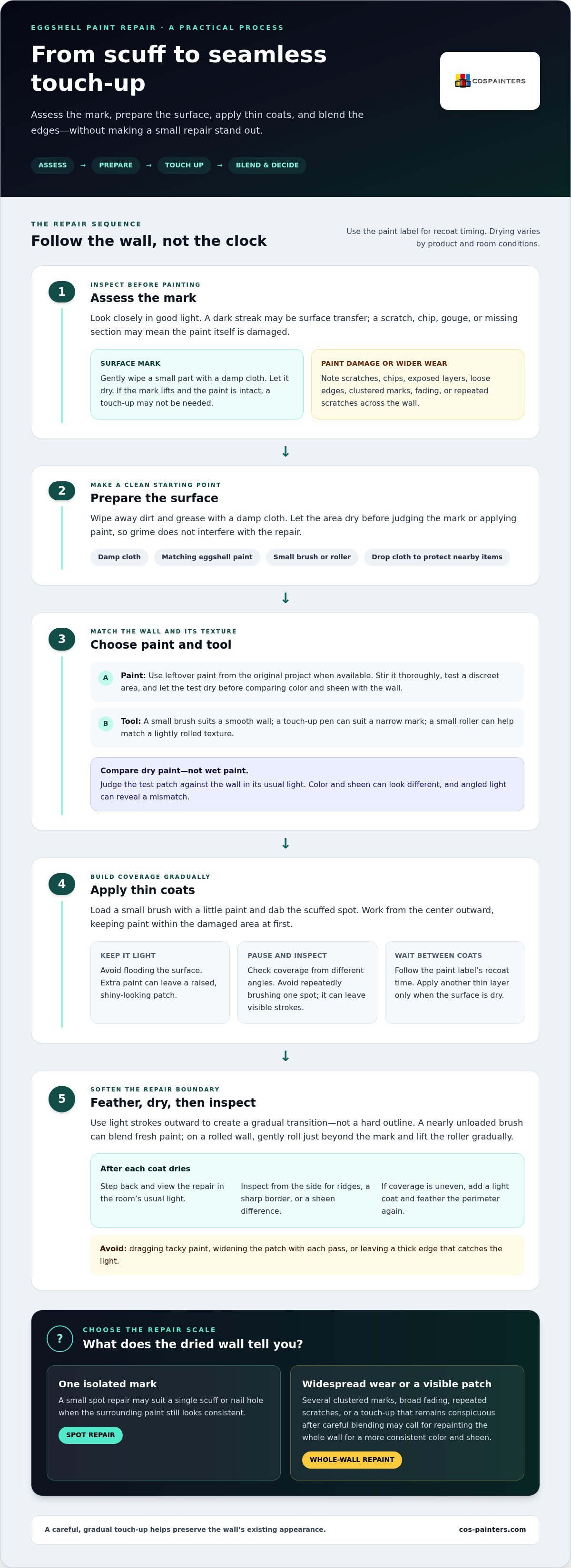
Assess the damage, prepare the area, apply paint, and blend the edges. A small spot repair may suit an isolated mark, while repainting the whole wall can create a more consistent finish when wear is widespread.
Key Takeaways
- Assess the mark first to decide whether a small spot repair is enough or the damage calls for broader attention.
- Prepare the area carefully so dirt and grease don’t interfere with a smooth touch-up.
- Choose an application tool that suits the wall’s texture, then soften the edges to help the repair blend in.
- Use leftover paint from the original project when possible, and consider repainting the whole wall if the touch-up remains noticeable.
Applying paint and feathering edges
Apply eggshell touch-up paint in thin layers with a brush, touch-up pen, or roller. Follow the paint label’s recoat time, and apply another layer only when the surface is dry.
-
Apply Paint to the Scuffed Area
Load a small, high-quality brush with a little paint and dab the scuffed spot. Work from the center outward, keeping the paint within the damaged area at first. A touch-up pen can suit a narrow mark, while a small roller can help match a lightly textured wall. Avoid flooding the surface, since excess paint can leave a raised, shiny-looking patch.
Pause and inspect the coverage from different angles. If the scuff still shows, add another thin coat once the first has dried. Keep the layer even instead of repeatedly brushing one spot, which can leave visible strokes in the eggshell finish.
-
Feather the Edges Between Coats
Soften the repair boundary with light strokes as you work outward. Use a nearly unloaded brush to blend the fresh paint into the surrounding wall, or gently roll just beyond the mark to match roller texture. Aim for a gradual transition, not a hard outline. Check the edge before the paint starts to set, since dragging tacky paint can leave ridges.
For another coat, follow the recoat time on the paint label. Drying varies by product and room conditions, so rely on the label rather than a fixed time. The surface should feel dry before you apply another layer. Painting too soon can disturb the previous coat and make the patch more noticeable.
- Compare the repair with the wall after each coat dries. Step back and view it in the room’s usual light, then inspect from the side for ridges or a sharp border. If the coverage looks uneven, add a light coat and feather the perimeter again. Keep the blend controlled around the original scuff instead of widening the painted area with each pass.
- Use a small roller when the surrounding wall has a rolled texture. Roll gently over the fresh paint and just beyond its edge, lifting the roller gradually to soften the transition. A brush may work better on a smooth wall or narrow mark. Whichever tool you choose, keep the texture and pressure consistent, and avoid leaving a thick edge that catches the light.
Assessing scuffs and other paint damage
Before choosing a repair, determine whether the mark is on the paint or has damaged it. Small scuffs and nail holes typically need only a spot repair, while deeper damage needs closer assessment.
- Look closely at the mark in good light. A dark streak may be surface transfer, while a scratch can expose a layer beneath the eggshell finish. Check whether the paint feels smooth or has a gouge, raised edge, or missing section. This distinction helps you avoid painting over damage that needs more preparation.
- Check whether the scuff is only on the surface. Gently wipe a small part with a damp cloth, then let it dry before assessing the result. If the mark lifts and the paint remains intact, a touch-up may be unnecessary. If the finish is still discolored, scratched, or chipped, note the affected area for repair.
- Compare the mark with the nearby paint. View the wall straight on and from the side, since angled light can reveal dents, ridges, or changes in sheen. A faint gray streak on a smooth wall, for example, differs from a scrape with a visible edge. Check whether the eggshell finish looks worn beyond the mark.
- Distinguish isolated imperfections from widespread wear. A single scuff or nail hole is usually suited to a spot repair. Several clustered marks, broad fading, or repeated scratches across one wall can make a small patch stand out. Consider how far the damage extends before deciding where the repair should end.
- Check whether the underlying surface is exposed. A chip showing a contrasting layer, a deep groove, or loose paint is more than a simple surface scuff. Don’t cover loose edges with fresh paint, because the repair can follow the unstable boundary. Mark the damaged spots mentally or with removable tape nearby, not directly over the paint.
Blending new paint with old paint
Even careful application can leave a touch-up visible if its color or sheen differs. Knowing how to touch up scuffs on eggshell paint also means judging the dried repair against the wall, not the wet paint in the tray.
- Use leftover paint from the original project when available. It is more likely to match the wall’s color and eggshell finish than a newly selected alternative. Stir it thoroughly to mix settled color evenly, then test a small, discreet area. Let the test patch dry before judging its appearance.
Wet paint can look different from dry paint. Compare the dried test patch with the wall, not with paint inside the container. This gives you a more useful indication of whether the touch-up will blend.
- Check color and sheen separately. A patch may match the wall’s shade but reflect light differently. View it straight on and from an angle, under the room’s usual lighting. A repair that looks close near a window, for example, may stand out under a lamp. Knowing how to touch up scuffs on eggshell paint means considering both appearance and finish.
- Keep the test repair contained while you assess the match. Apply a thin layer, let it dry, then inspect its boundary against the surrounding eggshell finish. If the color looks close but the edge remains visible, soften the transition with a light application around the perimeter. Avoid adding paint before each layer dries, since wet layers make comparison difficult.
- Repaint the entire wall if a spot repair remains conspicuous after careful blending. A wall-wide coat can create a more consistent color and sheen than repeatedly enlarging one patch. This may suit a wall where the old paint and touch-up continue to look different after drying. Judge the result across the whole wall, not just beside the original scuff.
Cleaning and preparing the surface
Gather a damp cloth, matching eggshell paint, and a small brush or roller. A paint tray and drop cloth help keep the work area tidy while you prepare the wall.
- Move nearby furniture away from the scuffed area, then cover anything that could catch drips. A drop cloth protects the floor, while painter’s tape can shield adjacent trim. Keep the paint container and applicator close so you won’t need to reach across the prepared wall.
- Wipe the mark with a clean, damp cloth to remove dirt and grease before painting. Use gentle pressure across the scuff rather than scrubbing aggressively. A dirty fingerprint near a doorway, for example, can remain visible beneath fresh paint if residue is left on the surface.
- Rinse or replace the cloth if grime transfers onto it. A clean section of fabric helps prevent spreading dirt to the surrounding eggshell finish. Don’t soak the wall. Use a damp cloth, then let the wiped area dry before applying paint.
- Inspect the dry surface for residue, loose paint, or raised edges. If the mark still feels greasy or looks dirty, wipe it again with a clean, damp cloth and let it dry. Avoid painting over a damp patch, since moisture can interfere with an even application.
- Set out the paint and applicator only after the wall is clean and dry. Stir the matching paint until its color looks uniform, then pour a small amount into a tray if you’re using a roller. A small brush suits a narrow scuff, while a roller can help replicate a rolled wall texture.
- Keep the prepared area clear of dust as you work. For a mark near a baseboard, check the edge where dust can collect; for a scuff beside a switch, keep the damp cloth controlled around the trim. If damage spans a larger section, plan a broader wall refresh.
Colorado Springs Painters: Interior Painting
Colorado Springs Painters provides Interior Painting for rooms that need more than an isolated touch-up. If scuffs cover a wall, the eggshell finish looks uneven, or repeated patches fail to blend, a broader painting project can create a more consistent appearance. A professional interior repaint can refresh the surrounding space rather than draw attention to individual repairs.
A small, clean mark may be manageable with a careful spot repair. But if damage is widespread or the existing paint looks noticeably different from leftover paint, repainting the wall may be more practical. Colorado Springs Painters provides interior painting for larger areas and a more cohesive look.
Contact Colorado Springs Painters to discuss your interior painting project.
Give Your Walls a Fresh Start
A well-kept wall can make a room feel more considered, and thoughtful repairs help preserve that impression. If you’re deciding how to touch up scuffs on eggshell paint, let the extent of the damage guide your next step. A small mark may suit a careful touch-up, while visible unevenness across a wall may call for a broader refresh.
For a broader project, Colorado Springs Painters offers Interior Painting, Exterior Painting, and Commercial Decorating in Colorado Springs. Choose a scope that fits your space, whether you’re updating a room at home or refreshing a business interior. A clear plan for the finish and area involved helps set the project in the right direction.
Contact Colorado Springs Painters about your painting project and take the next step toward a refreshed space. With a considered approach, your walls can feel ready for what comes next.
Frequently Asked Questions
How can you tell whether an eggshell paint scuff needs cleaning or repainting?
Try cleaning first if the mark looks like a streak on an otherwise intact finish. A shoe sole may leave dark transfer without removing paint. If the mark remains after wiping, or you can see a scratch, chip, or exposed layer, paint repair is more appropriate. Check the spot after it dries, since damp paint can disguise discoloration or surface damage.
How do you match existing eggshell wall paint for a touch-up?
Start with leftover paint from the original project, if available, and check that its container identifies the same color and eggshell finish. Paint can look different as it ages on a wall, even when stored paint is a close match. Test a discreet area and assess it after drying. Compare it under the room’s usual lighting, not just beside the open paint container.
How do you apply eggshell paint to a small scuff without leaving a visible patch?
Keep the repair focused and use a small amount of paint rather than immediately coating a broad area. Work in controlled passes, then let the paint dry before deciding whether the coverage needs adjusting. For a scuff on textured paint, a roller may reproduce the surrounding surface better than a brush. Avoid building up a thick layer, which can leave a raised outline.
Should you feather or dab eggshell paint when touching up a wall?
Use the two techniques for different purposes: dab paint onto a small mark, then feather the outer edge to soften the boundary. Dabbing keeps paint concentrated over the scuff; feathering spreads the perimeter lightly into the surrounding finish. On a textured wall, gently rolling the edge may blend better than brush strokes. Don’t keep working the paint after it starts to set.
Why do eggshell paint touch-ups look different from the surrounding wall?
A touch-up can stand out if its color, sheen, or texture differs from the established wall. Existing paint may have changed in appearance over time, while a fresh layer can reflect light differently. Uneven thickness or a visible application edge can also draw attention. Check the repair from several angles: a patch may look subtle straight on but obvious in side light.
When should you repaint an entire wall instead of spot-touching scuffs?
Repaint the wall if isolated repairs remain visible or scuffs and worn areas are widespread. A wall-wide coat can create a more even appearance than expanding one touch-up after another. Scattered marks around furniture and a doorway, for example, may make separate patches look inconsistent. If the damage is limited to one clean, small mark, a focused repair may be sufficient.


