

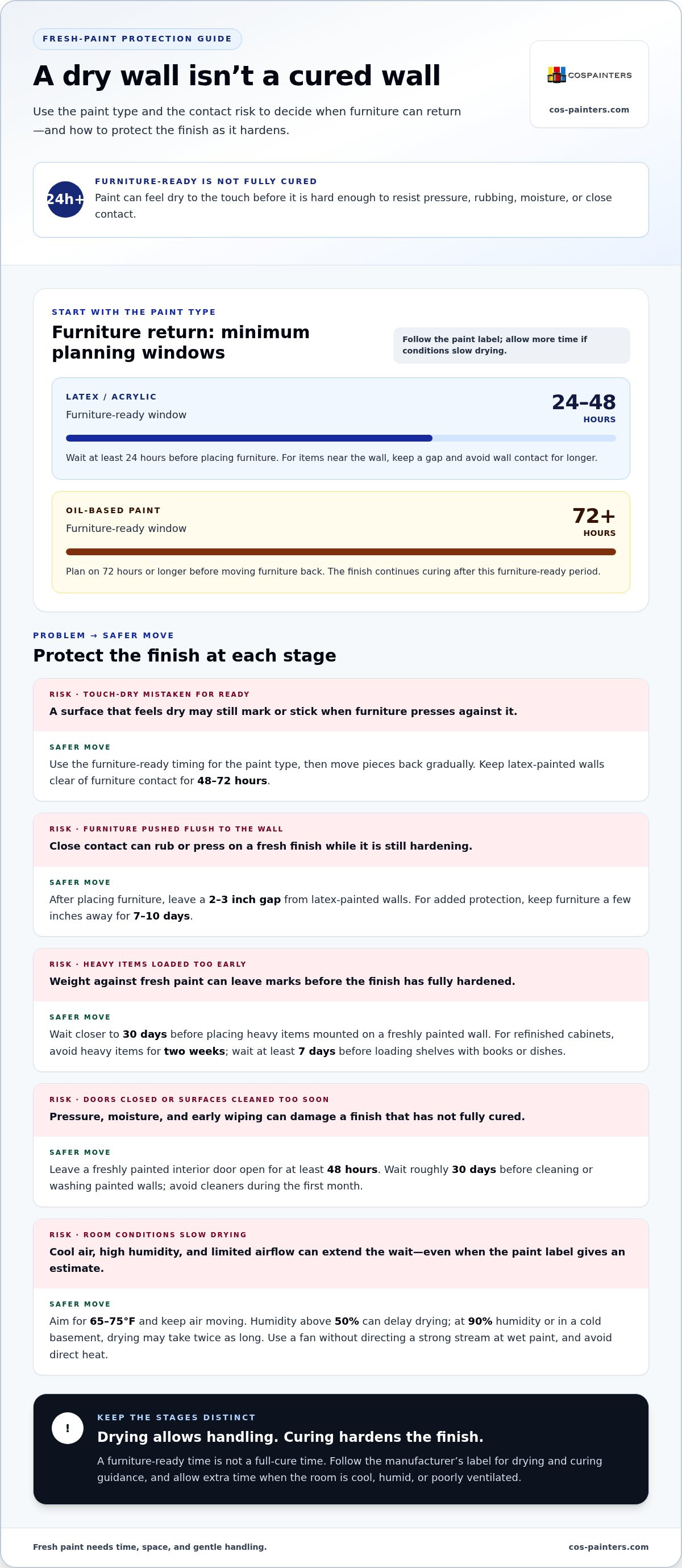
If you’re wondering how long after painting you can move furniture back, allow 24 to 48 hours for latex or acrylic paint, and 72 hours or longer for oil-based paint. These are furniture-ready times, not full curing times, so moving pieces back too soon can still mark or stick to a fresh finish.
It’s tempting to trust a wall that feels dry to the touch, but surface dryness doesn’t mean the paint has hardened enough for close contact. Waiting a little longer before moving furniture back, especially heavy pieces, helps protect the fresh finish.
This guide explains when paint is touch-dry, how furniture-ready times vary by paint type, and how humidity, temperature, and airflow can affect the wait. You’ll also learn how to return furniture to the room carefully while the paint continues to cure.
Key Takeaways
- Use the paint label’s drying guidance, and allow extra time when the room is cool, humid, or poorly ventilated.
- Move furniture back gradually, keeping heavy pieces and wall-adjacent items for later to reduce the risk of marks.
- Paint that feels dry can still be curing; protect the finish from pressure, cleaning, and close contact as it hardens.
- Plan around the paint type: water-based and oil-based finishes have different furniture-ready timelines.
How humidity, temperature, and ventilation affect drying
Room conditions can change drying times, even when the paint can gives a clear estimate. For a freshly painted interior, follow the label’s drying and curing guidance, while accounting for humidity, temperature, and airflow.
Environmental Conditions and Drying
Environmental conditions are the temperature, moisture, and air movement around a painted surface. They matter because high humidity and cool air slow drying, while ventilation helps moisture leave the room. Humidity above 50% can delay drying; at 90% humidity or in a cold basement, drying may take twice as long. Paint-can timelines generally assume about 70 degrees and 50 percent relative humidity.
Aim for 65-75°F and keep air moving through the room. Open windows when conditions allow, or use a fan to improve airflow without directing a strong stream at wet paint. These steps support drying; they don’t replace the label’s stated wait before furniture returns or surfaces are handled.
Latex and Oil-Based Paint Drying
Latex and oil-based paints dry at different rates, so paint type matters when planning furniture placement. Latex paint is typically touch-dry in 1-2 hours and safe for light contact after 4-6 hours. Oil-based paint may need 6-8 hours to feel touch-dry, with full curing taking 7-10 days.
Touch-dry doesn’t mean durable enough for a bookcase pressed against the wall. Latex can take around 30 days to cure fully. Sherwin-Williams gives a curing time of two to three weeks for acrylic and latex paint and as little as five days for oil-based paint.
Follow the paint manufacturer’s label for drying, recoating, and curing times. A label’s 8-hour drying estimate assumes suitable room conditions; after only 4 hours, the surface may not be ready for the next step. Keep the distinction clear: drying allows handling, while curing is the longer process that hardens the finish.
To support safe drying, maintain the recommended 65-75°F range and provide steady ventilation rather than applying direct heat. For exterior jobs, primer often needs 2 to 6 hours before the first coat of paint. Check the primer label, since its stated wait determines when painting can continue.
Interior Paint Drying Times Explained: When is it Safe to Touch, Move Furniture, or Apply a Second Coat?
Interior paint timelines depend on the finish and room conditions. Temperature, humidity, and airflow all affect when a painted surface is ready for contact.
Conditions That Affect Interior Paint
Conditions that affect interior paint are the temperature, moisture, and air movement around the wet finish. They matter because cold rooms and high humidity slow paint drying, while ventilation helps moisture escape. Drying slows dramatically below 50°F or above 85% humidity, so a cold winter room can extend the timeline.
Keep the room ventilated and conditions steady rather than trying to speed drying with direct heat. A fan can circulate air without blowing directly at the wall. Paint that feels dry may still need time to cure fully, especially in a closed room with limited airflow.
Furniture Contact With Painted Walls
Furniture contact means a piece presses against or rests close to the painted surface. For latex paint, wait at least 24 hours before placing furniture, then leave a two to three inch gap. Avoid wall contact for 48-72 hours, particularly with heavy furniture that can press or rub against the finish.
Remove painter’s tape once the final coat is dry to the touch, peeling it back slowly. For latex-painted walls, wait 7-10 days before hanging items; pictures can generally be rehung after 7 days. This extra time helps prevent fresh paint from lifting or sticking.
Ventilating a Freshly Painted Room
Ventilating means moving fresh air through the room as paint dries. After the paint has dried, ventilate for a few hours before using a bedroom, especially after interior painting with low- or zero-VOC paint. If a strong paint smell lingers, wait 24-48 hours before heavy use.
Keep air moving without creating strong drafts across wet walls. In a cold room, opening windows can lower the temperature and slow drying, so ventilate while maintaining suitable room conditions.
For the next coat, latex paint typically needs at least 2 to 4 hours, while oil-based paint typically needs 24 hours. Follow the label’s recoat timeline, particularly on cabinets or other surfaces that need a durable finish. A dry-to-touch surface alone doesn’t mean it’s ready for another coat.
Protecting paint during curing
Curing is the slower stage when paint hardens beyond the dry-to-touch point. Patience matters: pressure, moisture, or cleaning too soon can leave marks that may become permanent. Treat a freshly painted room gently while the finish develops its durability.
Keep furniture a few inches from painted walls for 7 to 10 days. This gap reduces rubbing and lets air circulate around the surface. For heavy items mounted on a freshly painted wall, wait closer to 30 days. Avoid anything taped to the wall, including command strips, for at least two weeks.
Cabinet paint needs similar care. Painted cabinets take about 30 days to fully cure, so avoid heavy use during that period. Refinished cabinets shouldn’t be loaded with heavy items for two weeks, and shelves shouldn’t carry books or dishes for at least seven days. A loaded shelf can press on the finish before it hardens.
Moisture and pressure can affect a new finish even after the room looks complete. Leave a freshly painted interior door open for at least 48 hours before closing it fully, preventing paint from sticking to the jamb. Keep objects from leaning against trim, baseboards, and cabinet fronts during early curing.
How long should you wait before cleaning or washing newly painted walls? Wait roughly 30 days, when the paint has fully cured. During the first month, avoid cleaning painted surfaces with cleaners; early wiping can damage a finish that hasn’t hardened completely. If a small mark appears, don’t scrub it immediately. Give the surface time to cure first.
Paint type also shapes the care period: interior oil-based paint may take up to 30 days to cure completely. Follow the paint-can curing directions, and keep the room’s use light while the finish hardens. Waiting protects the painted room from avoidable scuffs and helps preserve the finished surface.
Furniture-ready times by paint type
Furniture-ready means the finish can handle careful placement, not that the paint is fully hardened. The paint type sets the starting timeline, while close contact and heavy pressure call for extra caution.
- Latex paint: Allow 24-48 hours before moving furniture back. Light contact may be safe after 4-6 hours, but that doesn’t make a wall ready for a heavy piece.
- Acrylic paint: Plan on 24-48 hours before furniture returns. Light contact may be safe after 2-4 hours.
- Enamel paint: For oil-based enamel, wait 48-72 hours before furniture placement. Light contact may be safe after 8-12 hours.
- Oil-based paint: Allow 72 hours or longer before moving furniture back. Light contact may be safe after 12-24 hours.
A brief touch is different from moving furniture. A hand might brush a wall without damage, but a chair or dresser can press against the finish for hours. Waiting until the paint is ready for furniture helps prevent dents, paint transfer, or sticking as the surface continues to harden.
After latex paint, for example, return lighter pieces first and keep them away from the wall. With oil-based paint, allow more time, even if the surface feels dry sooner. The paint can’s label is the best guide to that product’s drying and handling times.
Consider the furniture as well as the finish. A light chair placed centrally creates less pressure than a heavy bookcase pushed against a freshly painted wall. Move pieces carefully, avoid scraping, and leave space between furniture and walls while the finish hardens.
If you’re planning a fresh room update, explore professional interior painting and build furniture timing into the project schedule.
Colorado Springs Painters: Interior Painting
Colorado Springs Painters offers interior painting for rooms that need a fresh, carefully finished look. If you’re planning a repaint and need to coordinate furniture removal, paint application, and the room’s return to everyday use, professional painting can help you plan the project around those practical details.
Interior painting can refresh a single room or contribute to a broader home update. Planning ahead helps you account for paint type, drying conditions, and the time needed before moving furniture back against the walls.
For a bathroom refresh or an exterior project, Colorado Springs Painters also offers bathroom painting and exterior painting. Visit cos-painters.com to learn more or get in touch about your painting project.
Plan Your Next Room Refresh
Knowing how long after painting you can move furniture back helps you plan a room refresh without putting the finish at risk. Build the waiting period into your schedule and decide where furniture can stay temporarily. A little advance planning makes the return to everyday use smoother.
For a new project, Colorado Springs Painters provides interior and exterior painting, as well as commercial decorating. Consider how the room is used, the finish you want, and how the work will fit around your household or business. A well-planned painting project can refresh the space while keeping its practical needs in view.
Ready to take the next step? Contact Colorado Springs Painters to discuss your painting project. Your refreshed space can start with a thoughtful plan.
Frequently Asked Questions
How Long Does It Take for Paint to Dry?
Paint may feel dry within hours, but drying depends on its type and what “dry” means for the next task. Latex paint is touch-dry after 1-2 hours, while oil-based paint can take 6-8 hours. A surface that feels dry isn’t necessarily ready for furniture, cleaning, or pressure. Use the paint label’s guidance for the specific product and planned use.
What Does Fully Cured Mean?
Fully cured means the paint has hardened beyond its initial dry stage and is better able to withstand regular use. Latex and acrylic wall paints can take 14 to 30 days to cure. Until then, avoid treating the finish like a permanent, hardened surface: heavy pressure, scrubbing, or adhesive strips can still leave marks or damage the paint.
Does the smell tell you anything?
A strong lingering paint smell can be a cue to keep ventilating, though odor alone does not establish whether the paint has cured. Wait 24-48 hours before heavy use if the odor remains strong. With modern low-VOC or zero-VOC paint, many people find a bedroom comfortable after the paint dries and the room has aired for a few hours; people sensitive to odors should wait 24 hours before sleeping there.
What Does Dry to Touch Mean?
Dry to touch means the surface no longer feels wet when lightly touched. It does not mean the paint has fully cured or can withstand a dresser rubbing against it. For example, latex paint may feel touch-dry after 1-2 hours, yet still need much longer before close furniture contact. Treat touch-dry as an early drying milestone, not permission for every use.
Why does furniture stick to a freshly painted wall?
Furniture can stick when it presses against paint that hasn’t hardened enough. Pressure and limited airflow at the contact point can make the finish adhere to the furniture, then pull or mark the paint when the piece moves. A bookcase pushed flush against a freshly painted wall is a common risk. Leave a gap and avoid sliding furniture across the painted surface.
How long after painting can you move furniture back?
If you’re deciding how long after painting can you move furniture back, allow 24-48 hours for latex or acrylic paint. Oil-based paint may need 72 hours or longer, while oil-based enamel generally needs 48-72 hours. These are furniture-ready windows, not full-cure times. Move items carefully and keep heavy pieces separated from the wall while the finish continues to harden.


