

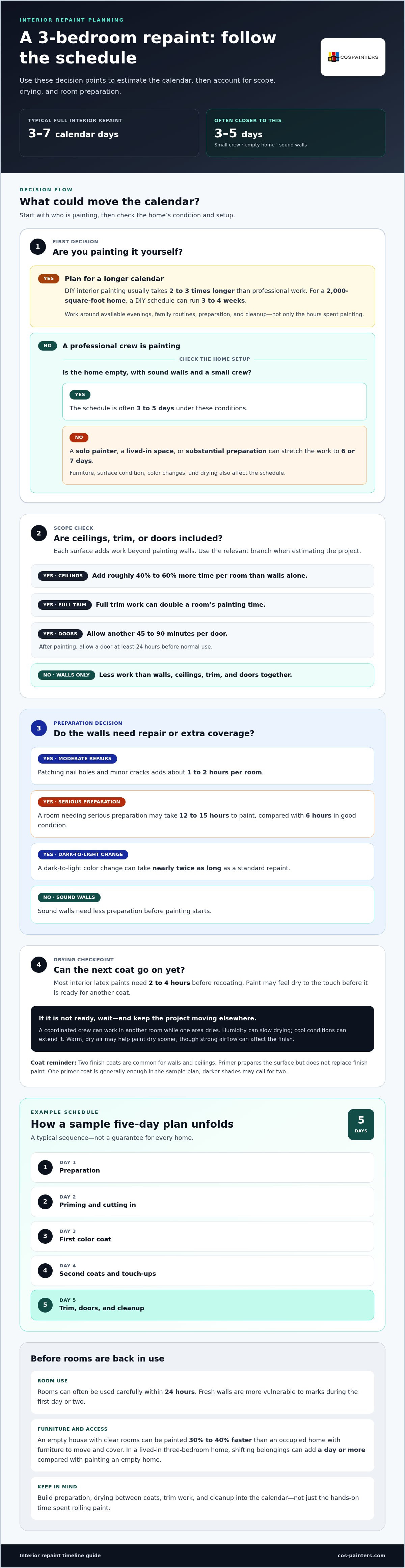
A full interior repaint of a typical three-bedroom home generally takes 3 to 7 calendar days. The timeline for a 3-bedroom interior paint job is often closer to 3 to 5 days for a small crew working in an empty home with sound walls. A solo painter, a lived-in space, or substantial preparation can stretch the work to 6 or 7 days.
It makes sense to want a clear schedule before furniture is moved, rooms are rearranged, and daily routines are disrupted. The time on the calendar includes more than rolling paint onto walls: preparation, drying between coats, trim work, and cleanup all play a part.
Here’s how a typical schedule unfolds, how professional painting compares with doing the work yourself, and which details can add time. This will help you plan around the project and understand what keeps the work moving smoothly.
Key Takeaways
- Build drying time between coats into your calendar; paint may feel dry before it’s ready for another coat.
- Compare the full DIY schedule, including preparation and cleanup, with the more coordinated pace of a professional crew.
- Decide whether ceilings, trim, and doors are part of the scope, since each adds work beyond painting walls.
- Clear rooms and make furniture easier to protect so less time is spent moving items and preparing work areas.
3 Bedroom House Interior: How Many Days to Paint?
A typical three-bedroom home takes 3 to 7 calendar days to repaint inside. A realistic timeline for a 3-bedroom interior paint job is often 3 to 5 days for a small crew in an empty home with sound walls.
Drying Between Paint Coats
Drying time is the pause before paint can take another coat. Most interior latex paints need 2 to 4 hours before recoating, so painters can use that interval in another room. Paint that feels dry to the touch may still need longer before another layer. Include those pauses in the timeline for a 3-bedroom interior paint job, rather than counting only hands-on painting hours.
Conditions That Shape the Schedule
Preparation and surface condition determine how much work happens before painting starts. Filling cracks, smoothing rough patches, and protecting floors take time; sound walls need less preparation. Humidity can slow drying, while cool conditions can extend it. Warm, dry air may help paint dry sooner, though strong airflow can affect the finish. Room conditions shape the pace.
Painting Phases and Room Use
A typical schedule moves through preparation, priming, first coats, second coats, trim, and cleanup. In a sample five-day plan, preparation takes Day 1; priming and cutting in take Day 2. The first color coat follows on Day 3, with second coats and touch-ups on Day 4. Trim, doors, and cleanup finish Day 5. Rooms can often be used carefully within 24 hours, but fresh walls are more vulnerable to marks during the first day or two.
Coat Needs for Walls and Ceilings
Two finish coats are common for walls and ceilings; primer prepares the surface but doesn’t replace finish paint. One primer coat is generally enough in this plan, while darker shades may call for two. A color change, uneven surface, or visible patches can require more coverage. The number of coats affects the schedule because each layer needs time before the next step or room use.
DIY versus professional timelines
A professional crew may complete a three-bedroom interior in a few working days, while painting on your own may stretch across weeks. The difference depends on crew size, available work time, preparation, and how efficiently painters move between surfaces.
Professional and DIY Time Differences
Professional painters work as a team, dividing preparation, cutting in, rolling, and trim work across rooms. Homeowners often paint around work, family routines, and available evenings, which spreads actual project time over a longer calendar period. DIY interior painting usually takes 2 to 3 times longer than professional work. For a 2,000-square-foot home, a DIY schedule can run 3 to 4 weeks.
Not every professional job follows the same pace. Furniture, surface condition, color changes, and drying all affect the schedule. A coordinated crew can move to another room while one area dries, maintaining progress without rushing coverage. The same approach can work for a smaller team, but fewer hands make it harder to prepare and paint several rooms in parallel.
Timelines by Home Size and Bedroom
Home size offers a useful starting point for estimating a professional schedule. Under standard conditions, a crew typically needs 3 to 4 days for a 1,500-square-foot home, and 3 to 5 days for a 2,000-square-foot home. These ranges describe whole-house projects, not just bedroom walls; ceilings, trim, doors, and preparation can change the scope.
Bedroom dimensions matter, too. A professional crew typically spends 4 to 6 hours on a small 10-by-10-foot bedroom, compared with 6 to 8 hours for a 14-by-16-foot master bedroom. Those estimates refer to painting time, not necessarily the full calendar schedule with drying and room setup. Check the square footage and included surfaces when comparing timelines; two rooms with the same label may need different amounts of work.
Wall, ceiling, trim, and door painting durations
Scope changes the time needed: walls alone take less work than walls, ceilings, trim, and doors together. Painting a 12-by-12-foot room can take roughly 5 or 6 hours. Corners and the area around a window need careful edging, so rolling open surfaces is only part of the task.
Ceilings add roughly 40% to 60% more time per room than walls alone. Adding full trim work can double a room’s painting time, while each door adds another 45 to 90 minutes. After painting, allow a door at least 24 hours before normal use. Include these details in your repaint schedule, not just the wall work.
To estimate paint quantity, divide total wall area in square feet by 350. Measure each wall’s height and width, then combine those areas before calculating. Keep ceilings separate from the wall-area estimate; exterior surfaces also need their own measurements. This approach gives you a starting point for planning paint, while the number of coats and surface condition affect the amount needed.
Wall repairs add hands-on time before painting. Moderate preparation, such as patching nail holes and minor cracks, adds about 1 to 2 hours per room. Sand rough patches smooth, caulk gaps at trim, and remove sanding dust before applying paint. These steps help create an even surface, but damaged areas take longer to prepare than walls in sound condition.
Condition can change the workload sharply: a room needing serious preparation may take 12 to 15 hours to paint, compared with 6 hours in good condition. A dark-to-light color change can take nearly twice as long as a standard repaint. A smaller room isn’t automatically a quicker job if repairs, detailed corners, or extra coverage are needed. Include preparation and drying in your estimate, not only brush and roller time.
Furniture removal and room protection
Furniture changes the amount of setup before painting begins. An empty house with clear rooms can be painted 30% to 40% faster than an occupied home with furniture to move and cover. In a lived-in three-bedroom home, shifting belongings between spaces can add a day or more compared with painting an empty home.
Start by removing small furniture and clearing access to walls, corners, and window frames. Move larger pieces to the center of the room when they can’t leave, then cover them and the floor with drop cloths. Keep a cabinet or other heavy item in place only if it doesn’t block the areas being painted. Clear walkways so painters can carry supplies without disturbing protected surfaces.
Protecting the room takes time, but it helps prevent paint marks and makes cleanup more straightforward. In an empty home, a professional crew may spend less time moving and covering items, leaving more of the work period for painting. In an occupied home, room-by-room planning can keep furniture away from active walls. Room size helps frame the work, but obstacles and access also affect preparation.
Room labor varies with the work included. A professional crew typically spends 4 to 8 hours painting a single room. Living and dining areas together may require 5 to 10 hours of hands-on work with normal preparation. That time covers painting, not necessarily moving furniture, protecting surfaces, or returning items after the room is ready.
Living-room painting cost depends on the room, surface condition, colors, furniture handling, and included details; the price is given after a quote request. If you’re planning a full interior repaint, organizing furniture and access helps clarify the project’s scope and schedule.
Colorado Springs Painters: Interior Painting
Colorado Springs Painters provides Interior Painting for homeowners planning a room refresh or a whole-home repaint. When your timeline depends on coordinating preparation, coats, trim, and room access, professional support can help organize the work around your home’s needs. Share which rooms and surfaces you want painted, along with any repairs or color changes, to establish the scope and a practical schedule.
Interior Painting can also suit focused projects, such as refreshing bedrooms or updating shared living spaces. The right scope depends on the wall condition and the finish you want, not bedroom count alone.
Contact Colorado Springs Painters to discuss your interior painting project.
Plan Your Refresh With Confidence
A well-planned timeline for a 3-bedroom interior paint job starts with decisions that fit your household: which rooms come first, what needs to be moved, and how much of the finish you want refreshed. Thinking through those choices before work begins helps make the project easier to coordinate with everyday routines.
For a home refresh, Colorado Springs Painters offers Interior Painting and Exterior Painting. The company also provides Commercial Painting / Decorating for business spaces. Choose the service that matches the property and surfaces you want renewed, then discuss your project’s scope.
If you’re ready to plan a more polished, comfortable interior, contact Colorado Springs Painters to discuss your painting needs. A clear starting point can make the next steps feel simpler, and your home’s refreshed look can be closer than it seems.
Frequently Asked Questions
Does crew size really change how long a 3 bedroom house takes?
Yes. Crew size affects how much work can happen at once: one painter can cut in while another rolls open wall areas. For an empty three-bedroom home with sound walls, a two- or three-person crew often finishes in 3 to 5 calendar days. A solo painter may need 6 or 7 days, particularly when preparation is extensive or colors change between rooms.
How Long Does It Really Take?
A full repaint of a typical three-bedroom home generally takes 3 to 7 calendar days. The shorter end suits a home with clear rooms, sound surfaces, and a coordinated crew. Occupied rooms, substantial repairs, or several color changes can lengthen the schedule. Count from setup through final touch-ups, rather than counting only the hours spent applying paint.
Should I get a written timeline before hiring a painter?
Yes, a written schedule makes it easier to plan room access and household routines. It should identify the rooms included, the order of work, and when preparation, painting, and cleanup are expected. If a bedroom needs to remain available, for example, noting that constraint helps shape the sequence. Keep the scope and schedule together so changes are easy to track.
Why does a 3 bedroom repaint take longer than the painting hours suggest?
Painting hours count hands-on work, while the calendar schedule also includes pauses and transitions. A crew may prepare one room, paint another, then return when the first is ready for its next stage. Moving supplies, protecting belongings, and completing final touch-ups also take time. In an occupied home, coordinating access to bedrooms and shared spaces can spread the work across more days.
How long does it take to paint the interior of a 3-bedroom house?
A full interior repaint generally takes 3 to 7 calendar days. The scope matters: painting only bedroom walls differs from including shared rooms, hallways, ceilings, trim, and doors. An empty home with walls in good condition usually supports a shorter schedule. Repairs, occupied rooms, and changes between colors add work beyond simply painting the three bedrooms.
How many days does interior painting take for a 3-bedroom home with a professional crew?
A professional crew often completes an empty three-bedroom home with sound walls in 3 to 5 calendar days. That schedule can cover bedrooms alongside shared spaces and finishing details. The crew’s size, preparation needs, and room access all influence how tasks are divided. If the home is occupied or the walls need considerable repair, the schedule can extend beyond that range.


