

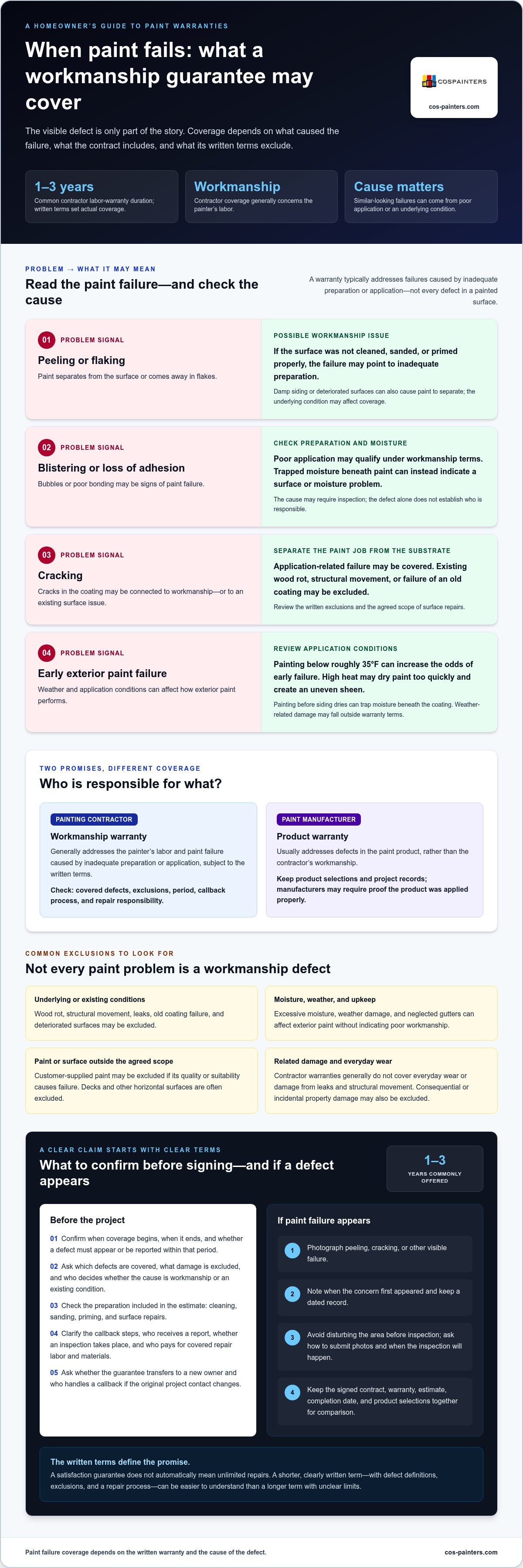
A painter’s satisfaction guarantee should cover workmanship failures such as peeling, blistering, cracking, or poor adhesion caused by inadequate preparation or application. Contractor warranties commonly last one to three years, though the written terms define the actual coverage. They generally address the painter’s labor, not damage from leaks, structural movement, or everyday wear.
It’s reasonable to expect a guarantee to explain what happens if the finish fails, but the details matter. A paint manufacturer’s warranty usually addresses product defects, while a contractor’s warranty addresses workmanship. This guide explains what a painter's satisfaction guarantee should cover, which preparation and application problems may qualify, and what exclusions to review. It also outlines questions to ask about coverage, claim steps, and repair responsibility before signing, so you can understand the promise behind the finished paintwork.
Key Takeaways
- Separate contractor workmanship coverage from a paint manufacturer’s product warranty so you know which promise applies to a defect.
- Learn which signs of paint failure may point to poor preparation or application, and why moisture or existing surface problems can change the diagnosis.
- Before signing, look for written terms that define the coverage period, exclusions, repair responsibilities, and how to submit a claim.
- Keep project records and document a concern promptly to make it easier to explain what happened and when it appeared.
What Does a House Painting Warranty Cover?
A house painting warranty usually covers workmanship, while its exclusions define which damage falls outside the painting contractor’s responsibility. In the United States, a written guarantee is governed by its contract terms and applicable law; the word “satisfaction” alone doesn’t promise unlimited repairs.
Common Warranty Exclusions
A warranty exclusion identifies conditions the painting contractor won’t repair under the stated coverage. Review these terms carefully: peeling or cracking can stem from an existing problem, not the new paint job.
Existing wood rot, structural movement, leaks, or old coating failure may be excluded. Customer-supplied paint may also fall outside coverage if its quality or suitability causes the paint to fail. For example, a warranty may cover poor application but exclude cracking linked to a deteriorated surface or unsuitable paint.
Weather damage, excessive moisture, and neglected gutters can affect exterior paint without indicating poor workmanship. Contracts may also exclude consequential or incidental damage, such as harm to belongings or other property related to paint failure. Decks and other horizontal surfaces are often excluded because standing water, sun exposure, and foot traffic affect their coatings differently than vertical siding.
Guarantee Duration
A written guarantee can explain the period for reporting covered workmanship defects. Professional painting contractors commonly offer labor warranties lasting one to three years, though the project type and surface conditions can affect the term.
Compare the stated period with the work being done: exterior paint faces weather, while interior surfaces have different exposure. The written warranty should state when coverage begins, its end date, and whether a defect must appear or be reported during that period. These details help distinguish a covered failure from damage that develops later.
Duration alone doesn’t establish what a warranty covers. A shorter written term with clear defect definitions, exclusions, and a repair process is easier to understand than a longer term with unclear limits. Keep the signed contract and warranty together, and note the completion date to track the coverage period.
Covered paint failures from preparation or application errors
A painting warranty typically covers paint failure caused by poor preparation or application. Common signs include peeling, blistering, flaking, cracking, and loss of adhesion. The cause matters: a defect linked to the painter’s work differs from failure caused by moisture or deteriorated wood.
Preparation gives paint a sound surface to grip. A professional process may include cleaning away dirt, sanding rough areas, and applying primer where needed. If paint peels because the surface wasn’t cleaned or primed properly, that points to a workmanship issue. By contrast, paint separating over damp siding can indicate trapped moisture, which requires attention to the underlying condition.
Application conditions matter, too. Exterior painting below roughly 35°F can increase the odds of early failure. High heat may dry exterior paint too quickly, creating an uneven sheen. Applying paint before siding dries can also trap moisture beneath the coating. These examples help explain why a warranty claim may involve an inspection of the surface and surrounding conditions.
Review the estimate and proposal for included preparation, such as cleaning, sanding, priming, and surface repairs. Clear terms connect each task to the area being painted and define responsibility for identified damage. If a proposal says only “painting,” it may be harder to determine whether skipped preparation falls within the agreed scope. Keep the estimate with the painting warranty for comparison if a defect appears.
Paint manufacturers may require proof that their product was applied properly, so keep product selections and project records. Photograph peeling or cracking, note when it first appeared, and avoid disturbing the area before inspection. For a home interior project, interior painting can include the careful surface preparation that supports a smooth, lasting finish.
Questions to ask before signing a painting contract
State and local consumer-protection rules differ, so the written terms and applicable law where the property is located shape enforceability. Ask how the guarantee defines covered defects and excluded damage, and how to request service.
Contractor Accountability and Callbacks
A callback process explains how a painting contractor handles a reported defect after completion. Clear steps identify who receives the report and what happens next. Ask whether to submit photos, when an inspection takes place, and how the contractor distinguishes workmanship problems from moisture or existing surface damage. Keep a dated record of the first signs, such as peeling near a window.
A contractor’s local reputation and clear written responsibilities matter when you need to understand how a warranty works. Ask who handles a callback if the original project contact changes, and whether the guarantee transfers to a new owner. Specific answers clarify accountability better than a general promise of satisfaction.
Remedies for Customer Dissatisfaction
Remedies describe the corrective action available when finished work fails to meet the contract or covered workmanship standard. A painting warranty can state whether the contractor will inspect, touch up, or repaint an affected area. Ask who pays for labor and materials for covered repairs, and whether the remedy applies to the full surface or only the defective section.
For example, peeling caused by poor application calls for a different response than a color preference discovered after completion. The contract should distinguish a workmanship defect from a change of mind and explain how each concern is handled. Defined remedies give both sides a shared reference point.
Written Guarantee Terms
A written guarantee should identify its coverage period, covered defects, exclusions, claim steps, and responsibility for repair labor and materials. Ask whether the painting contractor provides the warranty at completion and whether it is signed with the contract. These details let you compare the promise with the estimate’s surface-preparation tasks and selected paint.
Ask how the contractor’s warranty relates to the manufacturer’s paint warranty, since product defects and workmanship errors involve different responsibilities. Confirm how and when to submit a claim, what records to keep, and whether the guarantee transfers with the property. A clear written process reduces uncertainty if defects appear after the finish is complete.
Workmanship and surface-preparation coverage
A workmanship guarantee defines the standard the painter’s labor must meet. Its value depends on connecting covered defects to the preparation and application tasks in the agreement.
Workmanship-Related Paint Problems
Workmanship-related paint problems are failures caused by how the surface was prepared or coated. That distinction matters because similar damage can have different causes. Peeling paint might point to inadequate cleaning, while peeling over damp wood may indicate moisture behind the surface. A contractor’s inspection can help identify whether labor, structural movement, or another condition contributed.
Review the written scope for preparation steps such as cleaning, sanding, priming, and repairing agreed surface flaws. If paint separates where primer was required but omitted, the documented scope helps clarify responsibility. Exclusions should also distinguish workmanship issues from pre-existing damage the project did not address.
Examples of Workmanship Defects
Common workmanship defects include cracking, flaking, blistering, and premature paint failure linked to application or preparation errors. For example, paint may blister after application over a poorly prepared surface or crack when caulking was rushed. These visible signs can help you describe the problem clearly when reporting it.
Not every crack or peeling area proves poor workmanship. Structural movement, water intrusion, or deteriorated wood can damage a properly applied coating. Note where the defect appears, when you first saw it, and whether nearby surfaces show similar changes. These details give an inspection useful context.
Scope of Workmanship Coverage
Workmanship coverage is the contractor’s written commitment to correct defined defects caused by the work performed. It should explain covered repairs, exclusions, and whether labor and materials are included. A reasonable scope ties the remedy to the affected painted area rather than implying that every surface problem qualifies.
Compare the guarantee with the estimate before signing. If the estimate includes sanding and priming, the warranty can clarify how failures tied to those steps are handled. Keep the signed scope, product selections, and completion records together. For help planning a carefully prepared paint project, discuss your painting project.
Colorado Springs Painters: Interior Painting
Colorado Springs Painters provides Interior Painting for homeowners planning a refreshed room or a coordinated update across their home. Discuss which surfaces need attention and what finish suits the space, while reviewing the written scope and asking about warranty terms. For exterior projects, the team also provides Exterior Painting; Bathroom Painting and Commercial Decorating suit those specific settings.
Before work begins, share your priorities, preferred colors, and any surface concerns. A clear understanding of the areas to be painted helps align the planned work with your expectations and contract terms. Contact Colorado Springs Painters to discuss your painting project and its next steps.
Plan Your Next Paint Project With Confidence
Use the guarantee conversation as a starting point for a more thoughtful project. Before choosing colors, consider how each room is used, the finish you want, and any surface concerns that could affect the work. A clear scope connects those priorities to the finished space.
Colorado Springs Painters provides Interior Painting, Exterior Painting, and Commercial Decorating in Colorado Springs and surrounding areas. If you’re considering a fresh interior, an exterior refresh, or an update to a commercial space, bring your project goals and coverage questions into the discussion. Understanding what a painter's satisfaction guarantee should cover can help set expectations before work begins, but it doesn’t replace clear project terms.
Take the next step when you’re ready to shape your plans. Contact Colorado Springs Painters to discuss your painting project, and move toward a finish that feels right for your space.
Frequently Asked Questions
What should I do if I notice peeling paint within my warranty period?
Report peeling promptly using the claim method in your contract. Describe the room or exterior area, the approximate size of the affected patch, and whether the paint is lifting in one spot or across a larger surface. Keep your message and any response with your project paperwork. Avoid painting over the area, since that can obscure its original condition.
Should touch-ups be included in a painting warranty?
Touch-ups for covered workmanship defects are often included, but the written terms should define their scope. A repair, for example, might address the affected section rather than repainting an entire room. Ask how the contractor will handle visible differences in sheen or color after a repair, and distinguish defect correction from touch-ups requested solely because you’ve changed your preferred color.
What Is a Workmanship Warranty, Exactly?
A workmanship warranty is a contractor’s written commitment that its labor meets a defined standard. It concerns the work performed, not every issue that may affect paint later. For example, a coating defect linked to application may fall under workmanship terms, while a formulation defect belongs to the paint product’s warranty. The written agreement explains how those responsibilities are separated.
What are the exclusions?
Exclusions are conditions or types of damage the warranty specifically leaves out. They matter because visible paint damage alone doesn’t establish responsibility. Read each exclusion alongside the promised coverage: a clause about pre-existing surface damage, for instance, may affect a claim where the underlying material was already deteriorated. Clear wording helps you understand the limits before work begins.
What should a painter's satisfaction guarantee cover?
A painter's satisfaction guarantee should define the workmanship standard, covered paint defects, duration, exclusions, and claim process. It should also state whether covered repairs include labor, materials, or both. For a practical example, look for wording that explains how peeling linked to the painter’s application will be assessed and what remedy follows, rather than relying on a broad promise of satisfaction.
What is typically excluded from a painting contractor's satisfaction guarantee?
Contractor guarantees commonly exclude damage unrelated to the contractor’s labor, such as water intrusion, structural movement, impact, vandalism, or extreme weather. They may also exclude deterioration of old coatings and damage caused by later work or homeowner neglect. For example, a new leak that stains a finished wall differs from paint failure caused by an application error, even if both affect the finish.


