

Satin is often a practical default among interior paint finishes for high-traffic family homes because it is generally easier to clean and more resistant to scuffs than flatter finishes. Eggshell offers a softer, less reflective look and can be more forgiving on walls with minor imperfections. The trade-off is that higher sheen can make dents, patches, and uneven texture more noticeable.
Busy walls collect fingerprints, bag marks, and everyday mess, so cleanability matters alongside color choice. This guide compares eggshell and satin, explains when semi-gloss may suit a space, and covers what to consider in family rooms, hallways, and stairwells. Use the room’s wear, wall condition, and desired appearance to choose a finish that works for your home.
Key Takeaways
- Match the finish to how each room is used, from low-touch accent walls to busy stairs and entryways.
- Compare paint quality as well as sheen; a well-made washable finish can be more practical than a lower-quality glossier one.
- Use higher-sheen options selectively on trim, doors, and surfaces exposed to frequent moisture or cleaning.
- Prepare walls carefully by cleaning, repairing, and priming where needed so the new paint adheres evenly.
- Let fresh paint cure before cleaning it, then use gentle methods to keep walls looking their best.
1. What Is the Best Paint Finish for High-Traffic Walls?
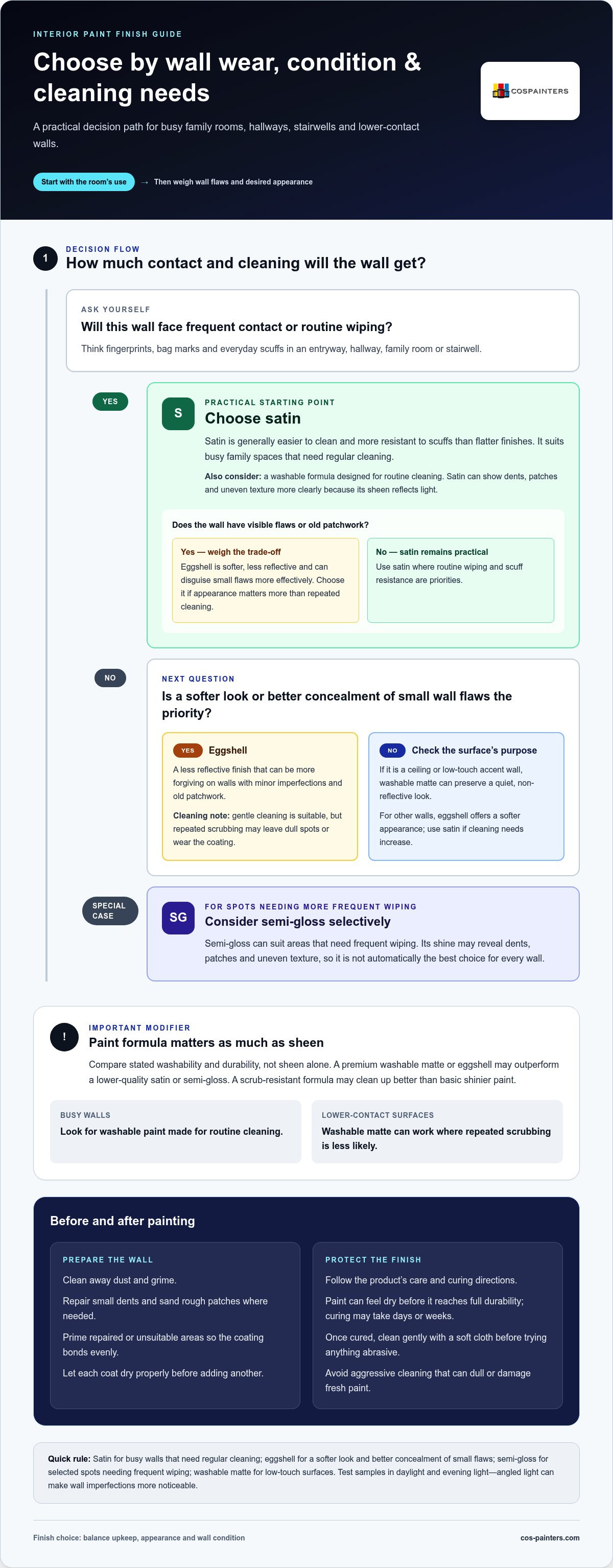
For most high-traffic walls, satin is a practical starting point. Its higher sheen generally makes it easier to clean and more resistant to scuffs than flat or matte paint. In a family living room, entryway, or stairwell, choose a washable formula designed for routine cleaning. Semi-gloss can suit spots that need frequent wiping, but its shine may reveal wall flaws.
Sheen affects both upkeep and appearance. A more reflective paint film usually releases fingerprints and everyday marks more readily, which can help where backpacks brush walls or hands leave prints near a doorway. The trade-off is visibility: reflected light can emphasize dents, patches, uneven texture, and application marks.
Look beyond sheen to the paint’s stated washability and durability. A premium washable matte or eggshell may outperform a lower-quality satin or semi-gloss. For example, a hallway painted with a scrub-resistant formula may clean up better than one coated in a basic, shinier paint. Follow the product’s care directions to protect the finish.
There isn’t one dependable per-gallon cost for durable interior paint in the United States. Retail prices vary with paint quality, formulation, and seller, so compare those factors rather than sheen alone.
For a durable, washable finish, prepare the wall before painting. Clean away dust and grime, repair small dents, and sand rough patches where needed. Prime repaired or otherwise unsuitable areas so the new coating bonds evenly. Apply the paint according to its directions, allowing each coat to dry properly before adding another.
Lighting changes how sheen looks across a wall. Satin can show a soft glow in a bright living room, while the same sheen may appear subtler in a dim entryway. Test a sample on more than one wall and view it in daylight and evening light. Light striking the wall at an angle can make ridges and patch edges more noticeable.
Scrubbability depends on the paint film, not just its sheen. Satin and semi-gloss are common choices for walls exposed to daily wear, but aggressive cleaning can still dull or damage fresh paint. Paint may feel dry within hours yet need days or weeks to reach full durability. Follow the manufacturer’s curing instructions before scrubbing.
Match the finish to the wall’s condition and use. Choose satin for busy family spaces that need regular cleaning; consider eggshell when a softer look and better concealment of small repairs matter more. Reserve semi-gloss for areas that need more frequent wiping. This balance helps keep high-use rooms presentable without making every wall highly reflective.
2. Is eggshell or satin better for high-traffic walls?
For walls that collect fingerprints and scuffs, satin is usually the more practical choice. Its surface generally handles routine wiping better than eggshell. Eggshell offers a softer, less reflective appearance and can disguise small wall flaws more effectively. Choose between them by balancing cleaning needs with the look and condition of each space.
Washable eggshell and satin can both work in homes with children or pets. Satin is better suited to repeated cleaning in busy hallways, family rooms, and children’s bedrooms. Eggshell can suit a lower-contact living room or a wall with visible old patchwork. Formula matters too: a premium washable eggshell may outperform a lower-quality satin.
Washability and scrub resistance vary by sheen and paint formula. Satin and higher-sheen finishes generally tolerate more frequent cleaning than flat or matte paint. Eggshell can handle gentle cleaning, but repeated scrubbing may leave dull spots or wear the coating. Follow the paint label’s cleaning instructions, and use a soft cloth before trying anything abrasive.
Washable matte can be a sensible option for ceilings and low-touch accent walls. These surfaces usually face less contact than a stairwell or entryway, so their lower sheen can preserve a quiet, non-reflective look. Even washable matte is less suited to repeated scrubbing than satin. Avoid it on walls where hands, bags, or furniture regularly leave marks.
Stain-resistant paint can make everyday marks easier to remove, but it doesn’t make a wall stainproof. Wipe spills promptly and use mild cleaning methods suited to the paint. Moisture-resistant coatings may help in damp spaces, but persistent humidity or poor airflow can still be a problem. In a bathroom, ventilation remains important for keeping painted surfaces in good condition.
“Mould-resistant” describes a coating intended to resist mould growth on the painted surface; it doesn’t correct persistent moisture or inadequate ventilation. For a bathroom wall, pair appropriate paint with good airflow. For a child’s room, prioritize washability and scuff resistance. Choosing finishes for each room’s actual exposure is more reliable than using one gloss level everywhere.
Gloss finishes can be easy to wipe, but their reflection highlights dents and uneven texture. Eggshell offers a gentler appearance, while satin gives busy walls a useful middle ground between cleanability and shine. Before deciding, consider how often the surface needs cleaning, how much wear it receives, and whether reflected light will reveal wall imperfections.
After painting, don’t rush into repeated washing. A coating may feel dry before it reaches full durability, so follow the manufacturer’s curing directions. Once cured, clean marks gently and avoid harsh chemicals that can dull the finish. This helps satin or eggshell walls stay presentable without unnecessary wear.
3. Comparing flat, matte, eggshell, satin, semi-gloss, and high-gloss
Flat and matte finishes absorb more light than satin or gloss, giving walls a softer look. They also hide small imperfections, such as nail holes and uneven patches, better than reflective coatings. Their drawback is cleaning: repeated scrubbing can leave visible marks or remove paint. Use them where appearance matters more than frequent washing, such as a low-touch bedroom wall.
Eggshell adds a gentle sheen while keeping reflection modest. It handles light cleaning better than flat paint and can disguise repairs more effectively than satin. Choose eggshell for living rooms or bedrooms with limited wall contact, especially when older plaster or patchwork needs less emphasis. It is not the strongest option for walls that face frequent scrubbing.
Satin offers a soft glow and a useful middle ground between cleanability and reflection. Its surface is generally easier to wipe than eggshell, making it practical for busy areas such as hallways and children’s rooms. Satin can still reveal dents and uneven texture, so repair rough spots before painting.
Semi-gloss is more reflective and easier to clean than satin or eggshell. It also resists moisture and grease better, which can help in a mudroom or laundry room exposed to wet coats, splashes, and detergent residue. In a child’s room, use it where repeated wiping matters most rather than automatically coating every wall.
High-gloss creates a hard, highly reflective surface that wipes clean readily. Its shine also highlights imperfections, glare, and application marks, making it less forgiving across broad walls. Use it selectively on trim, doors, or stair rails, where hands leave frequent marks and a smaller surface suits its polished appearance.
Low-sheen paint has a clear advantage on imperfect walls: flat and matte finishes diffuse light, so shallow dents and old patchwork stand out less. The trade-off is lower cleanability, especially when scrubbing is routine. Eggshell offers a compromise, while satin and gloss are easier to wipe but reveal more surface flaws.
Consider how each room is used before selecting a sheen. A satin hallway can tolerate bag scuffs better than flat paint, while eggshell may give a quiet guest bedroom a softer finish. A semi-gloss laundry-room wall can be easier to clean near a sink or washer. Keep high-gloss for details, not expansive walls.
Compare paint samples on the actual surface before deciding. View them beside a window and under evening lights, since reflection changes with lighting and wall texture. Then weigh three practical questions: how often will the wall need cleaning, how visible are its imperfections, and how much sheen suits the room? The answers help match the finish to its use.
4. Choosing paint quality and finish for busy family homes
Start with each room’s demands, then compare paint quality and sheen. Choosing interior paint finishes for high-traffic family homes means considering how often walls need cleaning, how much contact they receive, and how their surfaces look. A premium washable formula may be more practical than a cheaper coating that needs frequent touch-ups. For example, a kitchen wall may face fingerprints, food splashes, and moisture, so prioritize washability before deciding on sheen.
Wall condition matters just as much. Satin and semi-gloss reflect more light, which can reveal old patches, dents, or uneven texture. If a hallway wall has visible repairs, eggshell may soften those flaws while allowing gentle cleaning. Clean the surface, repair damaged areas, sand rough edges, and prime where needed. A smooth, well-prepared wall helps the new coating look even.
Match sheen to each space’s cleaning routine. Satin is useful for family rooms, kitchens, and shared hallways that need regular wiping. Semi-gloss resists moisture and grease better, so it can suit splash-prone kitchen areas or laundry spaces. Choose eggshell for a softer look in rooms with less wall contact. Reserve flat or matte finishes for low-touch areas that don’t need frequent cleaning.
Color can affect how busy rooms look between cleanings. Mid-tone neutrals, such as warm gray, soft taupe, and greige, can conceal everyday wear better than pure white or very dark colors. Dark shades may make a room feel smaller and show imperfections more readily. Test samples on multiple walls, then compare them in daylight and evening lighting before choosing.
Use suitable tools for an even result. Quality brushes help create clean edges around trim, while rollers spread paint smoothly across broad walls. Match the roller to the wall texture and keep application consistent across each section. Uneven pressure or a roller that holds too little paint can leave visible marks, especially under strong window light.
When selecting interior paint finishes for high-traffic family homes, also read the paint label for VOC information, application directions, and ventilation guidance. VOC requirements can depend on the product and location. If reducing indoor emissions is a priority, choose a low-VOC option and ventilate the room as directed during painting and drying.
Before starting, make a room-by-room plan. Note each wall’s condition, moisture exposure, and cleaning needs, then pair those factors with paint quality and sheen. Washable satin may suit a frequently used kitchen wall, while eggshell can give a quieter living room a softer appearance. Follow the manufacturer’s drying and curing instructions before cleaning newly painted surfaces.
5. What Paint Finish Is Best for Hallways and Stairwells?
Satin is often a practical choice for hallways and stairwells, where hands, bags, and shoulders brush the walls. Its washable surface handles scuffs better than flat paint, while its moderate sheen avoids semi-gloss’s stronger reflection. For a stairwell with visible patching, prepare uneven areas first, since satin can still reveal surface flaws.
A common mistake is choosing a finish by appearance alone. Flat paint can soften the look of an imperfect wall, but repeated cleaning may leave marks or remove paint. At the other extreme, high-gloss wipes clean easily yet can highlight dents and glare along a long hallway. Match sheen to the wall condition and the amount of everyday contact.
Paint quality matters too. A washable, durable formula can help busy surfaces withstand routine cleaning without wearing thin as quickly. Satin is generally better suited than eggshell when hallway walls face frequent fingerprints and bag scuffs. Semi-gloss can work on trim, doors, or other surfaces that receive more direct contact, but broad walls may look overly reflective.
Don’t scrub new paint just because it feels dry. A painted surface may feel dry within hours, but full durability can take days or weeks. Follow the manufacturer’s curing instructions before cleaning, and avoid aggressive scrubbing during that period. Early friction can dull or damage the finish before the paint film has fully hardened.
Once the coating has cured, clean painted surfaces gently. Use a soft cloth or sponge with mild soapy water, and test a discreet area first. Avoid harsh chemicals and abrasive pads, which can strip or dull the finish. Cleaning walls every few months can help manage dust, while prompt attention to fresh scuffs can prevent marks from settling.
Don’t use one cleaning method for every mark. Start with a damp cloth on a washable satin wall, using gentle pressure rather than vigorous scrubbing. For a stubborn mark, repeat carefully instead of reaching immediately for a stronger cleaner. This reduces the risk of creating a dull spot that looks worse than the original scuff.
For hallways and stairwells, plan the finish and upkeep together. Satin suits frequently touched walls; a tougher sheen may suit doors or rails, while a flatter finish can better disguise flaws in a low-contact area. Proper preparation and patient curing help the coating withstand everyday use throughout the home.
If your hallway or stairwell needs a durable, carefully applied finish, explore interior painting support for the project.
Colorado Springs Painters: Interior Painting
Colorado Springs Painters provides Interior Painting for homeowners planning a refresh or repaint of busy rooms. If hallways, stairwells, or family-room walls need a durable finish, professional painting can bring surface preparation, sheen selection, and application together for a consistent result. The right finish depends on each wall’s condition, how often it needs cleaning, and the look you want throughout your home. For moisture-prone bathroom walls, Colorado Springs Painters also offers Bathroom Painting. A clear plan for finishes and colors can help your rooms feel considered, practical, and welcoming. Contact Colorado Springs Painters or visit cos-painters.com to discuss your interior painting project.
Make Your Next Painting Decision With Confidence
A fresh coat can do more than brighten a room. It can help busy spaces feel intentional and easier to care for, especially when the finish suits how your household uses them. Before painting, note which walls need the most attention, what look you want, and where professional advice could help bring those choices together. That plan gives you a clear starting point for selecting interior paint finishes for high-traffic family homes.
Colorado Springs Painters offers Interior Painting for homeowners ready to move from choosing a finish to refreshing their rooms. Share your goals for the space and explore a practical direction for the project. Contact Colorado Springs Painters today to discuss your interior painting plans and take the next step toward a home that feels renewed and ready for everyday life.
Frequently Asked Questions
What Is the Best Paint Finish for High-Traffic Walls?
Satin is a strong starting choice for walls that see frequent contact, such as a family-room path between the sofa and kitchen. It combines a gentle sheen with practical cleanability. Consider eggshell if the wall has visible patching and receives less contact. The best match depends on the wall’s condition and how often fingerprints, chair marks, or other everyday dirt need to be removed.
Does Higher-Gloss Paint Always Last Longer?
No. Higher gloss often improves wipeability, but sheen alone doesn’t determine how well paint holds up. Paint formulation, surface preparation, application, and curing all matter. For example, a well-prepared wall with quality washable satin may perform better in daily use than a poorly prepared wall with a shinier coating. Pick a finish for the room’s cleaning needs, then follow its application and care directions.
Is eggshell or satin better for high-traffic walls?
Satin usually suits walls that need regular wiping, while eggshell offers a softer appearance and can better disguise minor surface flaws. In a busy family room, satin may be more practical near light switches or a frequently used doorway. Eggshell can work well on a quieter wall where appearance takes priority. Consider the wall’s condition, expected contact, and desired sheen together.
What Is Considered a High-Traffic Area?
A high-traffic area is a part of the home people pass through or touch often. Entryways, shared hallways, staircases, kitchens, and living-room routes are common examples. Consider the narrow wall beside a coat hook or the corner where family members carry laundry upstairs. Repeated contact from hands, bags, and furniture can leave marks, so these spots benefit from a finish suited to regular cleaning.
What Paint Finish Is Best for Hallways and Stairwells?
Satin is often useful for hallway and stairwell walls because it balances cleanability with moderate sheen. For a narrow stair landing with noticeable wall repairs, eggshell may soften the appearance, though it won’t handle repeated scrubbing as well. You can also choose a more reflective finish for trim or a handrail, separating frequently touched details from the larger wall surface.
What Paint Finish Is Best for Homes With Children or Pets?
Choose washable eggshell or satin for walls children or pets regularly brush against. Satin is practical near play areas, pet beds, or the route to the backyard, where marks may need prompt attention. Eggshell can suit less exposed walls when you prefer reduced reflection. Whichever sheen you select, follow the paint’s cleaning directions and avoid aggressive scrubbing that could dull the finish.
What Paint Finishes Are Best for Kitchens and Bathrooms?
Satin is a practical wall finish for many kitchens and bathrooms, while semi-gloss can suit surfaces exposed to more moisture, grease, or splashes. In a kitchen, consider where cooking residue lands; near a sink, a more washable coating can simplify cleanup. In bathrooms, paint alone can’t address ongoing humidity. Use an exhaust fan to manage condensation and help protect the painted surface.
What are High-Traffic Areas in a Home?
High-traffic areas include places people repeatedly cross, gather, or reach for throughout the day. Besides entryways and stairs, look at the wall beside a dining table, around light switches, or near a hallway console. These small zones may receive more handprints and scrapes than an entire room. Identifying the actual contact points helps you choose finishes and cleaning routines by surface instead of treating every wall alike.


