

Porcelain and ceramic tile are virtually impervious to pet-claw scratches, while luxury vinyl with a wear layer of at least 20 mil is a strong all-around option for flooring that resists pet scratches and stains. But the hardest surface isn’t automatically the best fit: moisture protection, traction, and daily cleanup matter too. Engineered hardwood can suit a pet home when it has a harder wood species and durable finish, though standing water can damage it.
It makes sense to want flooring that resists pet scratches and stains while handling excited paws, muddy tracks, and the occasional accident without sacrificing your home’s look and feel. Choose by comparing scratch resistance with stain and moisture performance, rather than relying on a single durability claim.
This guide compares tile, luxury vinyl, laminate, and engineered hardwood, explains how wear-layer thickness affects vinyl, and highlights each material’s trade-offs. You’ll also find practical ways to protect flooring, from choosing a finish with better traction to placing washable mats where pets spend the most time.
Key Takeaways
- For luxury vinyl in a pet home, look for a wear layer of at least 20 mil to help handle everyday claw traffic.
- Choose water-resistant or waterproof laminate to reduce moisture-related damage, and clean spills promptly.
- Engineered hardwood can work for pets when it has a harder wood species and durable finish, but standing water can damage it.
- Compare scratch resistance alongside moisture protection, traction, and cleanup needs to find the right fit for your home.
How Thick Should the Wear Layer Be for Pets?
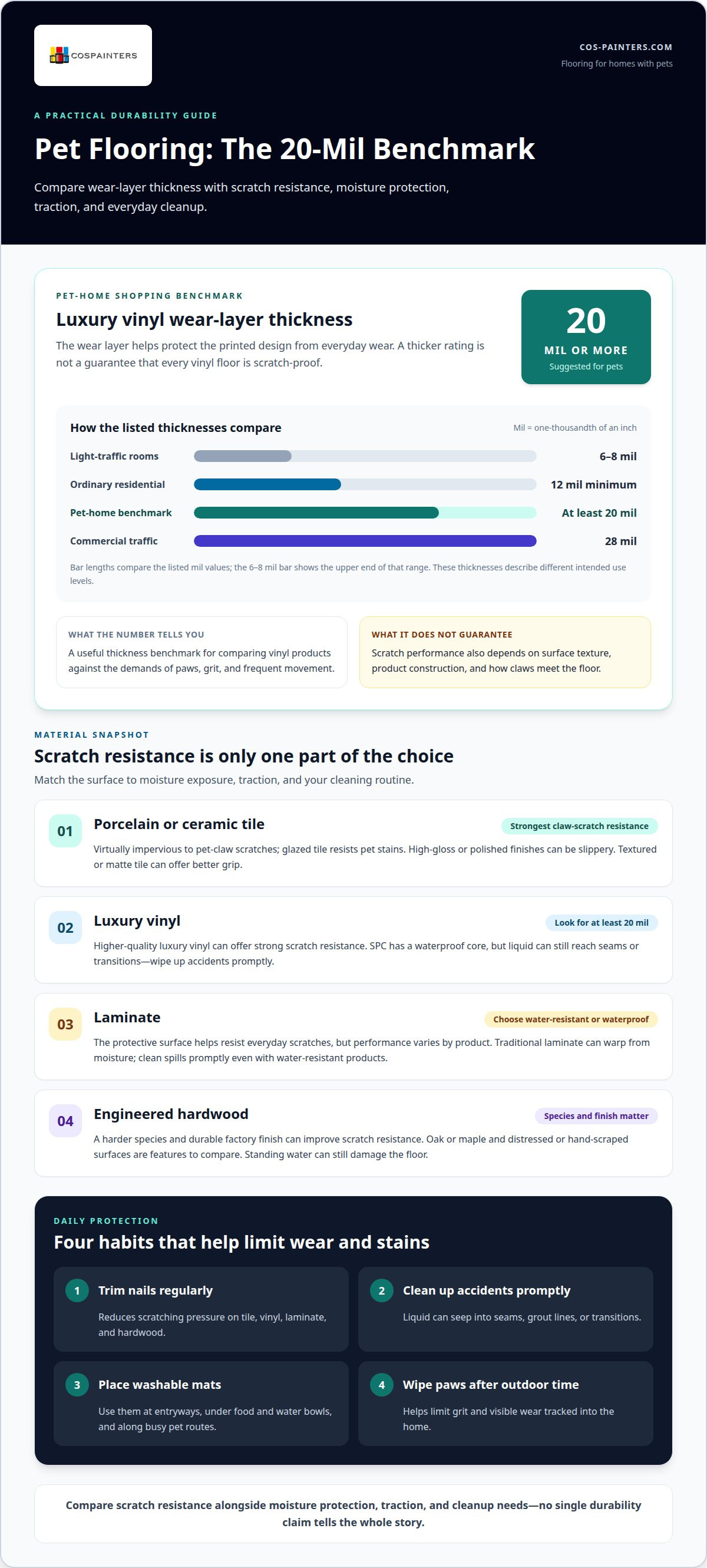
For a pet home, choose luxury vinyl with a wear layer of at least 20 mil. A mil is one-thousandth of an inch, and this surface layer helps protect the printed design from everyday wear. The 20-mil recommendation offers a useful shopping benchmark, but it doesn’t make every vinyl floor equally scratch-proof. Surface texture, product construction, and how claws meet the floor also matter.
Thickness ratings help separate intended uses. A 6- to 8-mil wear layer is intended for light-traffic rooms, while 12 mil is the minimum listed for ordinary residential use. For commercial traffic, the listed thickness is 28 mil. These figures describe different use levels, so don’t treat a residential minimum as the pet-home recommendation. Compare the product’s stated wear-layer thickness with the demands of paws, grit, and frequent movement.
SPC rigid-core luxury vinyl has a waterproof core, and a sufficiently thick wear layer can help it resist everyday pet-claw traffic. Luxury vinyl plank and tile offer wood- or tile-inspired looks, respectively, with a resilient surface layer. The waterproof core does not prevent liquid from reaching seams or transitions, so wipe up accidents promptly.
| Flooring option | Scratch resistance | Moisture consideration |
|---|---|---|
| Porcelain or ceramic tile | Virtually impervious to pet-claw scratches | Glazed tile resists pet stains |
| Luxury vinyl | Choose at least 20 mil for pets | SPC has a waterproof core |
| Laminate | Surface performance varies by product | Traditional laminate can warp from moisture |
| Hardwood | Species and finish affect scratch resistance | Standing water can damage engineered wood |
Use this comparison to match the floor to your pet’s habits: prioritize tile for claw-scratch resistance, or a 20-mil-or-thicker luxury vinyl wear layer for a balance of scratch protection and a waterproof SPC core.
Tile handles claw contact particularly well, but a high-gloss finish may be slippery. Textured or matte tile can offer pets better grip. Laminate and hardwood need more attention to surface damage and spills. For engineered hardwood, a harder species and durable factory finish can improve scratch resistance, but standing water remains a concern.
Which Floors Resist Dog Scratches Best?
Porcelain and ceramic tile resist pet-claw scratches particularly well, while higher-quality luxury vinyl can also offer strong scratch resistance. For dogs, compare surface durability with moisture protection, since muddy paws and accidents challenge floors in different ways.
The cost of installed pet-resistant flooring depends on the material, room size, floor removal, subfloor preparation, and installation details. Request a quote to get pricing for your project.
Laminate Water and Scratch Resistance
Laminate flooring has a protective surface that helps resist everyday scratches, but performance varies by product. Traditional laminate can warp after moisture exposure, so pet owners should choose a water-resistant or waterproof variety. Water-resistant flooring is designed to handle some moisture, while waterproof products offer stronger protection from liquid. Neither label removes the need to clean up pet accidents promptly.
Compared with tile, laminate is more vulnerable to moisture damage, while glazed porcelain and ceramic resist pet stains. Higher-quality WPC or SPC luxury vinyl can also provide strong scratch resistance, and SPC has a waterproof core. Compare each product’s stated water-resistance claims with its scratch-performance details, rather than assuming one feature proves the other.
Preventing Pet Scratches and Stains
Regular nail trimming reduces scratching pressure on tile, vinyl, laminate, and hardwood. Wipe up pet accidents promptly, since liquid can seep into seams, grout lines, or transitions. Place washable mats at entryways, under food and water bowls, and along busy pet routes. These steps address different sources of wear instead of relying on one material alone.
Wiping paws after outdoor time helps limit grit and visible wear. Tile offers strong resistance to claw scratches, but polished finishes can be slippery; textured or matte surfaces improve traction. Engineered hardwood can better resist scratches with a harder species and durable finish, yet standing water can damage it. Match the flooring and finish to your dog’s habits and your cleaning routine.
For help choosing and installing a floor for your home, explore flooring installation. A suitable material, prompt cleanup, and mats in spill-prone areas work together to protect your floors.
Q: Is engineered hardwood a bad choice for homes with pets?
No. Engineered hardwood can suit pet owners who choose a harder wood species and durable factory finish. Oak or maple, distressed or hand-scraped surfaces, and strong wear layers are practical features to compare. These choices can improve scratch resistance, but they do not make wood immune to claw marks. Traditional engineered hardwood can also be damaged by standing water or repeated pet accidents.
Solid hardwood has a trade-off: its surface can show scratches from active pets, while moisture from spills and accidents can affect the floor. Consider your pet’s habits alongside the appearance you want. A dog that tracks grit indoors may create more visible wear than a pet that spends most of its time on rugs. In either case, prompt cleanup helps limit moisture exposure.
Carpet presents a different challenge. Its fibers can snag under pet claws, and traditional carpet can trap pet hair, absorb odors, and stain easily. After an accident, liquid may reach the padding underneath, where lingering smells can be difficult to remove. Smooth, non-porous flooring makes hair, dirt, and messes easier to clean, though it may feel less soft underfoot than carpet.
Compare the trade-offs before choosing. Ceramic or porcelain tile resists pet-claw scratches particularly well, and glazed tile resists pet stains, but polished finishes can be slippery for pets. Carpet provides a quieter surface, yet its fibers and padding can hold hair and accident odors. Engineered hardwood offers a natural wood look, with scratch resistance influenced by species and finish. Its vulnerability to standing water makes prompt cleanup especially important.
For a young puppy or kitten, this guide recommends a forgiving, fully waterproof floor for at least the first year, then reassessing as habits become established. For established pets, match the finish to claw activity and your tolerance for visible wear. Enzyme-based cleaners can break down organic compounds behind lingering pet odors more effectively than general household cleaners. Rugs can also protect busy areas without requiring new flooring throughout the home.
Scratch and moisture resistance by flooring material
Porcelain tile and higher-quality luxury vinyl are strong candidates for homes with pets. Porcelain resists claw scratches and moisture, while vinyl offers a resilient surface with water-resistant or waterproof construction. The best choice depends on whether scratches, accidents, traction, or easy cleanup matter most in your rooms.
Porcelain absorbs 0.5 percent or less of its weight in water under ANSI A137.1. Glazed porcelain and ceramic tile resist pet stains, making them practical near food and water stations. Grout needs attention, though: sealing it can help prevent odors and stains from absorbing. Darker or epoxy grout can also make pet-related marks less noticeable. For traction, choose matte or textured tile over a polished finish, which can be slippery when wet.
Luxury vinyl can offer strong scratch resistance, and SPC rigid-core vinyl combines a waterproof core with a protective wear layer. Compare thickness and surface details, since the core protects against moisture differently from the layer exposed to claws. Laminate needs more care around liquid: traditional products can warp, so choose a water-resistant or waterproof variety for pet areas. Wipe up accidents promptly, especially near seams and transitions.
Cork has a softer feel, but sharp claws can scratch or puncture it if its finish is not durable. Water can also damage cork that is not sealed and maintained, so clean spills immediately. Engineered hardwood resists scratches better with suitable wood and finish choices, but standing water and repeated accidents can damage it. Carpet quiets footfall, yet its fibers and padding can trap hair, stains, and odors.
Use this decision guide: choose porcelain or ceramic for strong scratch and stain resistance; consider luxury vinyl for a resilient, moisture-conscious surface; and weigh hardwood or cork against your pet’s habits and your maintenance preferences. Washable runners can add a removable buffer in busy areas. No single flooring option suits every pet home, so prioritize the risks your rooms face most.
Planning a floor update? Explore flooring options to find a material suited to your home and pets.
Colorado Springs Painters: Interior Painting
Colorado Springs Painters can complement a flooring update with professional Interior Painting, a natural next step when new floors change the feel of a room. Fresh wall color can work with a durable floor and create a more cohesive look in spaces where pets spend time. Dedicated Bathroom Painting can refresh a bathroom alongside flooring decisions. Commercial spaces can benefit from Commercial Decorating, while Exterior Painting addresses a separate part of a property’s improvement plans.
Turn to Colorado Springs Painters when a flooring project has you considering a broader update to your home or property. Choose colors and finishes that complement the floor and suit the room’s everyday use.
Contact Colorado Springs Painters to discuss your interior painting project, or visit cos-painters.com.
Plan a Floor That Fits Your Home
Plan your flooring choice around the life of your home. Consider where your pets run, rest, eat, and come in from outdoors. Then decide which room needs the easiest cleanup, the quietest surface, or a finish that complements the rest of your interior. These priorities can help you choose flooring that resists pet scratches and stains without losing sight of comfort and style.
It also helps to plan the room as a whole. Consider how the floor’s color and texture will work with your walls, furnishings, and everyday routines. A thoughtful plan makes it easier to create a cohesive, welcoming space for people and pets alike.
For a broader home refresh, contact Colorado Springs Painters to discuss your project. A well-planned space can feel more like home, paws and all.
Frequently Asked Questions
What Makes a Floor Actually Pet-Friendly?
Pet-friendly flooring balances scratch resistance, moisture protection, traction, and easy cleanup. For flooring that resists pet scratches and stains, consider how your pet uses each room, not just the material’s label. A senior dog may need more grip than a young, agile cat. In a busy Colorado Springs entryway, a washable runner can catch grit and muddy paw prints before they spread indoors.
Is vinyl or laminate better for pets?
Vinyl is often a practical option for homes where spills and accidents are a concern, especially when it has a waterproof core. Laminate can resist everyday surface scratches, but traditional versions may warp with moisture. Choose water-resistant or waterproof laminate if you prefer its appearance. Compare the specific product’s scratch and moisture claims, since the material name alone does not establish how it performs.
Which Floors Handle Accidents and Spills?
Glazed porcelain and ceramic tile resist pet stains, while SPC vinyl has a waterproof core. Liquid can still reach vulnerable seams, transitions, or grout, so wipe up accidents promptly rather than letting puddles sit. In tiled rooms, grout maintenance matters as well as the tile itself. Mats beneath food and water bowls can catch routine drips before they reach the surrounding floor.
How does luxury vinyl plank compare with porcelain tile for pets?
Luxury vinyl plank can offer a resilient, softer-feeling surface, while porcelain tile is highly resistant to pet-claw scratches and moisture. The practical differences often come down to comfort and traction: tile can feel hard underfoot, and polished finishes may be slippery when wet. Textured or matte tile can improve grip. With either option, consider how the floor meets doorways and adjoining rooms.
Is laminate flooring scratch-resistant and waterproof for pets?
Laminate’s surface can resist everyday scratches, but not every laminate floor is waterproof. Traditional laminate can warp with moisture, so pet owners should choose a water-resistant or waterproof variety and clean spills promptly. The North American Laminate Flooring Association certification covers four end-use levels and includes 14 performance tests. Those tests offer a useful framework for comparing rated laminate products.
Which hardwood flooring finishes are most resistant to pet scratches?
A durable factory finish and harder wood species can improve hardwood’s scratch resistance. Oak or maple with a distressed or hand-scraped finish is worth considering for a pet home. These choices can make claw marks less prominent, but hardwood can still be scratched, and standing water can cause damage. Use rugs in active pet zones and wipe up accidents as soon as they happen.


