

For waterproof flooring for finished basements in Colorado Springs, luxury vinyl plank is a practical all-around choice: it resists water and works well over a concrete slab. Tile is another moisture-resistant option, while sealed concrete suits spaces where a simple, hard-wearing surface matters more than a softer feel.
A basement floor has to do more than look good. Concrete can carry moisture and feel cool underfoot, so the right choice depends on how you use the room and how the slab is prepared. This guide compares vinyl plank, tile, laminate, carpet, and sealed concrete, explaining where each option fits and what to consider before installation. You’ll also learn how vinyl plank performs in a finished basement and why careful installation helps create a comfortable floor for everyday life in Colorado Springs.
Key Takeaways
- Match the flooring to the basement’s moisture conditions and how you plan to use the space.
- Compare tile, laminate, carpet, and sealed concrete by comfort, upkeep, and suitability for a concrete slab.
- See why vinyl plank is a practical option for finished basement living areas.
- Learn how professional installation helps address slab conditions and support a lasting finish.
What is the best flooring for a basement?
Luxury vinyl plank is a practical all-around choice for finished basements with concrete slabs. The best fit still depends on moisture, comfort, and how you use the room.
Moisture Barriers and Subfloors
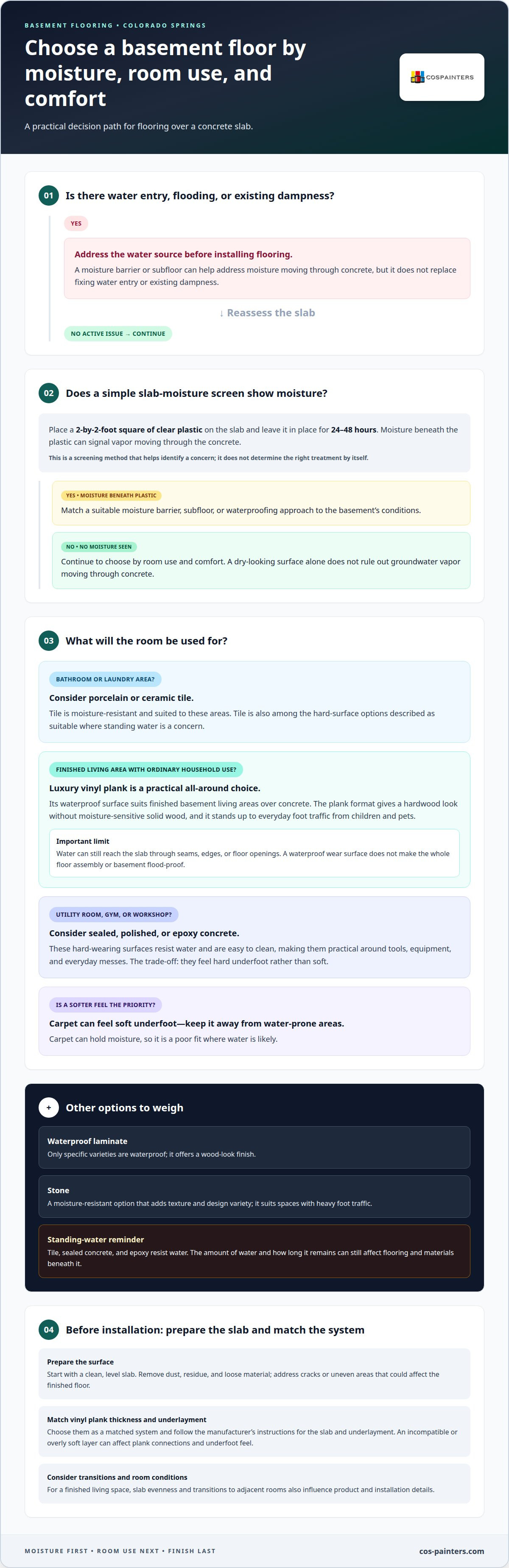
A moisture barrier or subfloor separates flooring from humidity moving through a concrete slab. A vapor barrier is usually 6-mil polyethylene, while a subfloor can add warmth under tile and help protect the finished surface. These layers address slab moisture and comfort; they don’t replace fixing water entry or existing dampness before installation.
Moisture Assessment Before Installation
Before flooring goes down, assess the slab for moisture. One simple screening method uses a 2-by-2-foot square of clear plastic sheeting left in place for 24-48 hours. Moisture beneath the plastic can signal vapor coming through the concrete. This check helps identify a concern, while a suitable barrier, subfloor, or waterproofing approach depends on the basement’s conditions.
Basement Water-Damage Risks
Groundwater vapor can pass through concrete even when the surface looks dry. Leaks or flooding pose a different risk: standing water may damage flooring and the materials beneath it. Carpet can hold moisture, making it a poor fit for areas prone to water. Solid hardwood is also not recommended because moisture can affect it; engineered wood is better suited to a dry, well-sealed basement.
Local Codes and Weather Effects
Colorado Springs flooring requirements depend on project scope and applicable local building rules. A flooring comparison alone can’t establish whether a permit applies, so don’t assume every installation requires one or that none do. Colorado Springs’ dry climate doesn’t eliminate the need to assess basement slab moisture. Freeze-thaw conditions make moisture control worth considering, but the slab’s condition and the room’s exposure matter more than climate alone.
| Option | Moisture fit | Comfort or use |
|---|---|---|
| Luxury vinyl plank | Waterproof | Finished living areas |
| Porcelain or ceramic tile | Moisture-resistant | Bathrooms or laundry areas |
| Waterproof laminate | Only specific varieties | Wood-look finish |
| Carpet | Keep away from water-prone areas | Soft underfoot |
| Sealed concrete | Waterproof | Utility rooms or workshops |
Assess slab moisture first, then weigh comfort and how you’ll use the room.
Basement flooring suitability over concrete slabs
A concrete slab can support several flooring options, but the finish should suit the room’s use and moisture exposure. Compare hard-wearing surfaces for workshops with warmer, more decorative choices for living areas and bathrooms.
Concrete Slab Preparation
Preparation starts with a clean, level surface. Remove dust, residue, and loose material, then address cracks or uneven areas that could affect the finished floor. This matters across flooring options, but the surface treatment differs: epoxy is applied to the slab, while stone or another floor covering sits above it.
Stone and Sealed Concrete
Stone offers more design variety than concrete and can give a finished basement a polished, upscale look. Both stone and concrete resist moisture and suit spaces with heavy foot traffic. Sealed concrete provides a direct, low-maintenance surface, while stone adds texture and visual detail.
For a basement gym or workshop, polished or epoxy concrete can provide a durable, low-maintenance finish. Sealed concrete and epoxy resist water and are easy to clean, making them practical where equipment, tools, or everyday messes are part of the room. Their hard surface is less suited to anyone seeking a softer feel underfoot.
Room function helps narrow the choice. Tile can work well in basement bathrooms, while stone adds a more tailored finish to a living area. Concrete and epoxy prioritize simple upkeep; stone prioritizes design variety. Each option still depends on preparing the slab for the finish being installed.
For help planning a finished basement around its use and concrete surface, explore basement flooring options as part of your project.
Is vinyl plank good for basements?
Luxury vinyl plank is a practical choice for finished basement living areas. Its waterproof surface suits rooms where humidity or minor leaks are a concern, and its plank format creates a hardwood look without moisture-sensitive solid wood. Vinyl is also durable under everyday foot traffic from children and pets. In a family room, it balances appearance with easy-care performance.
For flooding or standing water, porcelain and ceramic tile, sealed concrete, and epoxy are suitable options because they resist water. Luxury vinyl plank is also described as waterproof, but water can still reach the slab through seams, edges, or floor openings. A waterproof wear surface doesn’t make the entire floor assembly or basement flood-proof. The amount of water and how long it remains can affect both the flooring and the materials beneath it.
Choose plank thickness and underlayment as a matched system, not as separate upgrades. Follow the flooring manufacturer’s installation instructions for the concrete slab and any underlayment. An incompatible or overly soft layer can affect how planks connect and feel underfoot. In a finished living space, the slab’s evenness and the transition to adjacent rooms also influence the product and installation details.
Vinyl plank and vinyl tile can mimic hardwood or ceramic, giving basement spaces a finished look without using those materials. Plank layouts suit wood-inspired designs, while tile formats echo a tiled floor. This flexibility can help connect a basement lounge with nearby hallways or utility areas while maintaining a practical surface.
Before selecting a style, consider where water could enter, how the room is used, and the floor’s edges and transitions. For a basement with frequent standing water, choose a water-resistant hard surface such as tile or sealed concrete, and address the source of water before finishing the floor. For a living area with ordinary household use, waterproof vinyl plank offers a comfortable, durable alternative to carpet and hardwood.
Professional local installation
A basement floor works as a system: the slab, moisture protection, flooring, edges, and transitions all affect the finish. Professional installation coordinates those details before the room is furnished. A living area with vinyl plank, for example, has different edge and transition needs than a tiled basement bathroom. The material, slab condition, room layout, and expected use shape the installation plan.
Start with the concrete surface. The installer assesses whether it’s clean and level, then considers moisture before laying the selected floor. These steps help identify conditions that could affect adhesion, fit, or the finished surface. A moisture barrier or subfloor may suit a slab that needs added protection. Preparation depends on the flooring system, not on one approach for every basement.
Tile needs particular attention to movement. Flexible adhesives and expansion joints can accommodate possible foundation movement, helping reduce stress on a rigid tiled surface. Layout matters, too: cuts at walls, doorways, and transitions affect how the floor looks and meets adjoining rooms. In a basement bathroom, careful placement around fixtures supports a clean, practical finish.
Temperature and comfort matter in finished spaces. A concrete slab can feel cooler than the rest of the home, so match the floor to the room’s everyday use. Vinyl plank may suit a family area, while tile can work in a bathroom or laundry space. Rugs can soften tile underfoot, and radiant floor heating is another way to address its cool feel.
For waterproof flooring for finished basements in Colorado Springs, professional installation can coordinate the flooring system with the slab and room. A thoughtful plan also accounts for how connected spaces meet, such as a hallway leading into a finished living area. Homeowners comparing waterproof flooring for finished basements in Colorado Springs can move from material choice to a cohesive finish with careful project planning. Schedule your basement flooring installation to take the next step toward a finished space.
Colorado Springs Painters: Flooring
Colorado Springs Painters installs flooring for homeowners ready to turn a basement flooring decision into a finished room. Choose professional flooring support when you’ve settled on a material, need help coordinating the installation, or want the new floor to suit the space’s everyday use. Vinyl plank, tile, and sealed concrete each create a different look and feel, so matching your choice to the basement’s conditions is an important part of planning.
With flooring as part of your project, the next step is to discuss the space, selected material, and finish you want. This can help move the project from comparing options toward a coordinated result. Contact Colorado Springs Painters to discuss your basement flooring project.
Make Your Basement Feel Like Part of Home
The right floor can help a basement feel intentional, comfortable, and ready for the way you live. Before moving ahead, picture how you want the room to function each day, from relaxed family time to a flexible space for guests. That vision can guide your material choice and help the floor work with the rest of your home.
For waterproof flooring for finished basements in Colorado Springs, the next step is turning your preferred look into a well-planned project. Colorado Springs Painters also offers interior painting, exterior painting, and commercial decorating, bringing related property improvement work together when it suits your plans.
Contact Colorado Springs Painters to discuss your basement flooring project and take the next step toward a more welcoming space.
Frequently Asked Questions
Do you need a subfloor in a basement?
Not every basement flooring system needs a separate subfloor. The choice depends on the slab, flooring material, and product installation instructions. A subfloor can add warmth and create separation from slab humidity, while some flooring can be installed directly over prepared concrete. Consider the added floor height, especially at doorways and stairs, before choosing a buildup for a finished basement.
How Does This Stuff Hold Up to Kids and Pets?
Luxury vinyl plank is a durable option for household activity, including children, pets, and daily foot traffic. In a play area or family room, its plank surface can handle routine use while giving the room a finished look. Choose a layout that makes transitions between rooms practical, and clean spills promptly so moisture doesn’t linger at edges or beneath furnishings.
What’s the Real Difference Between “Waterproof” and “Water-Resistant”?
Waterproof describes a material designed to resist water passing through its surface; water-resistant means it can withstand some exposure but has limits. Neither label makes every part of a floor assembly waterproof. Seams, edges, transitions, and the slab beneath can still affect how water behaves. In a basement, consider both the flooring surface and possible water entry into the room.
What flooring types are best for finished basements in Colorado Springs?
Luxury vinyl plank is a strong choice for a finished living area, while porcelain or ceramic tile suits bathrooms and laundry spaces. Sealed concrete works well in utility rooms, workshops, and gyms. For Colorado Springs homes, base your decision on the room’s use, slab condition, comfort preferences, and moisture exposure, not appearance alone.
How do luxury vinyl plank, tile, engineered wood, and carpet compare for basement waterproofing?
Luxury vinyl plank and tile are moisture-conscious choices, with tile especially practical in wet-use areas. Engineered wood is better suited to a dry, well-sealed basement than a damp-prone room. Carpet offers softness, but it’s less suitable near water-prone areas. Compare likely spills and moisture exposure before prioritizing warmth, appearance, or underfoot feel.
What is the average cost to install waterproof basement flooring in Colorado Springs?
The price depends on the project and is provided in a quote; key factors include flooring material, basement area, slab preparation, moisture protection, and layout details. Uneven concrete or a planned subfloor, for example, can affect the project scope. Request a free, no-obligation quote from Colorado Springs Painters to discuss options for your basement and installation needs.


