

The obvious choice isn’t always the best fit: a commercial kitchen floor must balance cleanability, traction, and the demands of daily work. Epoxy floor coating for commercial kitchens can be suitable, especially when the surface is designed for wet or greasy conditions. The right choice depends on how the kitchen is used and what the floor must withstand.
A durable, easy-to-clean surface matters, but a smooth finish alone won’t address every flooring concern. This guide explains where epoxy works well, how slip-resistant additives and cove bases can help, and what to consider when comparing epoxy with tile, vinyl, linoleum, and rubber.
You’ll also learn how kitchen requirements shape the decision and when another flooring system may be a better match. Use these performance factors and practical trade-offs to assess which surface suits your commercial kitchen.
Key Takeaways
- Improve traction in wet or greasy kitchen areas by considering textured epoxy finishes and anti-slip additives.
- Assess whether the flooring surface is durable, non-absorbent, and easy to clean for food production needs.
- Consider a cove base to create a seamless floor-to-wall transition that’s easier to clean.
- Compare epoxy with tile, vinyl, linoleum, and rubber based on your kitchen’s cleaning needs, spills, and daily use.
Is the floor slip-resistant in greasy or wet kitchen areas?
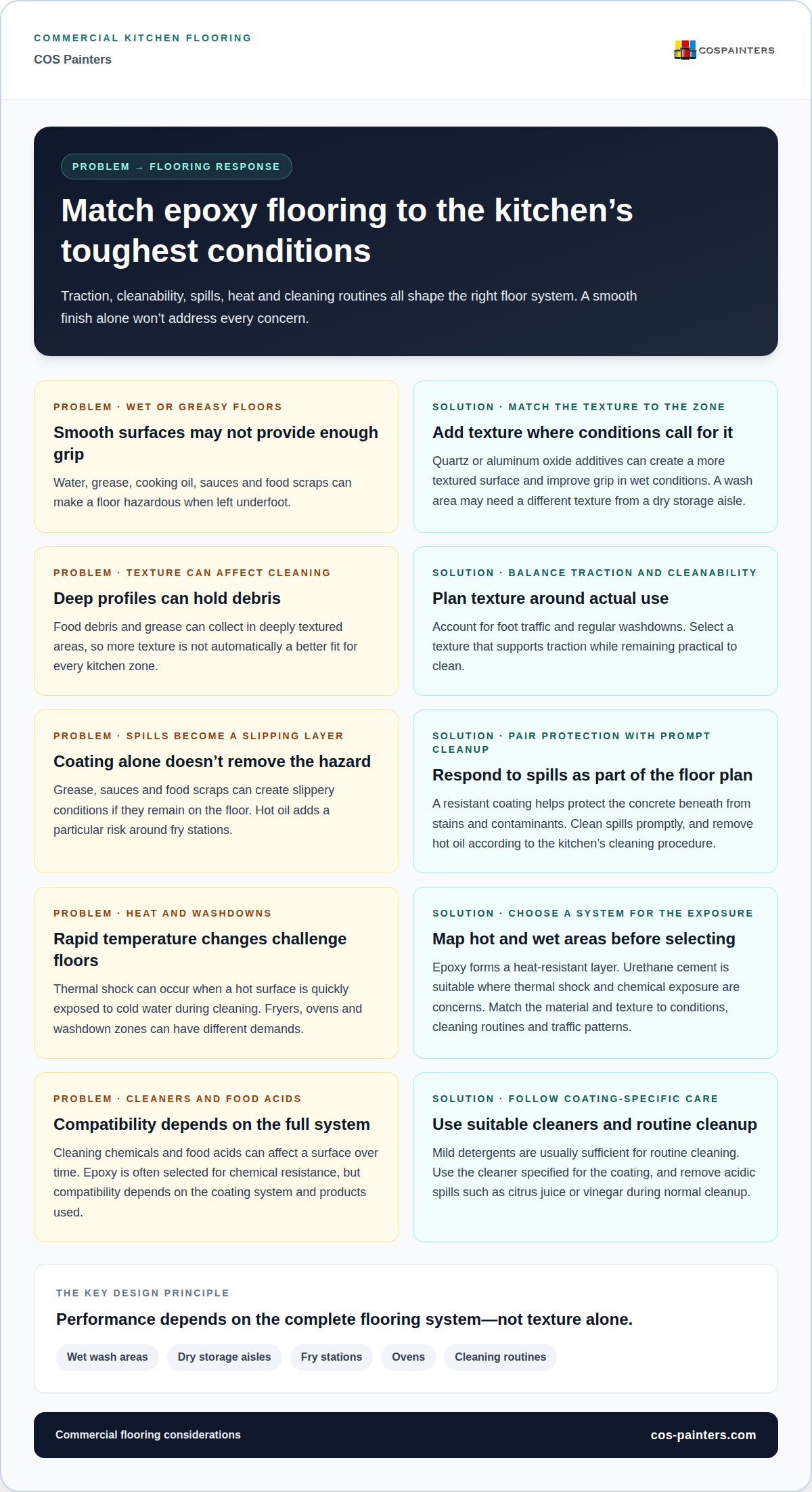
Epoxy can provide traction in a commercial kitchen, but a smooth finish alone isn’t the answer. Quartz or aluminum oxide additives create a more textured surface and can improve grip in wet conditions. For example, a wash area exposed to water needs a different texture from a dry storage aisle. The right texture balances traction with cleanability, since deep profiles can trap food debris and grease. A well-planned epoxy floor coating for commercial kitchens accounts for foot traffic and regular washdowns.
Grease, cooking oil, sauces, and food scraps can make any floor hazardous if left underfoot. A resistant coating helps protect the concrete beneath from stains and contaminants, while prompt cleanup prevents spills from becoming a slipping layer. In a busy fry station, remove hot oil according to the kitchen’s cleaning procedure rather than letting it spread. Textured areas can help maintain traction, but they don’t replace spill response or routine cleaning.
Cleaning chemicals and food acids can also affect a surface over time. Epoxy is often selected for chemical resistance, but its compatibility with sanitizers depends on the coating system and cleaning products used. Still, the coating system must suit the cleaning agents and food acids used in the kitchen. Mild detergents are usually sufficient for routine cleaning. Use the cleaner specified for the coating, and remove acidic spills such as citrus juice or vinegar during normal cleanup to limit residue and staining.
Hot oil creates a temperature challenge as well as a slip risk. Epoxy forms a heat-resistant layer, while urethane cement is suitable where thermal shock and chemical exposure are concerns. Thermal shock can occur when a hot surface is quickly exposed to cold water during cleaning. Identify fryers, ovens, and washdown zones before selecting a system. Then match the flooring material and texture to those conditions, cleaning routines, and traffic patterns. Performance depends on the complete system, not texture alone.
Does epoxy flooring meet health department and USDA requirements?
Epoxy can suit food production environments when its finished surface supports sanitation and applicable requirements. The material alone doesn’t establish compliance; surface condition, installation details, and local rules matter.
Food-Service and Health-Code Requirements
The FDA Food Code describes floors as smooth, non-absorbent, durable, and easily cleanable. A properly installed epoxy surface can provide these characteristics over concrete, while cracks, peeling, or gaps can undermine cleanability. Some health departments and industrial facilities require a minimum thickness of 1/8 inch, so requirements depend on the facility and jurisdiction. For food preparation and cooking areas, consider whether the complete system creates a continuous surface that can withstand routine cleaning.
Food Safety Regulations
FDA Food Code, HACCP guidelines, and USDA requirements may be relevant to commercial food environments, but they don’t amount to one universal flooring specification. The flooring decision should account for the processes in each area, from raw ingredient handling to cooked-food preparation. A seamless finish can reduce places where residue collects, while a porous or damaged surface is harder to clean thoroughly. Match the flooring design to the kitchen’s sanitation practices and the rules that apply there.
Food-safe and antimicrobial aren’t interchangeable claims. Epoxy’s smooth, non-absorbent finish can support cleaning, but that alone doesn’t establish that a coating has antimicrobial properties or meets every food-service requirement. For example, a prep area with frequent washdowns needs a continuous, durable surface that remains easy to clean. Both the coating system and its condition matter: damaged spots can interrupt that cleanable surface.
For lasting performance, the concrete substrate must be prepared and the coating applied as a complete system. The finished floor should have no open seams or rough defects that trap food particles. Colorado Springs businesses planning a kitchen upgrade can explore commercial flooring work as part of a project tailored to the space and its use.
Do commercial kitchens need a cove base?
An integral cove base carries the floor coating up the wall, creating a seamless transition. In a kitchen with frequent washdowns, this detail can make floor edges easier to clean.
Sanitary Floor-to-Wall Transitions
A sharp floor-to-wall corner can collect grease, spills, and food debris, making routine cleaning harder. A cove base replaces that corner with a curved transition, allowing a mop or cleaning tool to reach the junction more easily. During installation, the base should connect continuously with the floor coating. Gaps or exposed edges can interrupt the cleanable surface and leave places for residue to collect.
Hygienic Floor Design with Cove Bases
In a commercial kitchen, floor design must account for cleanup around equipment, sinks, and preparation areas. An integral cove base helps create a continuous surface at wall edges, reducing crevices where food particles and moisture can collect. This supports sanitation, but it doesn’t make a floor self-cleaning or prevent bacteria by itself. Staff still need to follow the kitchen’s cleaning routine and address spills promptly.
Top Coats and Integral Cove Bases
The recommended approach is an integral cove base coated to create a seamless surface. The topcoat should continue across the floor and cove, rather than leaving an exposed joint at the transition. This finish helps protect the base from routine cleaning and wear, supporting durability where carts, equipment, or foot traffic pass nearby. Quartz can add texture to flooring, but the cove’s finish must remain practical to clean.
Plan the wall transition before installation, especially behind fixed counters and around wash areas. Check that the cove meets the floor without visible breaks and that the coating reaches the intended wall height. These details help the finished surface handle daily grease, spills, and cleaning, while making the floor-to-wall junction easier to maintain.
Commercial kitchen flooring compared with epoxy, tile, vinyl, linoleum, and rubber
Restaurant flooring must suit constant foot traffic, cleaning routines, spills, and heat. The best choice depends on which demands dominate in each kitchen area.
Installation and Curing Time
Installation and cure schedules depend on the coating system, concrete condition, and site temperature. Epoxy primer should dry to the touch for 5-8 hours, and the next application step should follow within 24 hours. Before coating, prepare concrete by mechanically grinding or shot blasting to create a surface profile. That preparation helps the coating bond to the floor.
Common Epoxy Floor Problems and Risks
Epoxy creates a seamless, heat-resistant layer, while tile grout lines can collect residue and tiles can crack from thermal expansion. Vinyl, linoleum, and rubber are alternatives, but compare their surfaces, cleaning needs, and suitability for kitchen traffic. For hot-oil zones or sudden temperature changes, urethane concrete is another option because it withstands thermal shock. Sanitizers won’t damage or discolor epoxy flooring, but poor surface preparation can still contribute to coating failure.
When selecting a contractor, look for a clear plan covering concrete preparation, coating layers, and curing requirements. The plan should also match the surface to the restaurant’s hot areas, washdowns, and expected foot traffic.
Floor Lifespan and Replacement
Commercial kitchen epoxy flooring typically lasts 10 to 20 years with proper care. Actual wear depends on traffic, cleaning, spills, and the condition of the coating system. Peeling, cracks, or exposed concrete can signal that repairs or replacement need consideration, especially where damage affects cleanability. Routine cleaning with mild detergents helps keep epoxy in good condition.
Tile, vinyl, linoleum, and rubber each present a different surface choice, so compare them against the kitchen’s daily demands. Epoxy suits kitchens seeking a seamless finish; urethane concrete may suit areas facing thermal shock. A flooring project plan can match the material to the space. Plan commercial kitchen flooring around your kitchen’s traffic, cleaning, and heat exposure.
Colorado Springs Painters: Commercial Decorating
Colorado Springs Painters provides flooring services for commercial properties in Colorado Springs, making the company a practical next step when you’re planning a kitchen floor update. Commercial decorating can also help coordinate the look of the wider workplace. Discuss the kitchen’s daily demands, the flooring options you’re considering, and any improvements to the surrounding space. For a broader refresh, interior or exterior painting may also fit the project. Contact Colorado Springs Painters to discuss your commercial decorating or flooring project.
Plan a Floor That Fits Your Kitchen
Choose a flooring system around the way your kitchen operates, not just its appearance. A restaurant with heavy equipment, frequent washdowns, and changing temperatures may need a different approach from one with lighter daily demands. If epoxy floor coating for commercial kitchens seems like a strong fit, plan for both the floor’s operating conditions and the wider commercial space.
Colorado Springs Painters can help with flooring and commercial decorating, with interior and exterior painting available for broader property improvements. Bring your project goals and priorities into the conversation, then shape a practical direction for the space. Contact Colorado Springs Painters to discuss your project and take the next step toward a kitchen that works well for your team.
Frequently Asked Questions
Is epoxy flooring good for commercial kitchens?
Yes, epoxy can suit commercial kitchens that need a durable, cleanable surface. Epoxy floor coating for commercial kitchens works best when the system matches each area’s daily demands. For example, a dishwashing zone faces different moisture and cleaning patterns from a dry storage area. Consider the concrete condition, expected traffic, cleaning routine, and surface texture before choosing a finish.
Can epoxy floors handle hot oil and thermal shock?
Epoxy forms a heat-resistant layer, but hot oil exposure and rapid temperature changes create separate demands. Thermal shock can occur when a hot floor meets cold wash water. For areas exposed to that cycle, urethane concrete is suitable because it can withstand thermal shock and chemical exposure. Map fryer locations and washdown routines to select a system for those conditions.
Can it be installed in walk-in coolers and freezers?
Walk-in coolers and freezers need a flooring system suited to cold-room conditions. Don’t assume a kitchen coating will perform the same way in a freezer, where low temperatures and changing moisture conditions affect the space. Consider the room’s operating conditions, concrete surface, and cleaning routine together. The system selection should account for the cooler or freezer’s distinct environment.
Can it withstand constant cleaning and harsh chemicals?
Epoxy offers chemical resistance, and sanitizers won’t damage or discolor epoxy flooring. Still, “chemical-resistant” doesn’t mean every cleaner works at every concentration or contact time. For example, a restaurant using a concentrated degreaser should follow the cleaner’s directions and the coating system’s care guidance. Mild detergents are usually sufficient for routine cleaning and help keep the surface in good condition.
Epoxy or urethane cement, which one does my kitchen need?
Choose a system based on the kitchen’s exposure: epoxy provides a seamless, heat-resistant layer, while urethane concrete suits areas facing thermal shock and chemical exposure. A hot line with sudden hot-to-cold washdowns may need a different system from a dry prep area. Compare zones, cleaning routines, and temperature changes rather than selecting one material for every part of the kitchen.
How easy is maintenance?
Routine care is straightforward: remove food spills promptly and clean the floor with mild detergent. Include high-use paths, such as routes between prep stations and dishwashing areas, in the cleaning schedule. Look for changes like peeling or cracks during regular cleaning, since damaged spots can make the surface harder to maintain. Consistent care helps preserve the floor’s condition.


