

A long flooring warranty can still leave an installation problem uncovered. Here, flooring warranty vs. installation warranty is explained through one key distinction: a manufacturer’s warranty generally covers defects in the flooring material or its production, while an installation warranty generally covers workmanship or installation-related issues. Your flooring may have one or both, and the written terms define what each covers.
It’s easy to assume one warranty protects the whole floor, especially when a problem appears after the project is complete. In practice, the cause matters: a material defect and an installation issue may fall under different coverage. This guide explains how flooring warranties work, what each type may cover, and how to identify the terms that matter when a concern comes up. You’ll have a clearer picture of what to expect and how the two warranties fit together.
Key Takeaways
- Identify whether a flooring problem appears to come from the material or the installation, since that often determines which warranty applies.
- Read the warranty terms for exclusions, maintenance conditions, and any limits on how a claim is handled.
- Separate product defects from workmanship concerns to understand what an installation warranty may address.
- When planning new flooring, consider how professional installation can help create a finished floor suited to your space.
What is the difference between a manufacturer warranty and an installation warranty?
A manufacturer’s warranty generally covers eligible defects in the flooring material; an installation warranty addresses workmanship. Before signing, review the contract for coverage, duration, exclusions, and claim-handling responsibilities. This distinction helps you identify which terms apply if a problem appears after installation.
Manufacturer and Workmanship Coverage
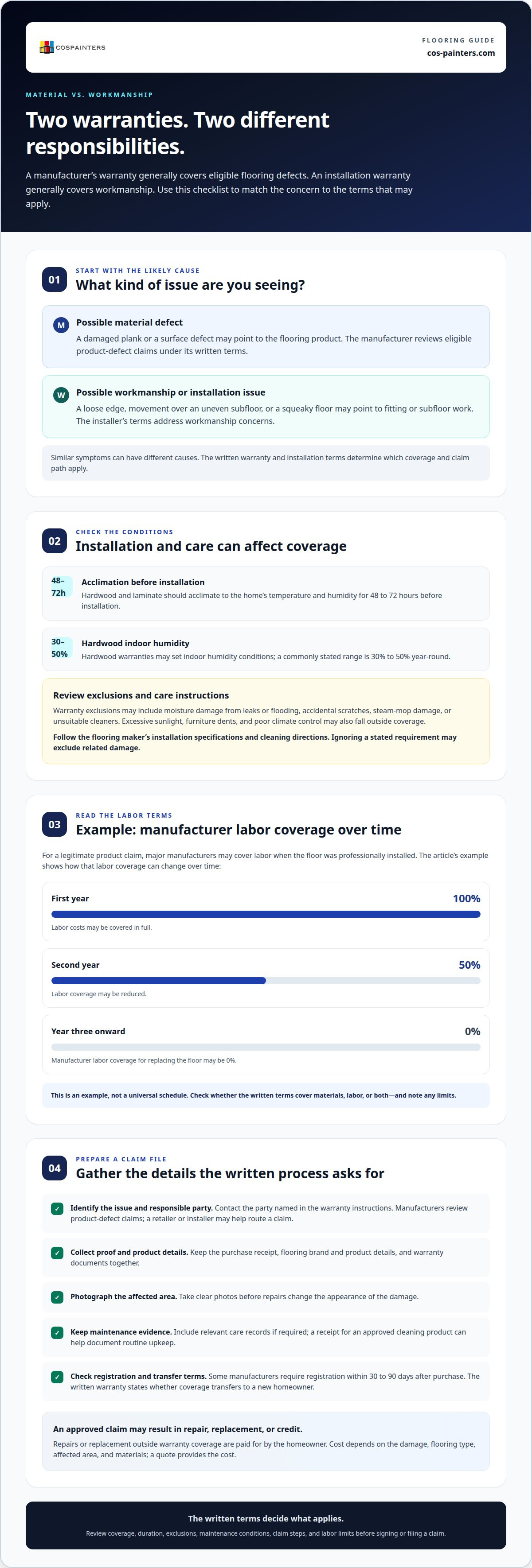
Flooring warranty vs. installation warranty explained: the distinction starts with who is responsible. The manufacturer covers eligible product defects, while the installer’s terms address workmanship. Similar symptoms can have different causes: a damaged plank may indicate a material defect, while a loose edge may relate to how the floor was fitted. New flooring may come with a manufacturer warranty, an installer warranty, or both.
For a legitimate product claim, major manufacturers may cover 100% of labor costs in the first year and 50% in the second year when the floor was professionally installed. From year three onward, manufacturer labor coverage may be 0% for replacing the floor. The written terms explain whether eligible coverage applies to materials, labor, or both.
Installation Errors and Product Coverage
The flooring warranty vs installation warranty explained comparison also depends on whether installation followed the product’s specifications. Manufacturers may require proper acclimation and set acceptable humidity ranges. Hardwood and laminate should acclimate to the home’s temperature and humidity for 48 to 72 hours before installation. If a problem results from ignoring a stated requirement, the manufacturer may exclude the related damage.
A manufacturer partnership doesn’t make product and workmanship coverage interchangeable. An installer may work with a manufacturer, but a material-defect claim and an installation claim still involve different responsibilities. Before signing, review the warranty documents, installation specifications, claim process, and any labor limits. These details show who handles each issue and what coverage may apply.
What Is a Flooring Warranty and How Does It Work?
A flooring warranty sets out coverage, exclusions, and claim steps for a specific product. Its written terms explain how maintenance, damage, and ownership affect coverage.
Maintenance Rules and Warranty Exclusions
Maintenance rules describe the care required to keep coverage valid, while exclusions identify damage the warranty doesn’t cover. Both matter because a claim may be denied if upkeep doesn’t follow the product instructions. For example, warranties may exclude moisture damage from leaks or flooding, accidental scratches, and damage caused by steam mops or unsuitable cleaners.
Hardwood warranties may also set indoor humidity conditions to protect structural integrity. A common stated range is 30% to 50% year-round. Excessive sunlight, furniture dents, or poor climate control may also fall outside coverage. Follow the flooring maker’s cleaning directions and keep receipts and warranty documents together.
Warranty Claim Responsibilities
Claim responsibilities depend on the written process: the manufacturer reviews product-defect claims, while the retailer or installer may help route a claim. Start by identifying the problem and contacting the party named in the warranty instructions. A finish defect and an installation concern may involve different coverage and claim paths.
Warranty terms commonly begin on the purchase or installation date and apply to defects under normal residential conditions. Some manufacturers require registration within 30 to 90 days after purchase. For a new homeowner, the written warranty controls transferability. It states whether coverage follows the flooring or stays with the original purchaser.
Claim Documentation and Proof
A claim file usually includes proof of purchase, warranty documents, and photos of the damage. These records help identify the product, establish its purchase date, and show the issue for review. Keep the receipt with the flooring brand and product details, then photograph the affected area clearly before repairs change its appearance.
Include relevant maintenance records if the warranty requires specific cleaning or care. For example, a receipt for an approved cleaning product can help document routine upkeep. The manufacturer or claim handler reviews the evidence and warranty terms; an approved claim may result in repair, replacement, or credit.
Costs Outside Warranty Coverage
Repairs or replacement outside warranty coverage are paid for by the homeowner. The cost depends on the damage, flooring type, affected area, and materials, and is provided after a quote request. This distinction helps separate a covered claim from a repair budget before work begins.
A small damaged section may need a different repair approach from widespread swelling or finish damage. The matching material and extent of removal also affect the work required. If a claim is declined, the written reason can clarify whether the issue involves an exclusion, a maintenance condition, or damage outside the warranty’s coverage.
Difference between flooring material and installation warranties
A flooring material warranty covers eligible product defects; an installation warranty addresses workmanship. This distinction helps match a problem to its likely cause. For example, a surface defect in laminate may involve the manufacturer, while movement caused by an uneven subfloor may point to installation. A squeaky floor is typically associated with installation or subfloor issues, not a product defect.
Product coverage depends on flooring type and claim category, not just the headline warranty period. A 25-year prorated warranty, for example, may cover replacement costs at 100% for the first 5 years, 50% by year 10, and 10% by year 20. That schedule changes the dollar value of an approved claim over time. Read the terms for the specific defect and remedy, since a long term doesn’t necessarily mean full replacement coverage throughout.
Carpet illustrates how detailed a material warranty can be. Wear coverage may apply when about 10% of the carpet shows abrasive fiber loss. Shading, pooling, matting, and crushing are appearance changes, not the defined abrasive wear. Even an approved claim may replace only the affected section to the nearest wall, doorway, or entrance, using identical carpet. The warranty protects against a stated condition, not every visible change during normal use.
Installation terms focus instead on work quality and resulting issues. Tile installation warranties commonly last 1-5 years, while manufacturer material terms can have different durations and exclusions. Improper installation may also affect product coverage if it conflicts with manufacturer specifications. “Certified” status alone doesn’t define what a warranty covers; the written terms do. Keep the product warranty and installation agreement together, then compare the reported symptom with each document’s covered causes and remedies.
What does a flooring installation or workmanship warranty cover?
An installation or workmanship warranty covers problems linked to the installer’s work, rather than defects in the flooring itself. Its terms define which installation-related issues qualify, how long coverage lasts, and what remedy applies. Loose planks or uneven transitions may point to workmanship, while a product flaw belongs under material coverage. The cause and written terms guide the claim.
Coverage may relate to preparation, fitting, or finishing. If a floor develops gaps because boards weren’t installed correctly, the concern may fall within workmanship terms. A squeak, however, can involve installation or the subfloor and may not qualify automatically. The warranty should distinguish covered workmanship from problems caused by the building, moisture, or later damage.
Duration and scope vary by agreement. A flooring professional described a one-year labor warranty as an industry standard, but that doesn’t define every installer’s terms. The written warranty should state its start date, covered work, exclusions, and available remedy. Check whether the installer will repair the affected area, replace materials, or cover labor only.
For a claim, describe the symptom, when it began, and where it appears. Photos of a lifted edge or uneven seam can show its location and extent. Keep the installation agreement and completion records together. The installer can assess whether the issue relates to workmanship, while a product defect follows the manufacturer’s claim process. Clear documentation helps distinguish those responsibilities.
Planning a flooring project? Explore flooring installation to discuss the work and how the finished floor can suit your space.
Colorado Springs Painters: Flooring
Colorado Springs Painters provides flooring services for homeowners and commercial spaces planning a new floor or updating an existing one. If you’re comparing material coverage with workmanship terms, understanding the distinction can help you plan with clearer expectations. Flooring installation is a natural next step when you’re ready to refresh a room, coordinate a floor with interior painting, or improve a property’s look and function. The right flooring choice depends on the space and the finish you want. Contact Colorado Springs Painters to discuss your flooring project.
Plan Your Next Flooring Project With Clarity
Use this flooring warranty vs. installation warranty explained guide as a starting point for planning your space. Consider how each room is used, the look you want across adjoining areas, and how new flooring will work with existing finishes. These choices help shape a cohesive project that suits your home or business.
As you plan, keep flooring warranty vs. installation warranty explained in mind alongside your design goals. Colorado Springs Painters offers flooring, interior painting, exterior painting, and commercial decorating, so you can consider coordinated updates for your property. Start by deciding which space you want to refresh and the overall feel you’d like to create.
Contact Colorado Springs Painters today to discuss your flooring project and possible next steps. A thoughtful plan can bring fresh character to your space and help it feel ready for what comes next.
Frequently Asked Questions
What does a flooring product warranty cover?
A flooring product warranty covers specified material defects under its stated conditions. Depending on the product, coverage may address wear-through, fading, finish failure, or structural defects. For example, a hardwood warranty may treat the floor’s structure separately from its surface finish. Remedies can also vary: an approved claim may provide repair, replacement, or credit rather than a complete new floor.
How do flooring product and installation warranties differ?
A product warranty concerns the flooring itself; an installation warranty concerns problems related to how it was fitted. Consider a plank that separates from the next one: the cause may involve the material, the installation, or conditions beneath the floor. Identifying the likely cause helps direct the claim to the applicable terms. Both warranties may apply to one project, but they cover distinct responsibilities.
How long do flooring warranties typically last by material and brand?
Terms vary by product, claim type, and manufacturer. Carpet warranties commonly last 10-25 years, while laminate wear-through and fading coverage commonly lasts 10-25 years. Luxury vinyl plank warranties commonly range from 15 years to lifetime. Hardwood finish warranties may range from 25-50 years; engineered hardwood finish terms commonly range from 20-50 years. Structural and finish coverage can have different periods, so compare the specific terms.
What exclusions and limitations are common in flooring warranties?
Common exclusions include accidental damage, misuse, scratches, furniture dents, excessive sunlight, and moisture from leaks or flooding. Some warranties also restrict coverage for standing water to a defined period. Using an unapproved cleaning product or a steam mop may affect eligibility. A warranty may also limit the remedy or prorate coverage over time, so the stated term may not mean full replacement throughout.
Does improper installation void a flooring manufacturer warranty?
Improper installation can affect manufacturer coverage, especially when it conflicts with the product’s instructions or contributes to the damage. It doesn’t automatically mean every product claim is excluded; the issue and warranty language matter. For instance, a verified material defect may be assessed differently from buckling linked to installation conditions. The manufacturer’s requirements and the cause of the problem help determine how coverage applies.


